
Walking Khopra Ridge in Nepal
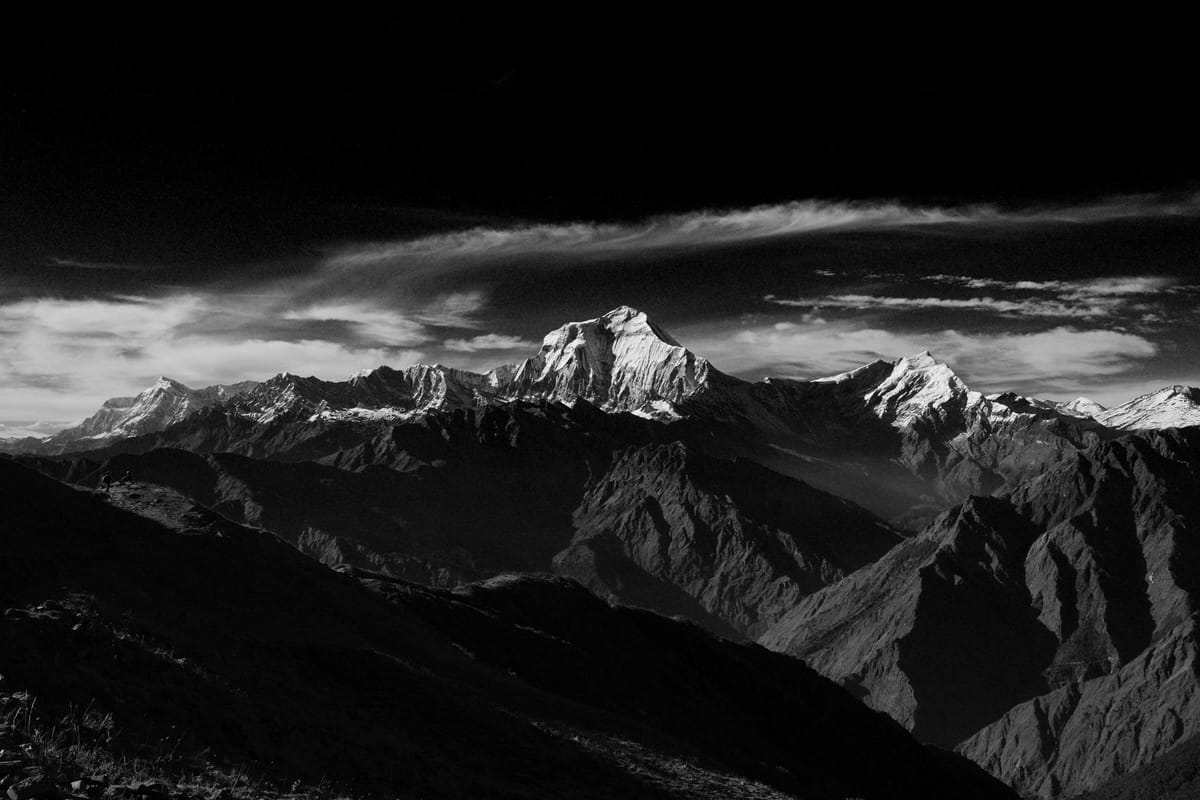
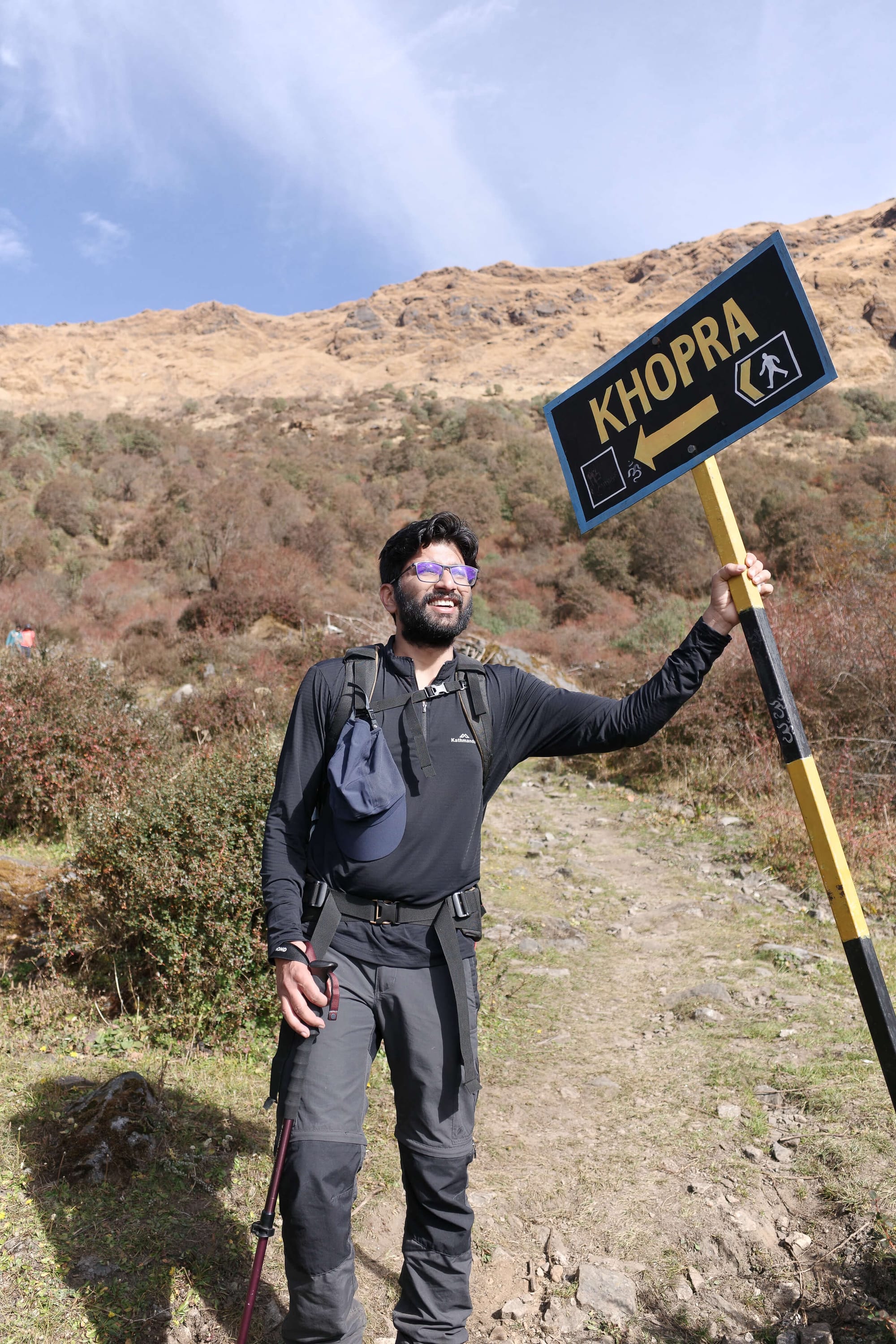
After walking ABC last year, the two contenders were Khopra Ridge and Mardi Himal. Mardi Himal being a shorter hike (3–4 days), we zeroed in on Khopra Ridge. Apart from the trek length, we also wanted a break from the Annapurnas – just for the curiosity of viewing other peaks. No offense to the Annapurnas and Machapuchare. Little did we know that they would still keep showing up.
What we didn't plan for was a cyclone. Its name was Arnab, and it would reach Nepal four days into our walk.
Day 0
Bangalore → Kathmandu → Pokhara (16,988 steps, 2,700 ft.)
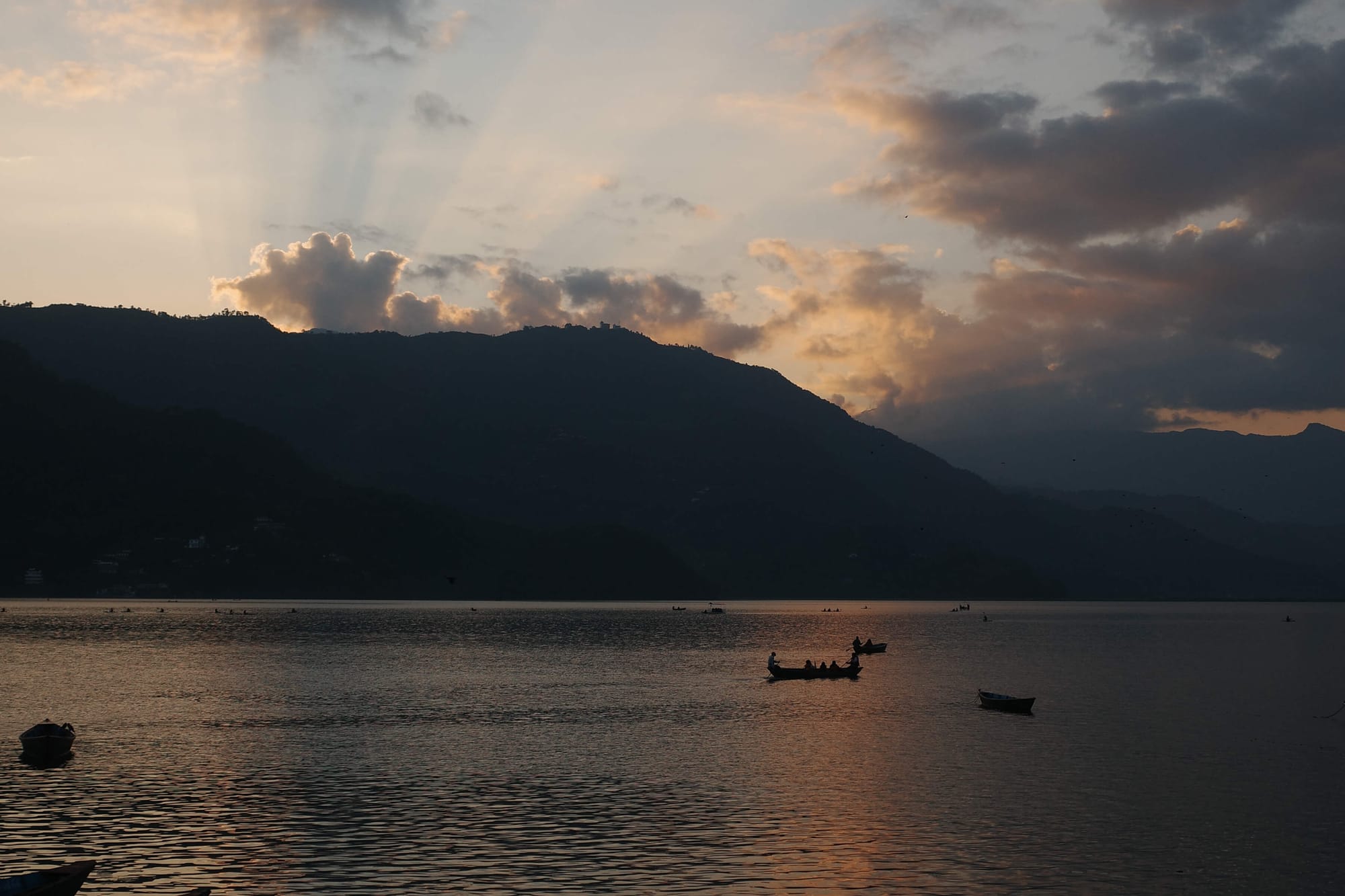
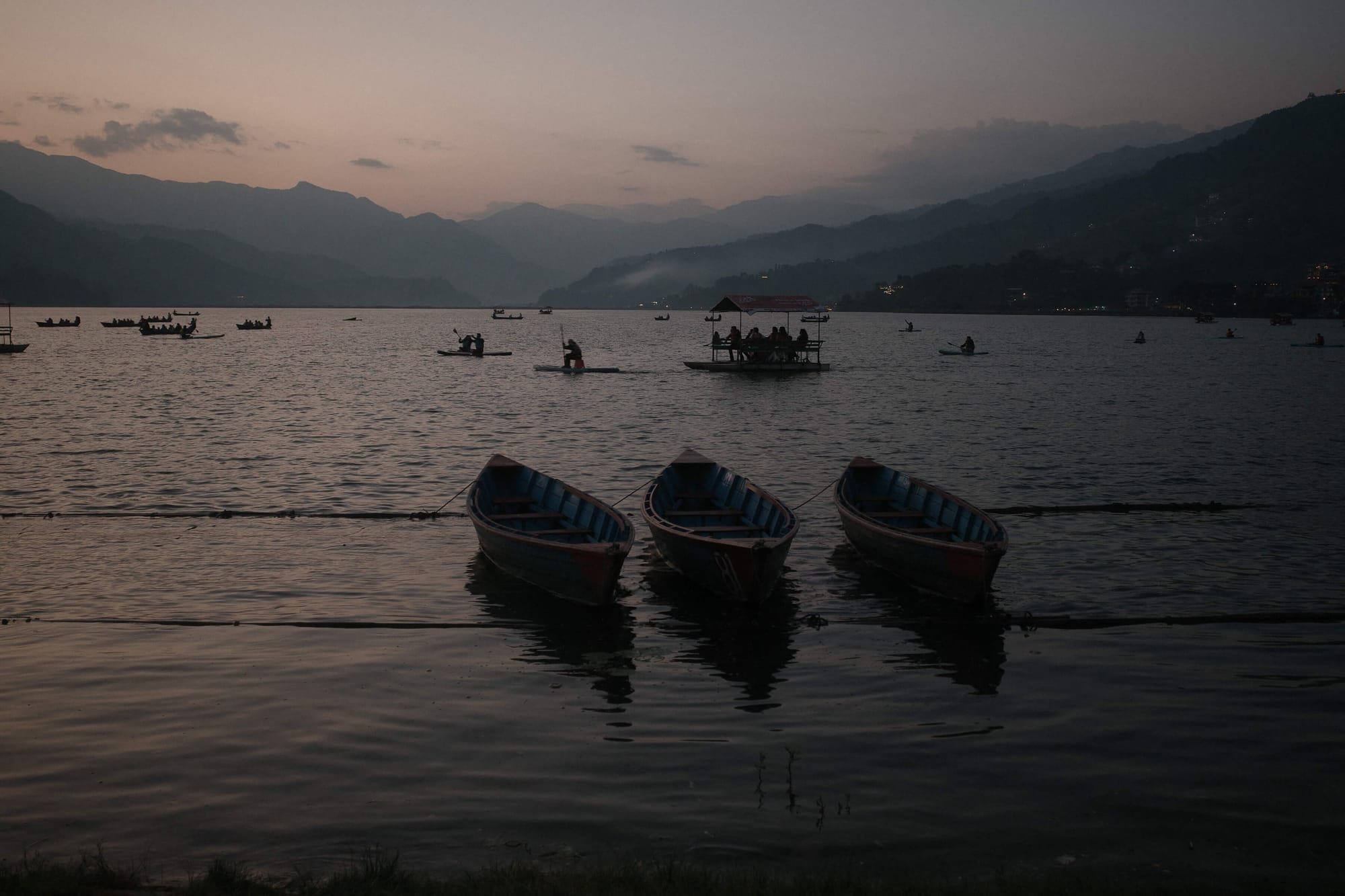
As much as I am excited about the hike, I (we?) love Pokhara just as much. Every year, the appreciation increases: for the walkability, for the ease of finding a good cup of coffee, and for the crispness of the weather at this time of year.
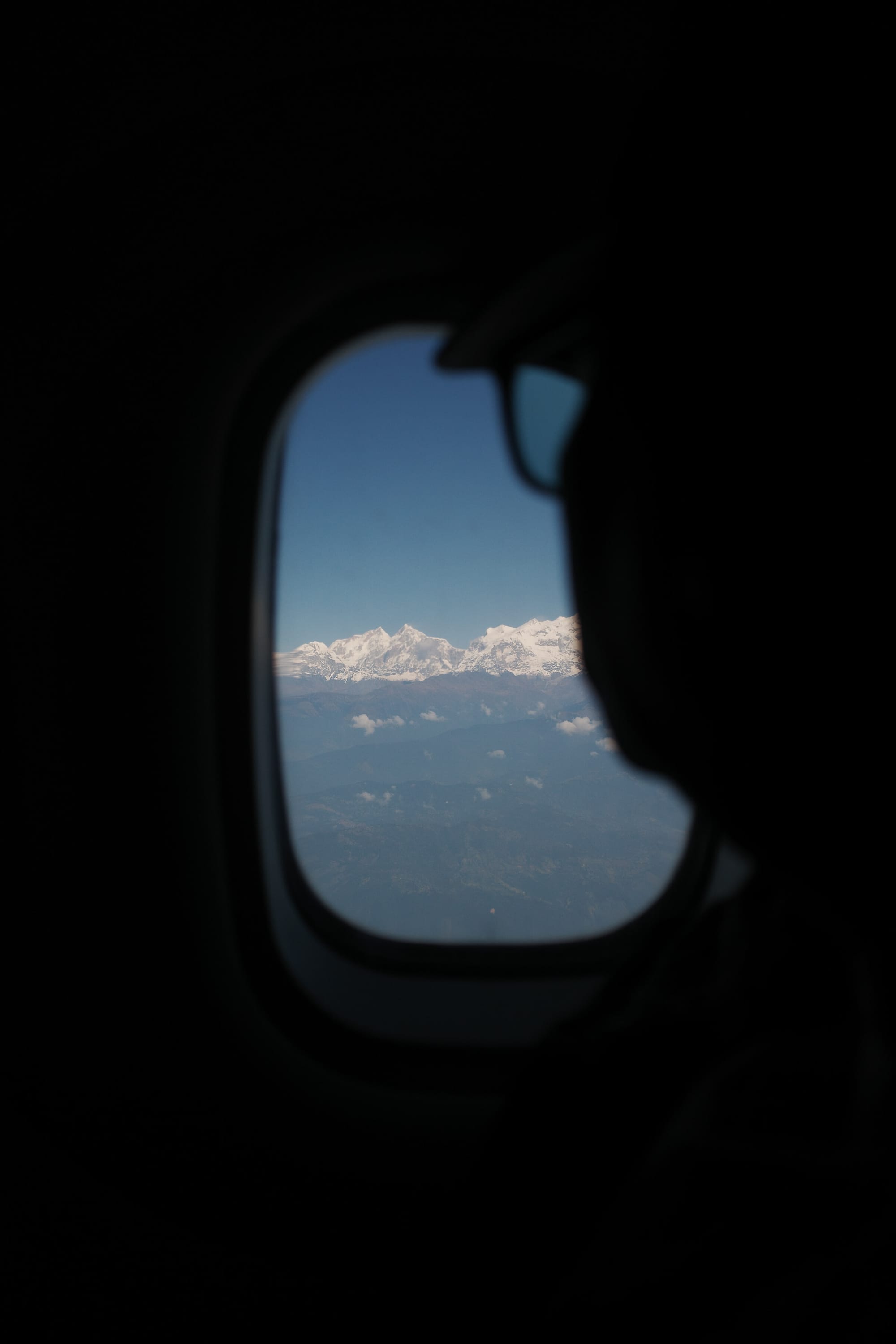
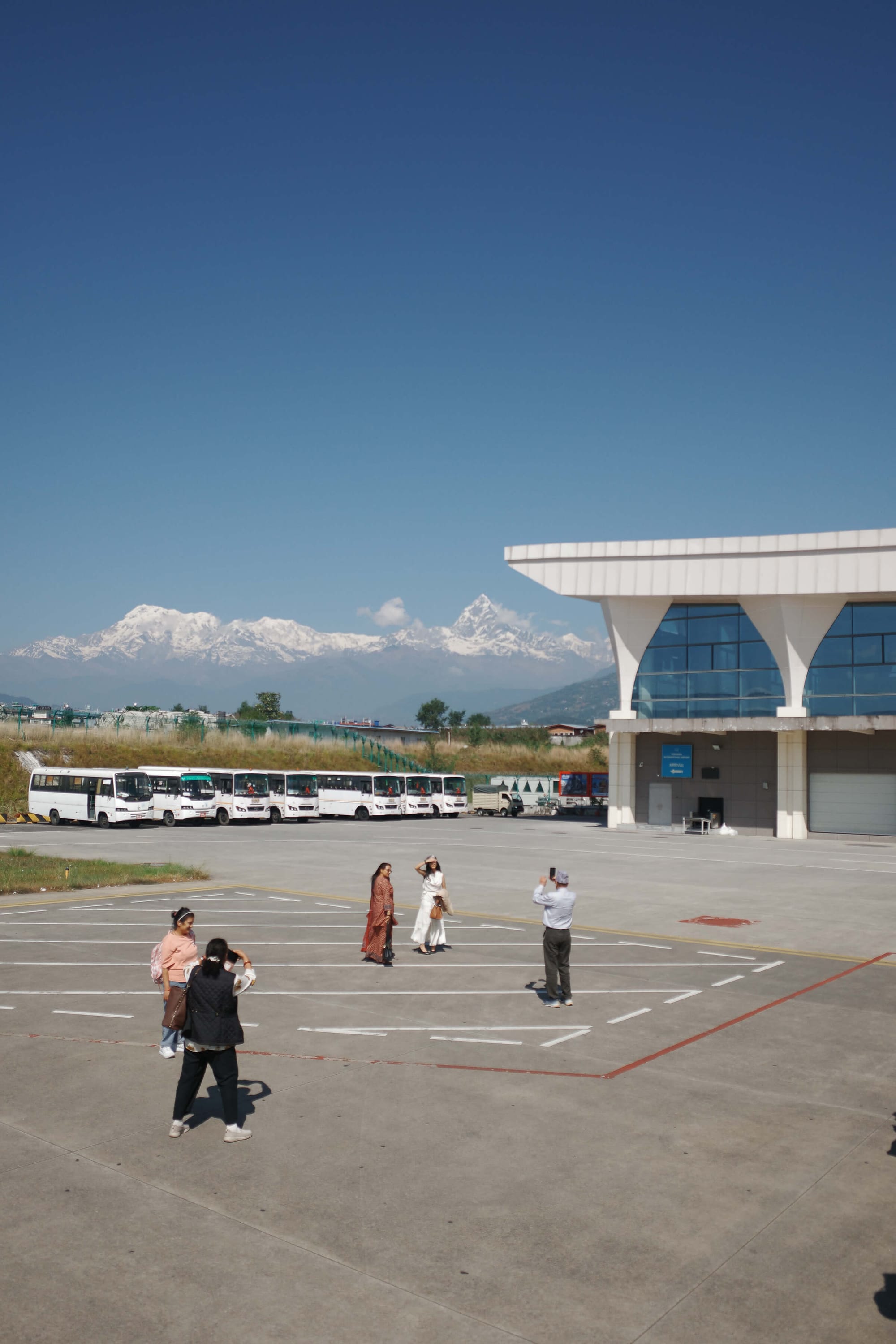
Flying from Kathmandu to Pokhara is an experience in itself. If the weather is right, it checks all the boxes of how air travel should be. The airport security is laid-back, and you can board any flight with that carrier if the seats are empty. The flight finishes before you realize it. You reach Pokhara in less than half an hour, whereas by road it would take at least 7 hours.
Day 1
Pokhara → Ghandruk → Tadapani (17,281 steps, 8,700 ft.)
Just like the Kathmandu to Pokhara flight, the Pokhara to Ghandruk cab ride is an experience. After we exit Pokhara, the roads stop existing, and it's just the will of the driver that you ride on.
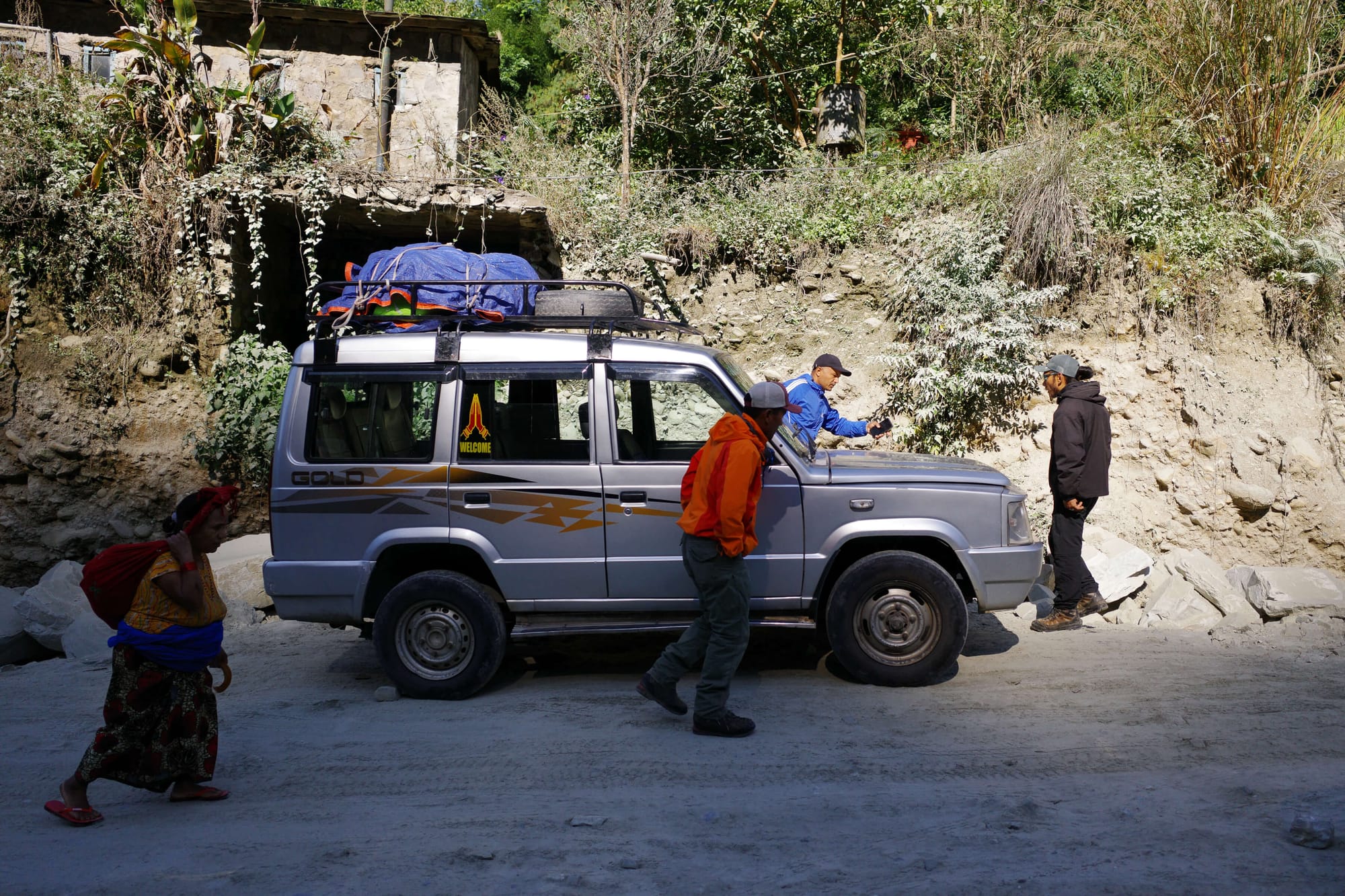
The initial plan was to stay in Ghandruk, but we decided to push on to Tadapani because of the bad weather brewing a few days later. Subodh, our guide, knew we would have to turn around before Arnab arrived. If we skipped the night in Ghandruk, we could be at Khopra Ridge while the sky was still clear.
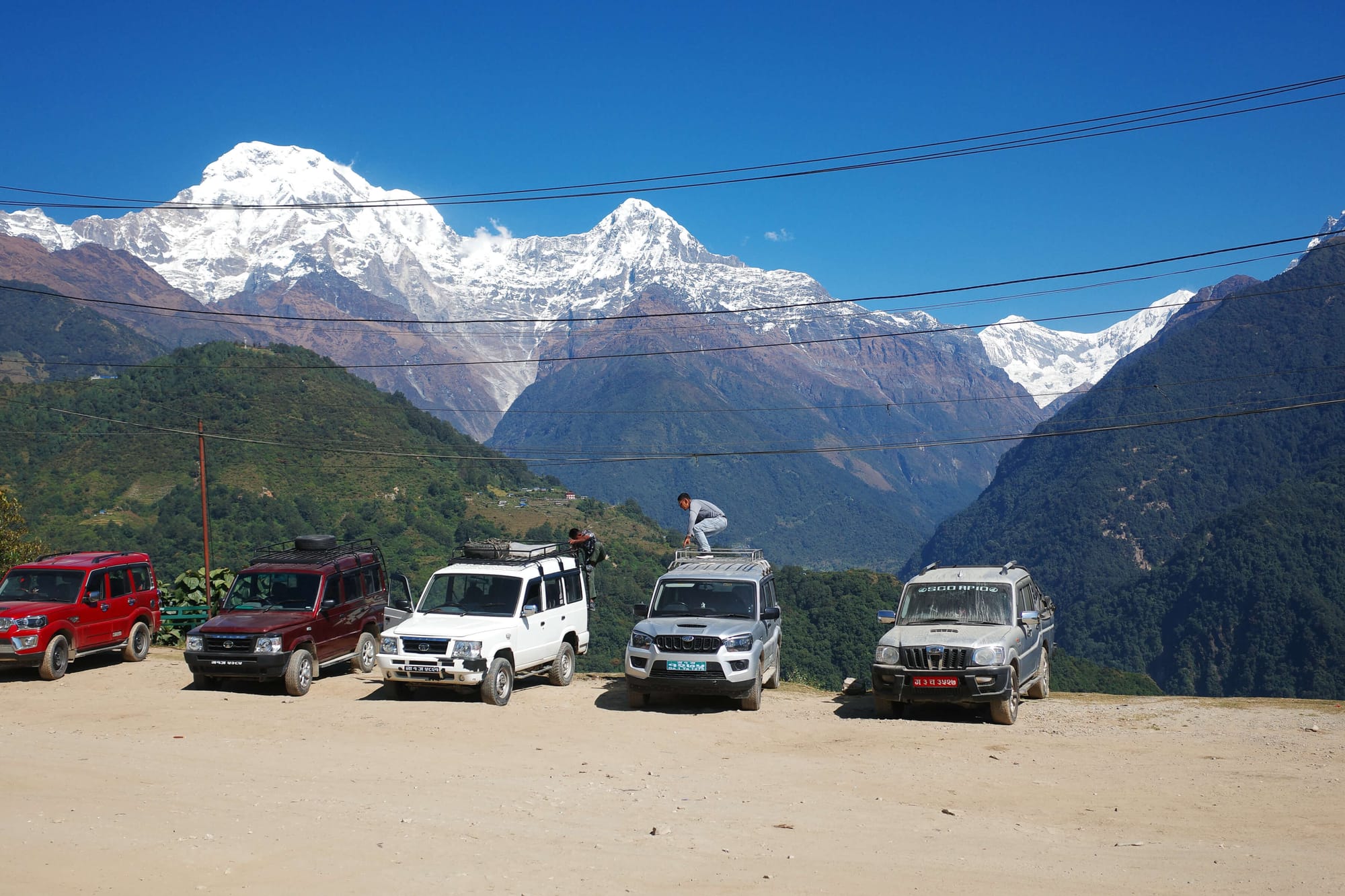
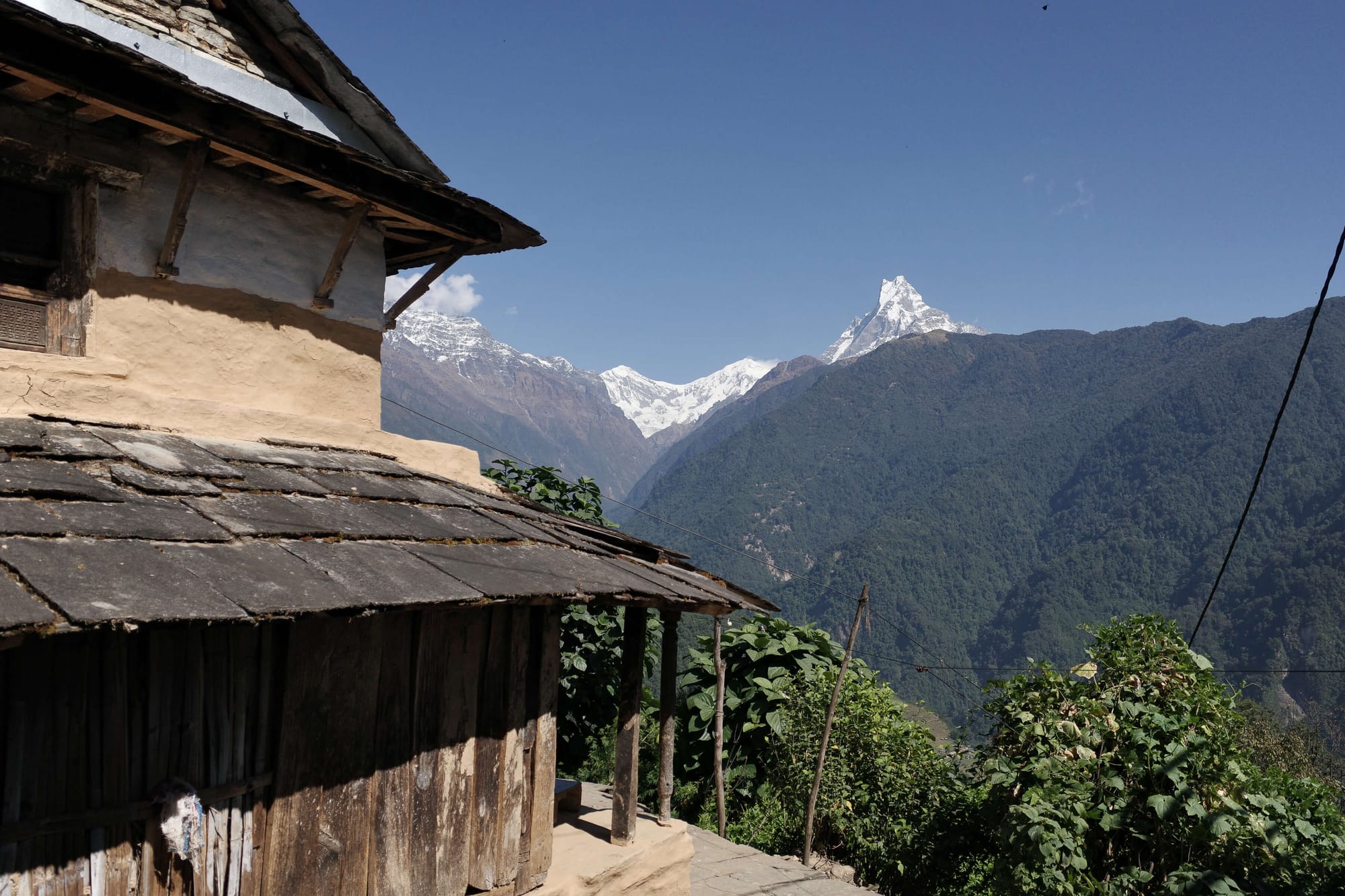
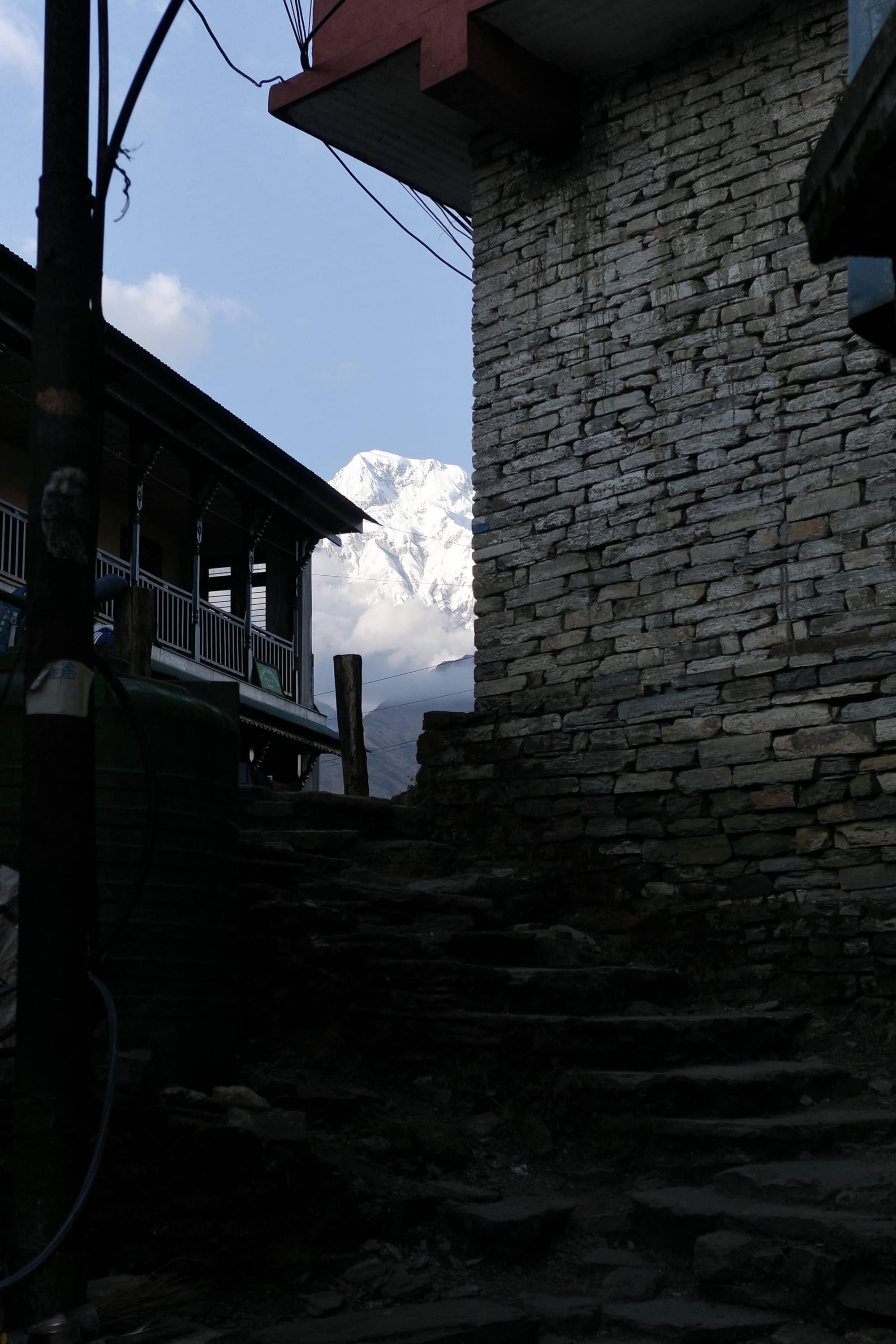
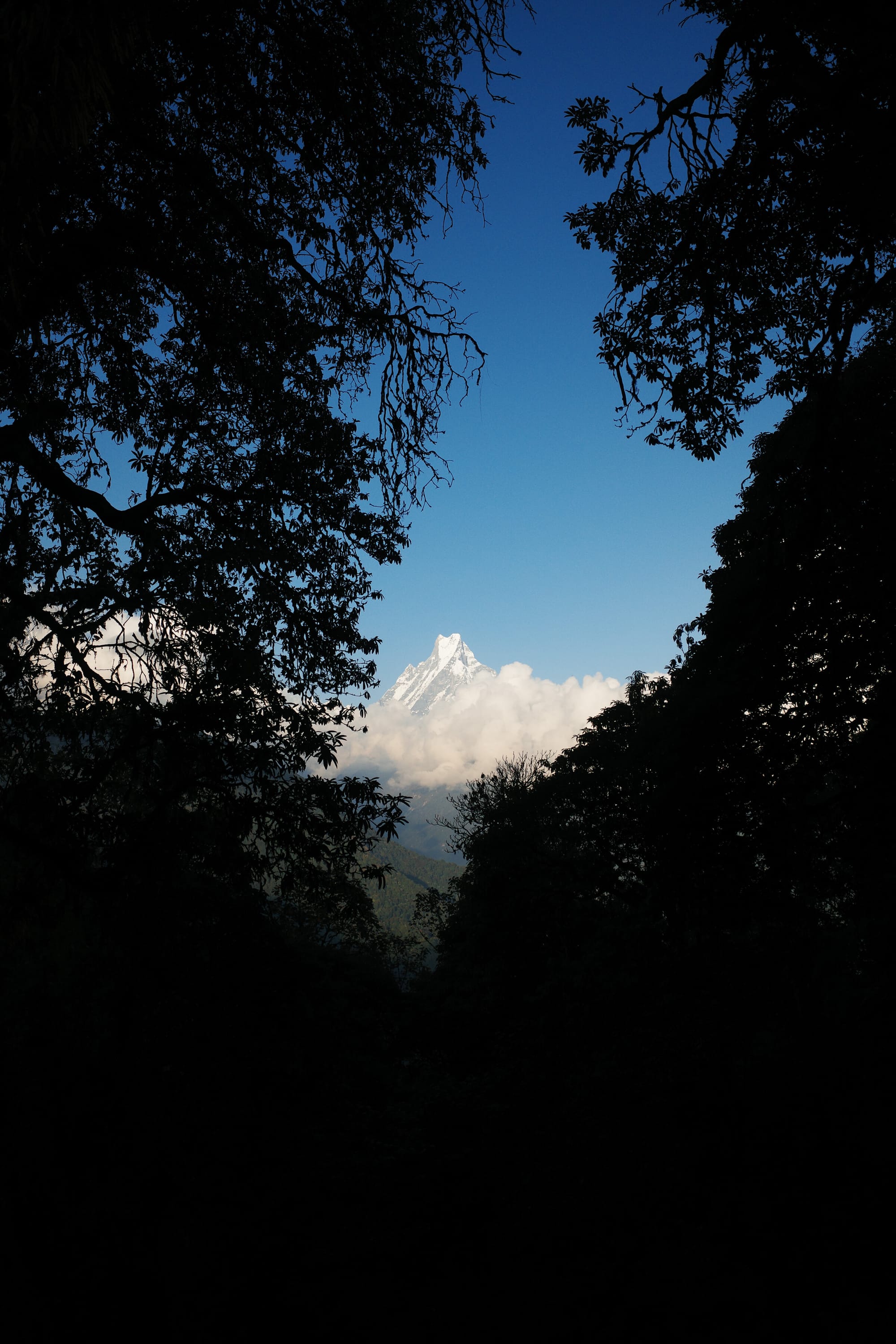
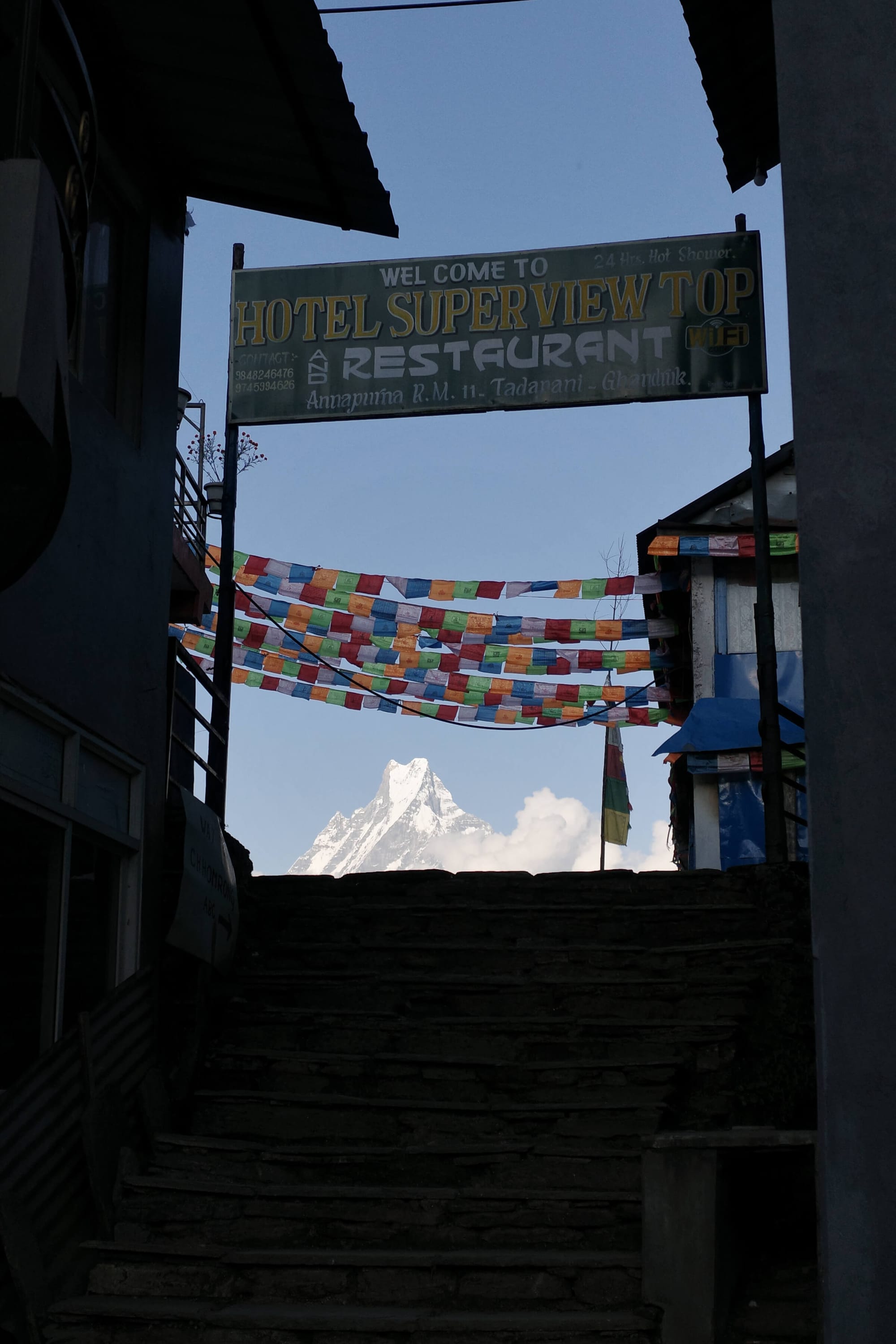
It was a bit disorienting to start walking right after that ride, since we were used to taking a break after putting our bodies through it. Our smartwatches thought we were walking, and rightly so. We were indeed walking, without moving our legs.
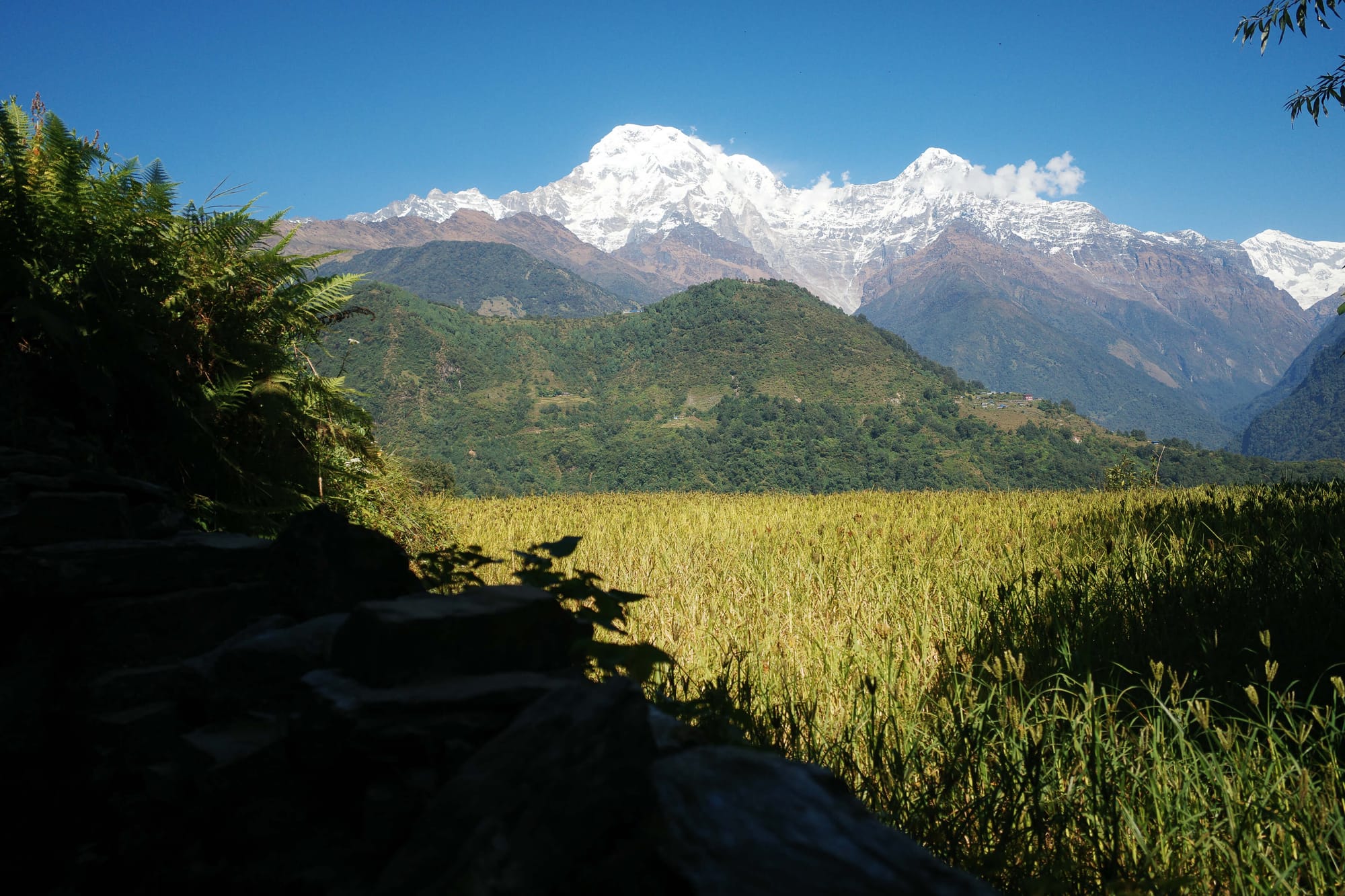
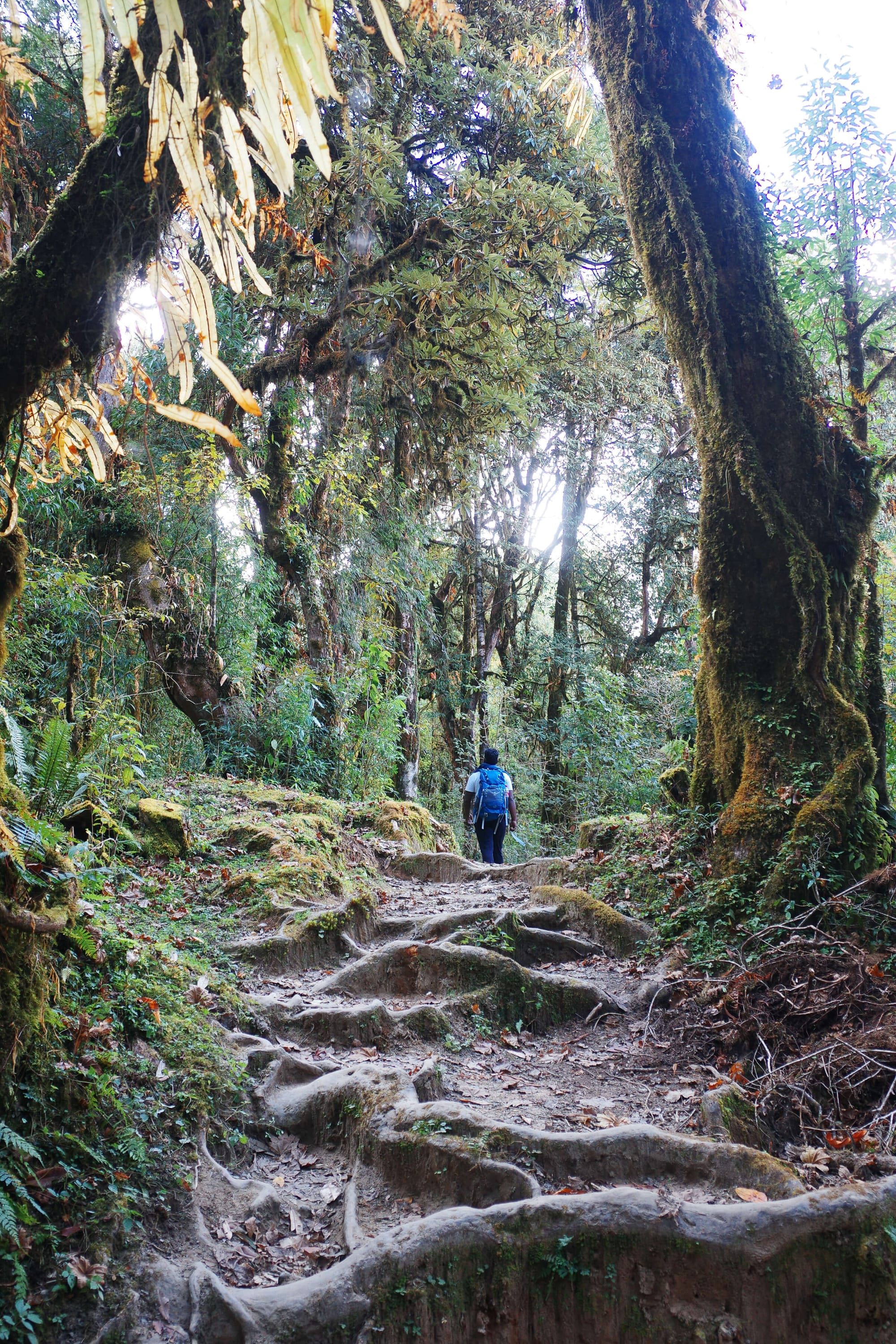
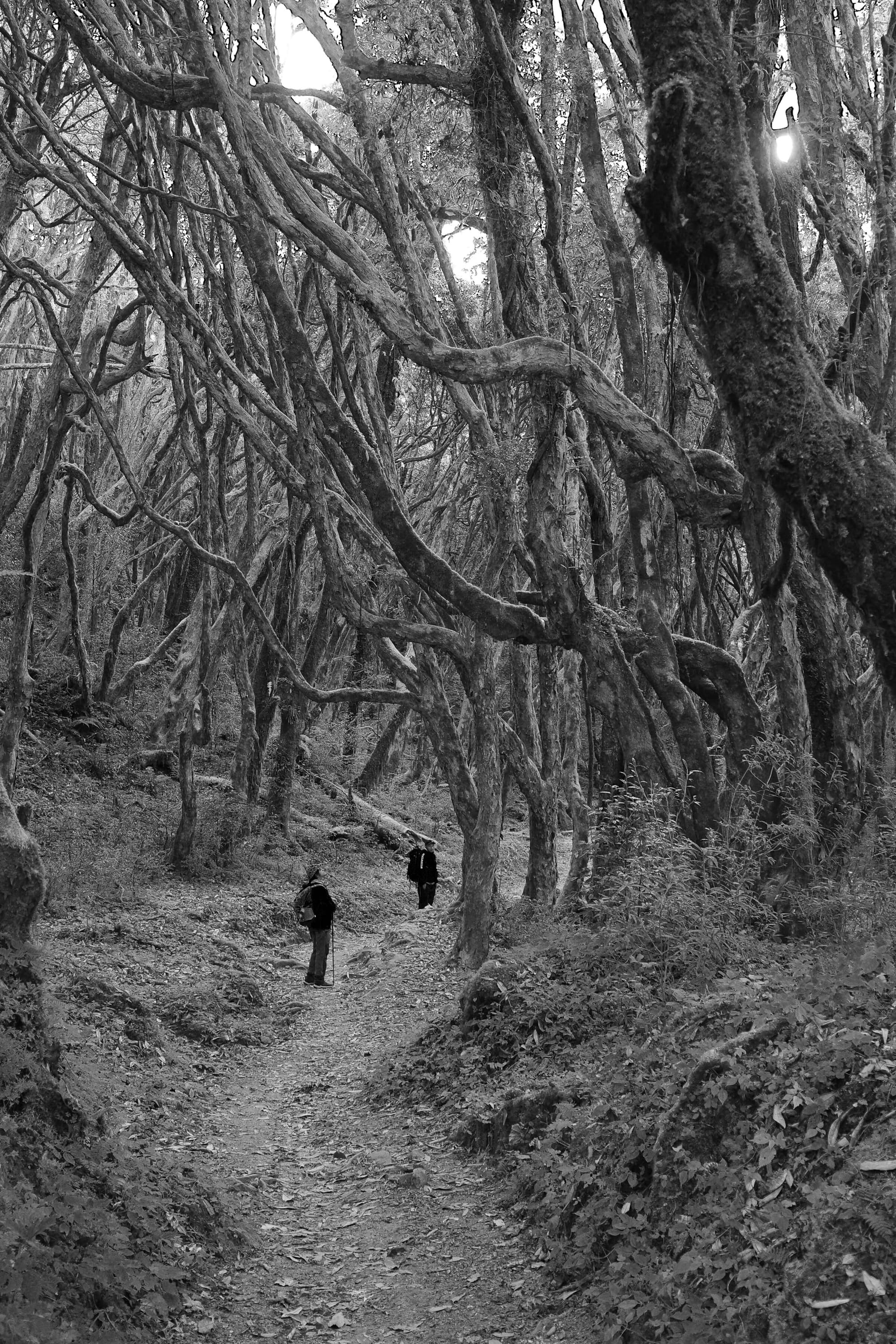
Familiar views from the previous ABC walk were all around, so the walk was more about finding our rhythm and the dynamics of our walking group. After lunch (dal bhat, which would be the same for the next six days), the path led us through a dense forest of green shrubs and brown, wise trees. We retired for the night in Tadapani, one of the many picturesque villages on the way.
Day 2
Tadapani → Dobato (17,715 steps, 11,250 ft.)
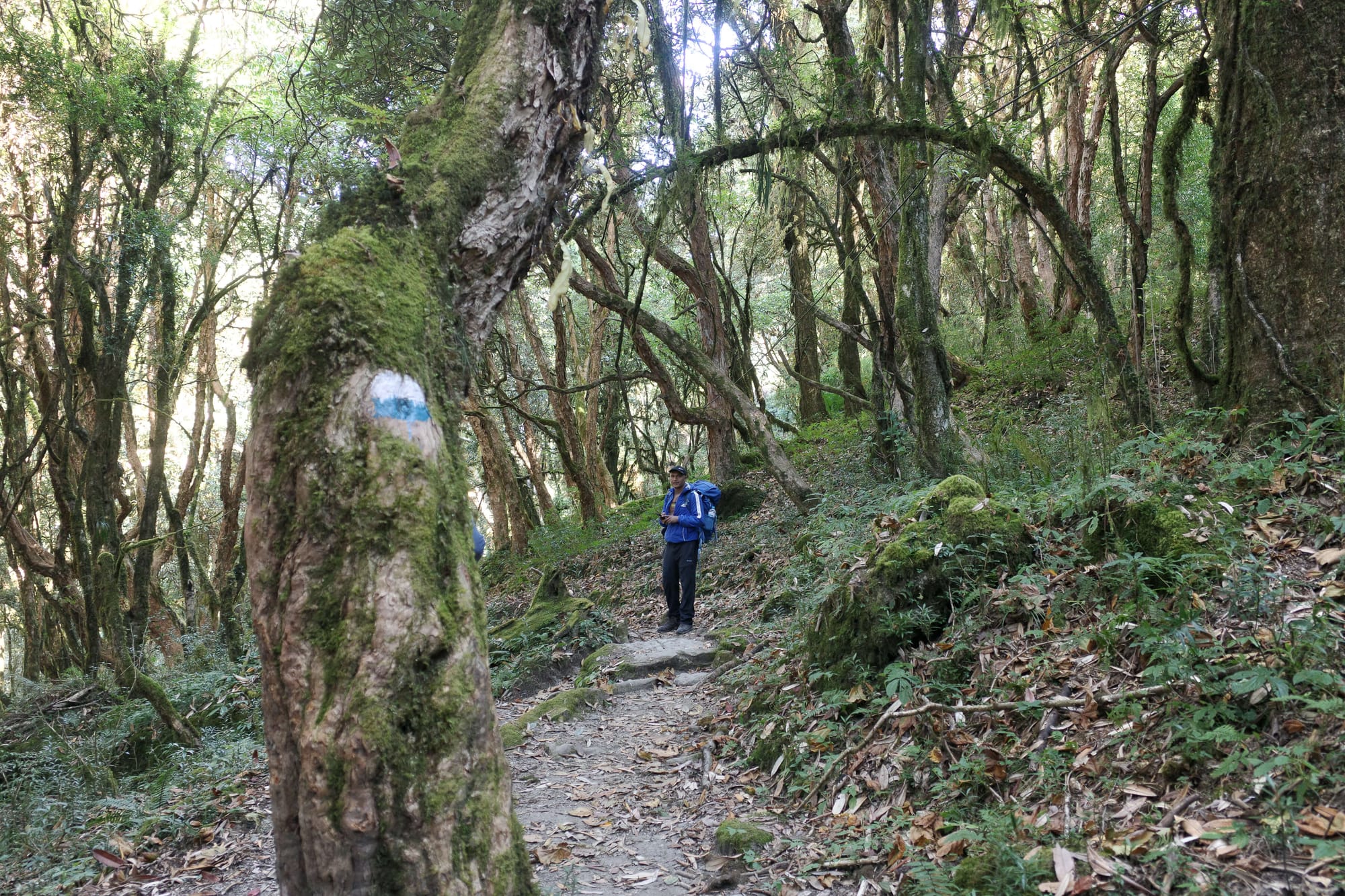
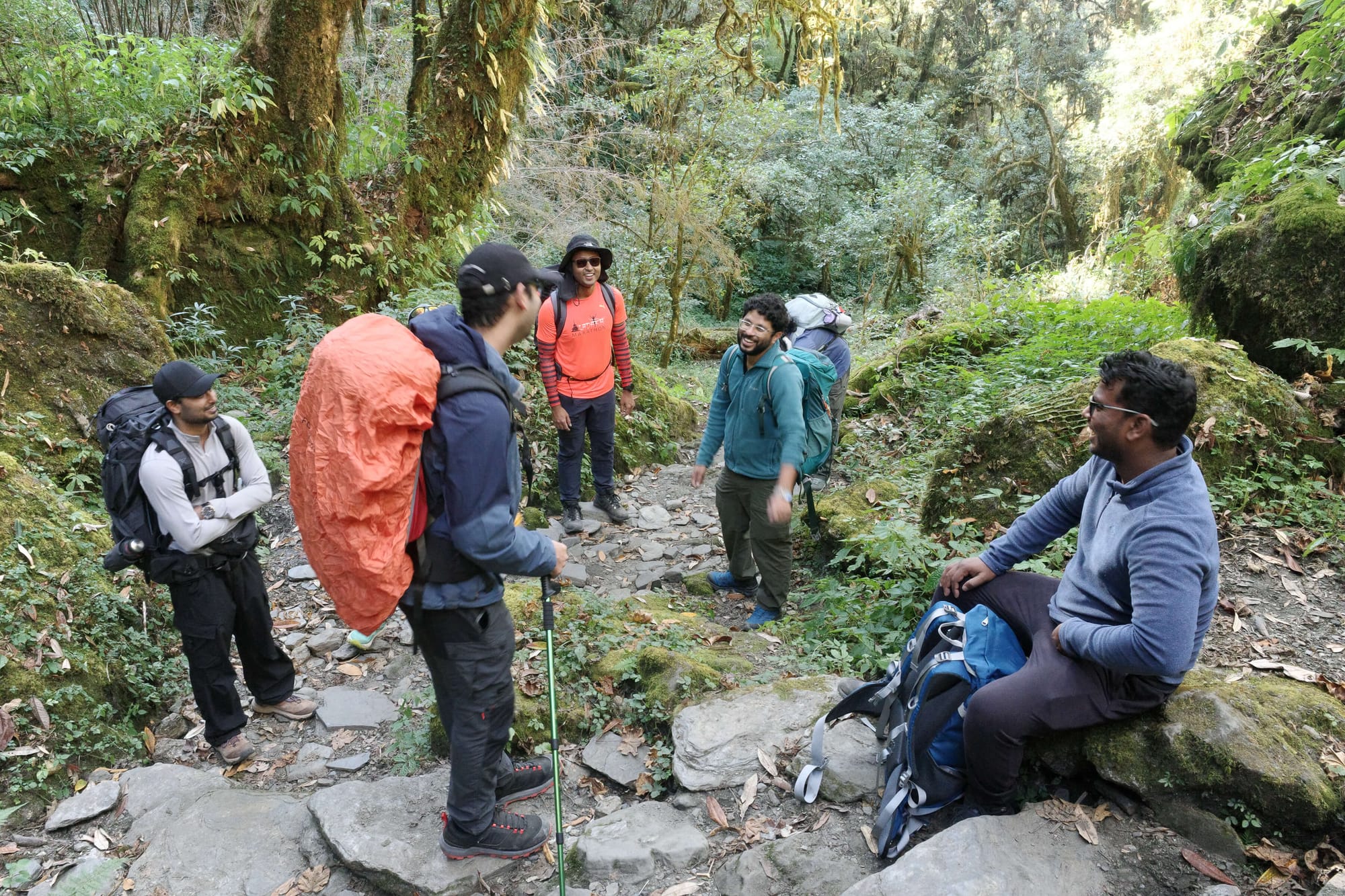
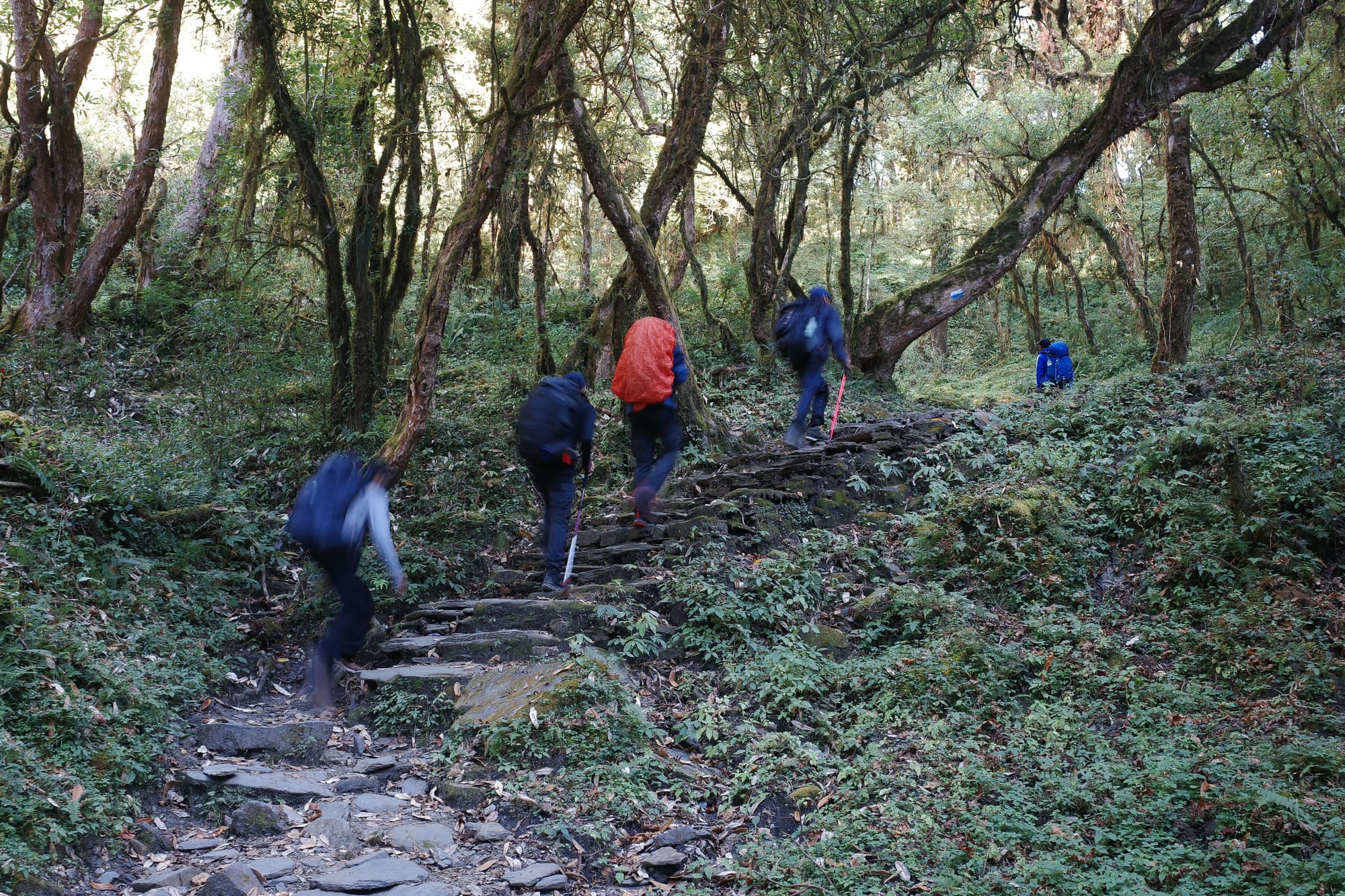
With well-rested bodies and big breakfasts, we walked in the same forest, with white morning sunlight shimmering down through the leaves and branches. With the warmth from our bodies and the sunlight, we almost forgot that winter was already here and the night would drop below zero.
After lunch, we had our first grueling climb, and before we knew it, we were in Dobato. Since this was just the second day of our walk, we didn't expect much from the view. The Annapurna range was still around us, and the star attraction – the Dhaulagiri range – was still nowhere to be seen.
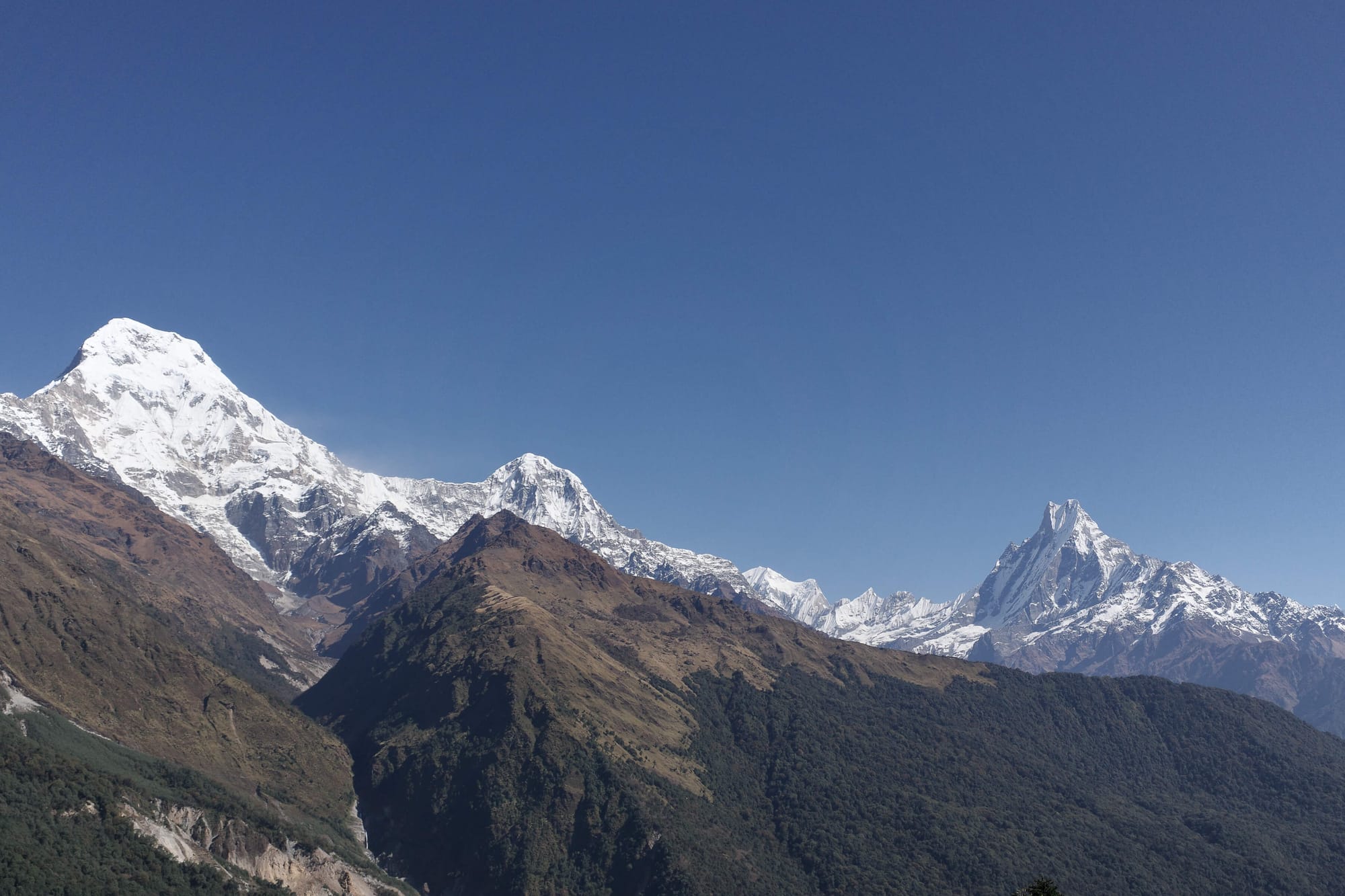
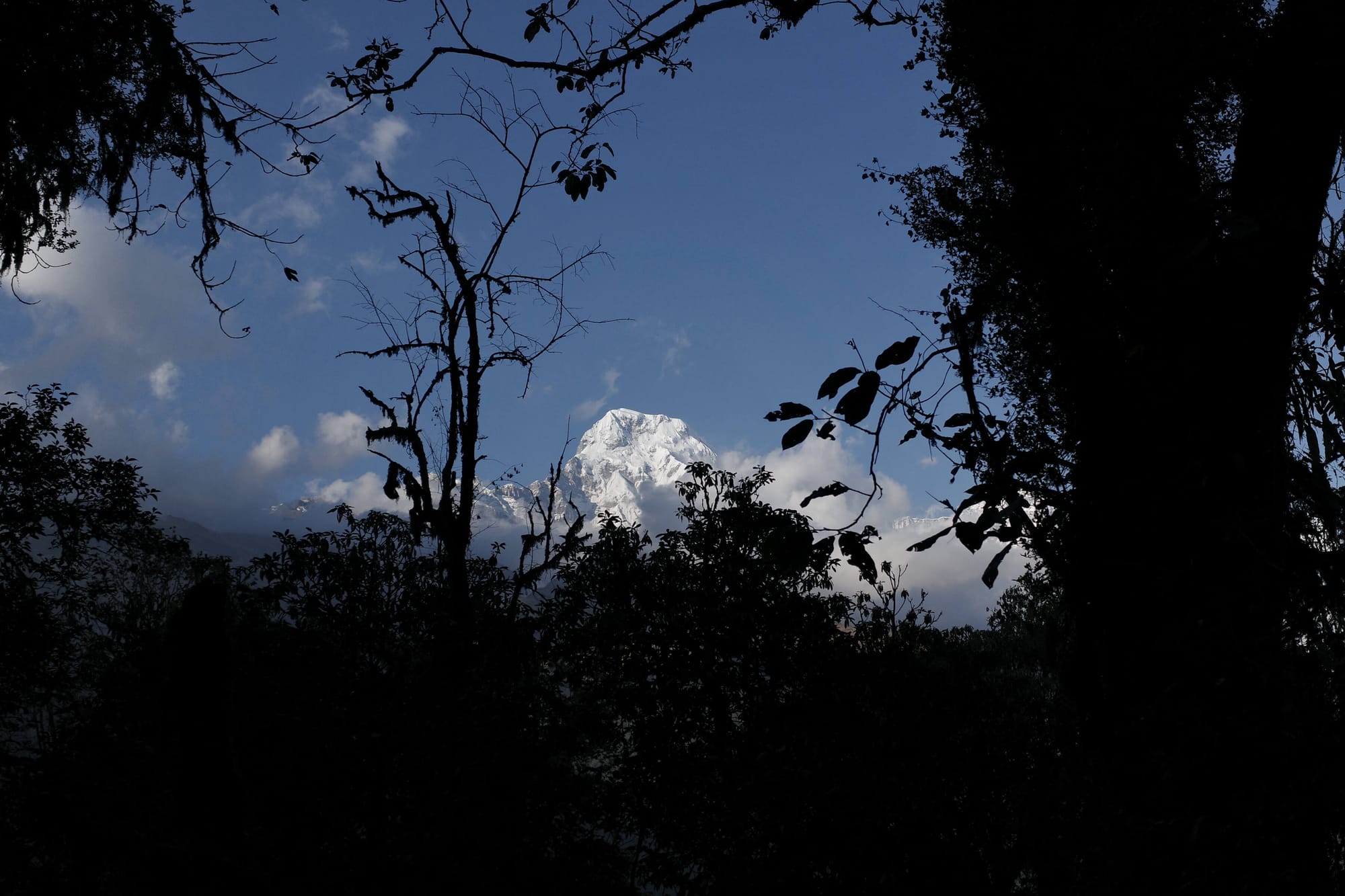
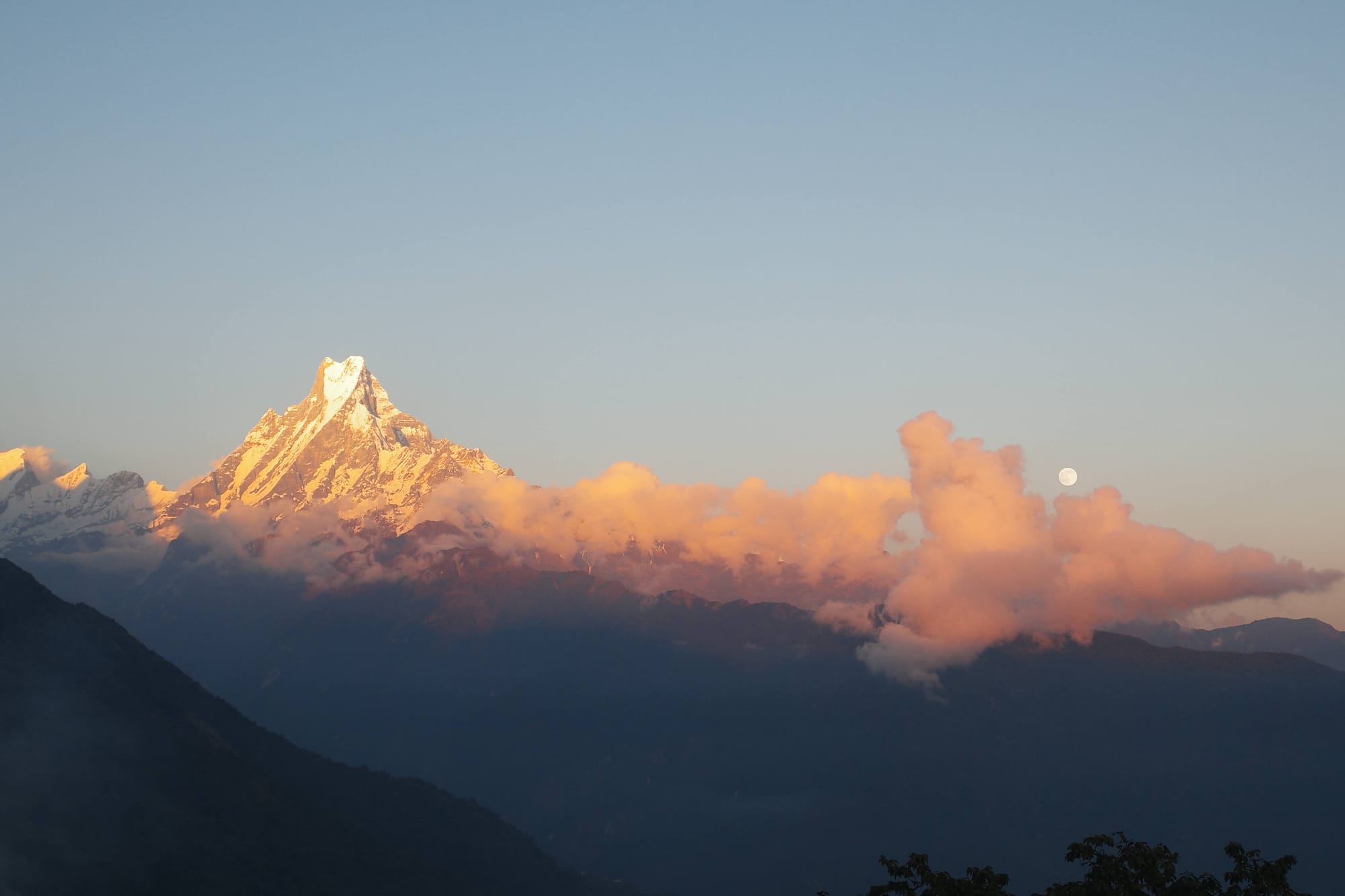
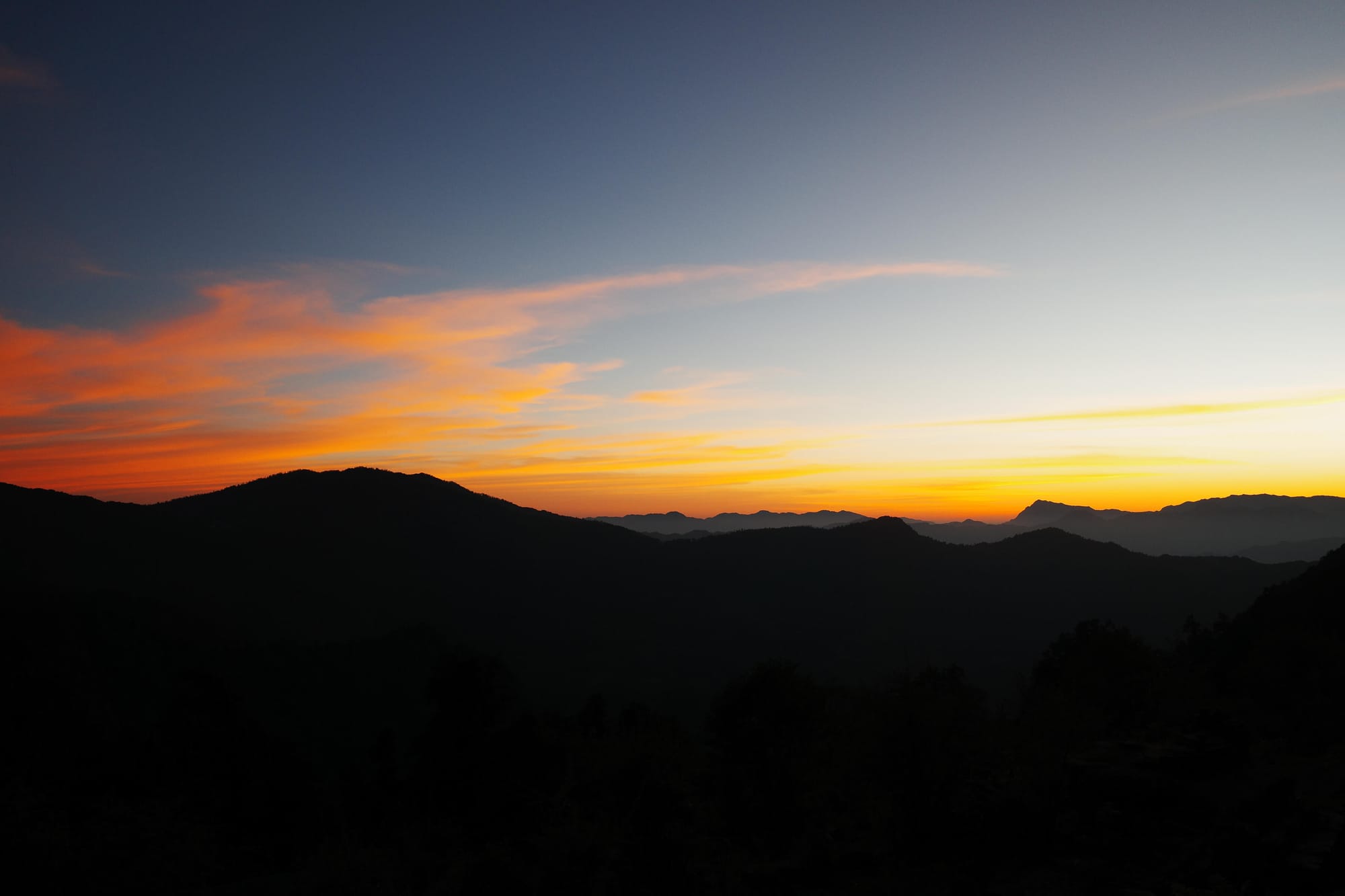
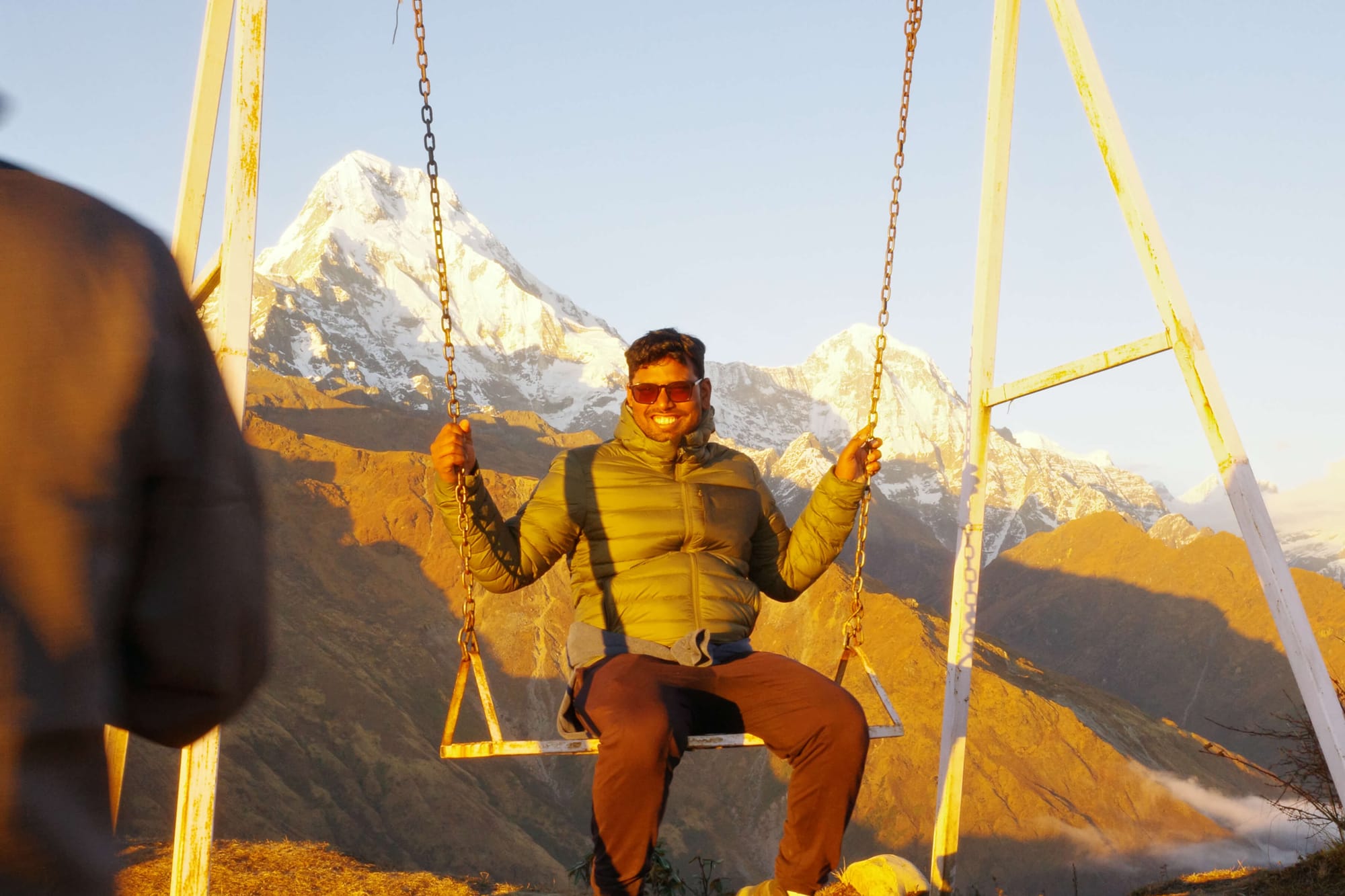
In the evening, we took a stroll to a nearby viewpoint. That stroll turned into one of the most scenic sunsets of my life. We got our first clear view of Dhaulagiri, with stunning views of the Annapurnas and, of course, the majestic Machapuchare. On one side we had a swarm of rolling hills, and on the other, these snow-clad peaks – a striking balance only mother nature could make.
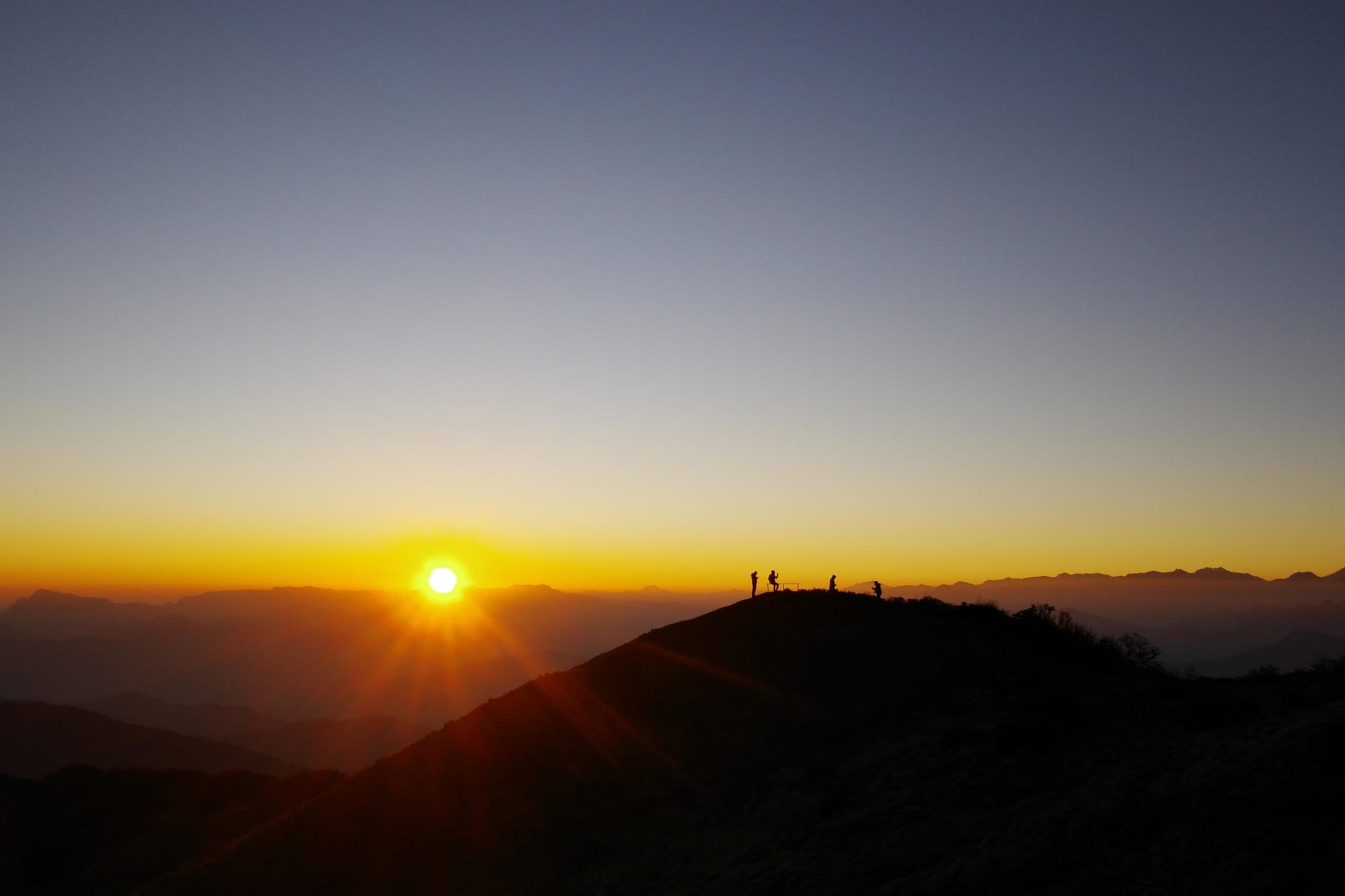
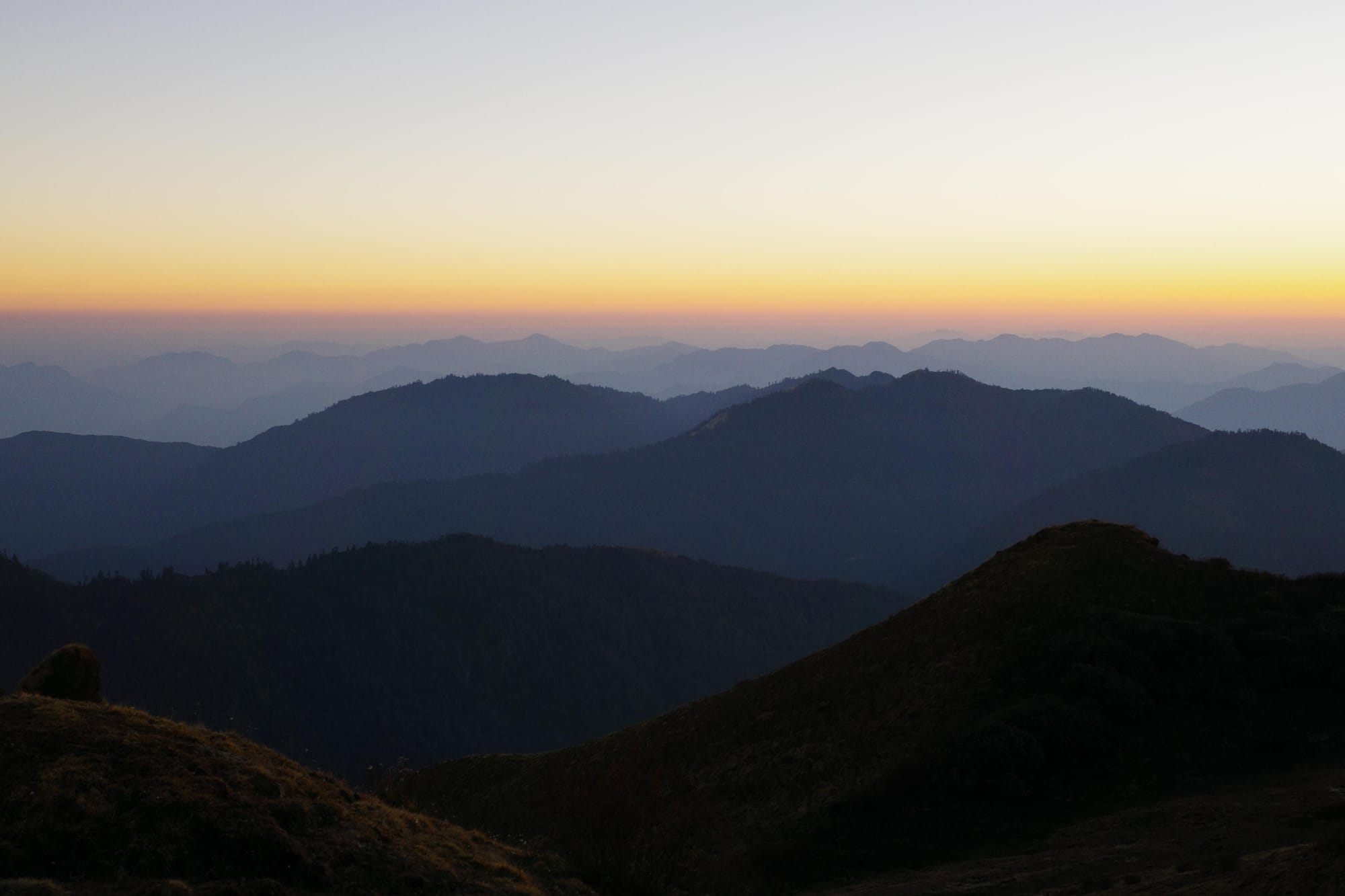
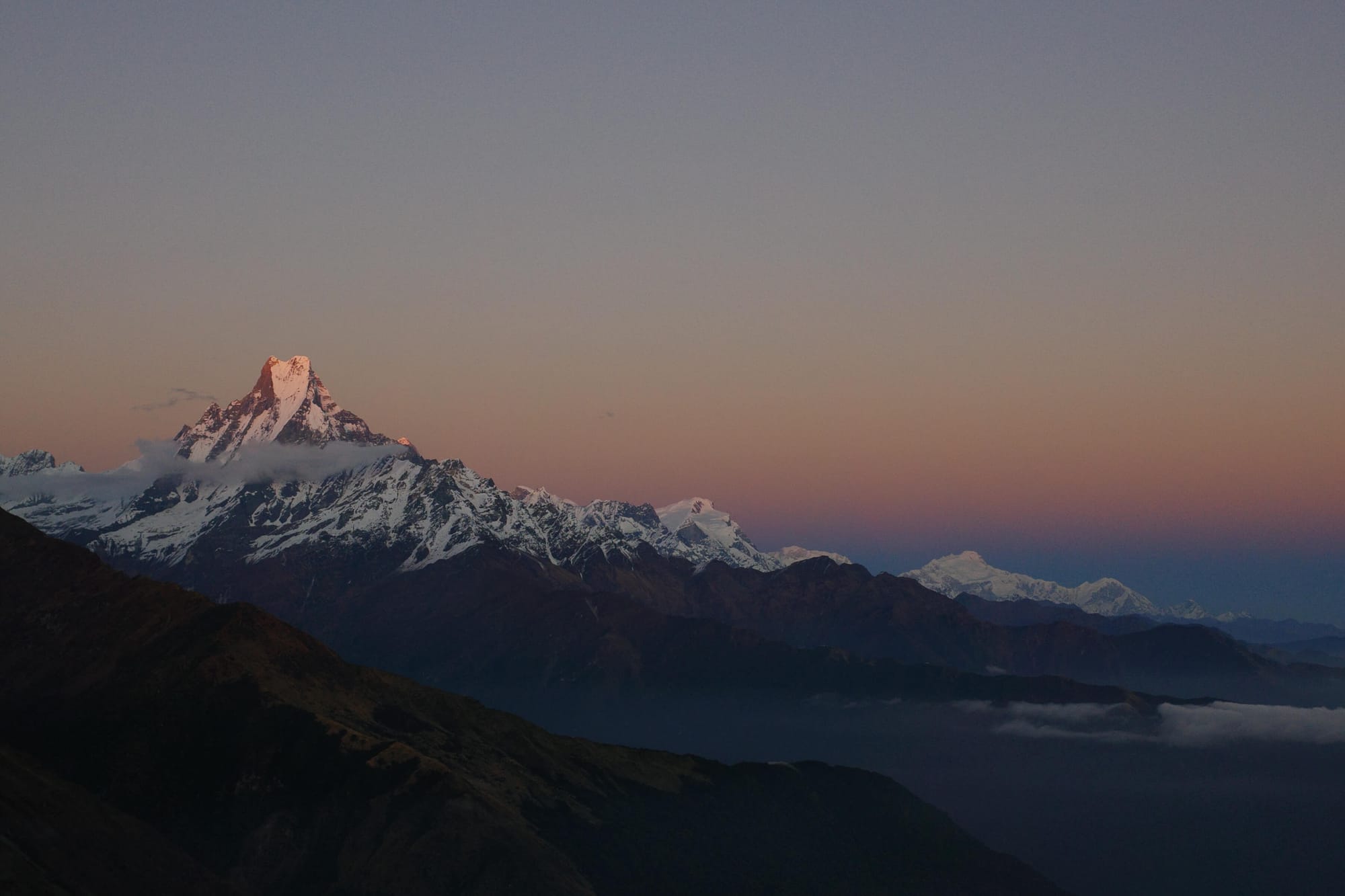
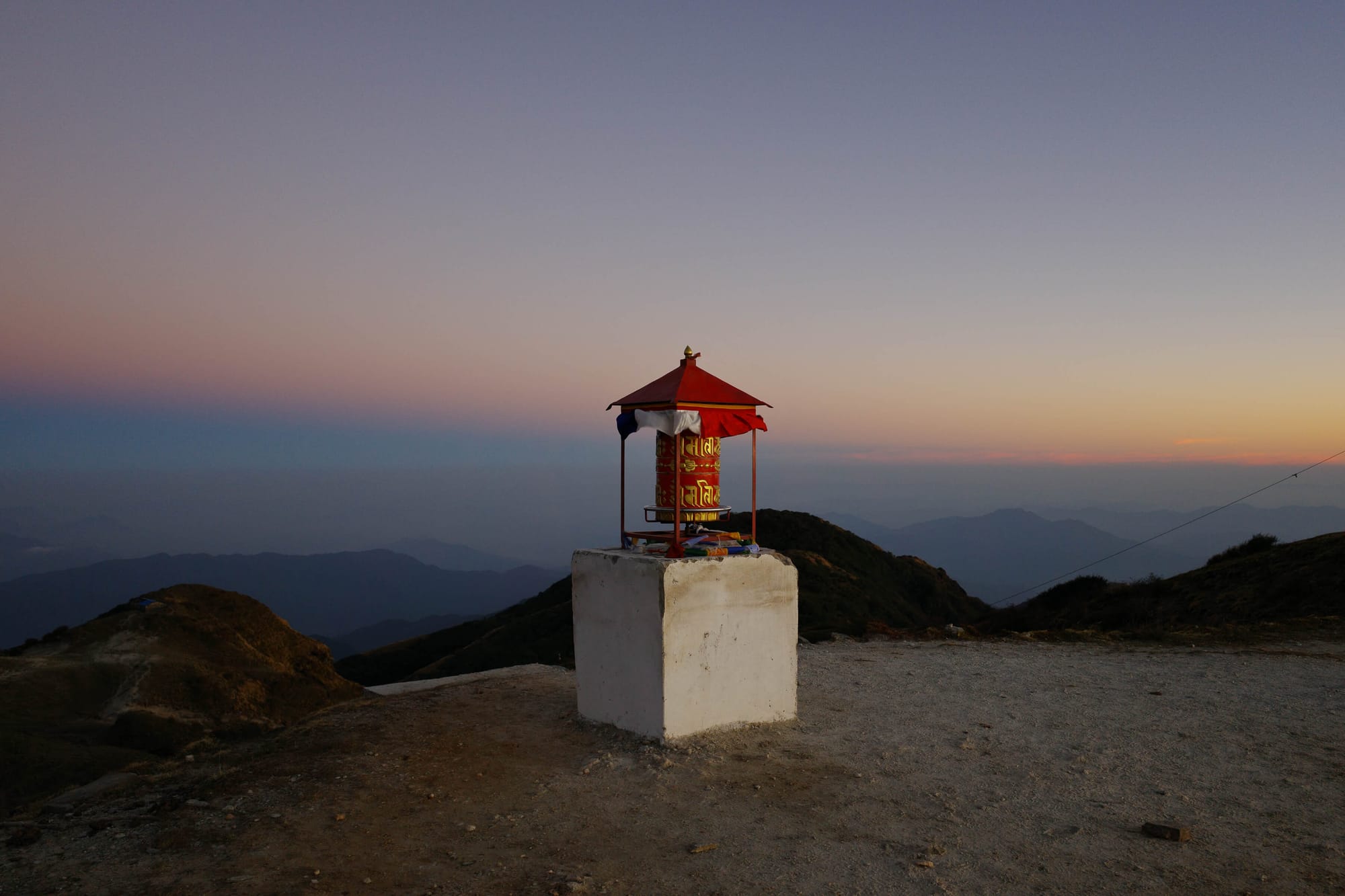
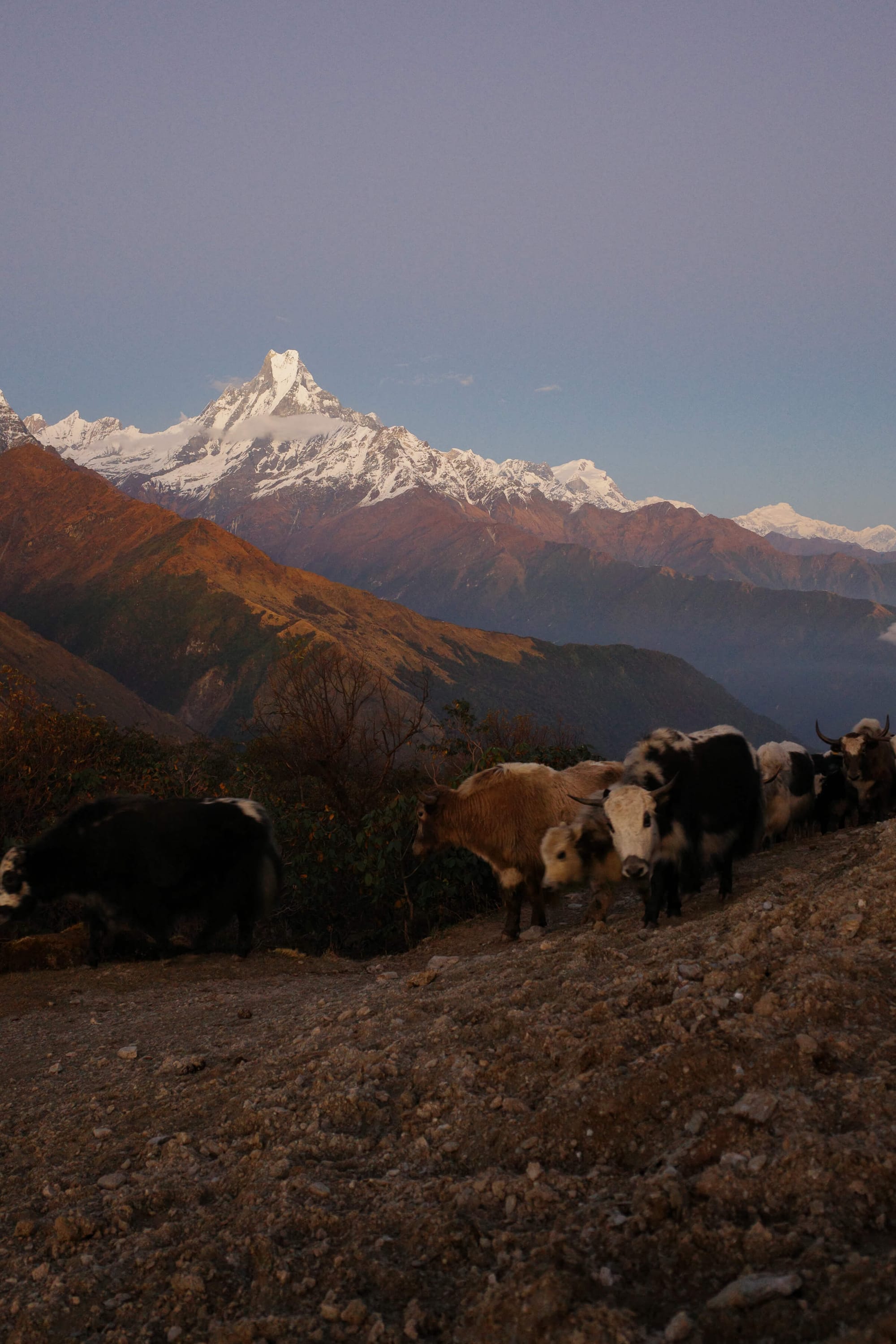
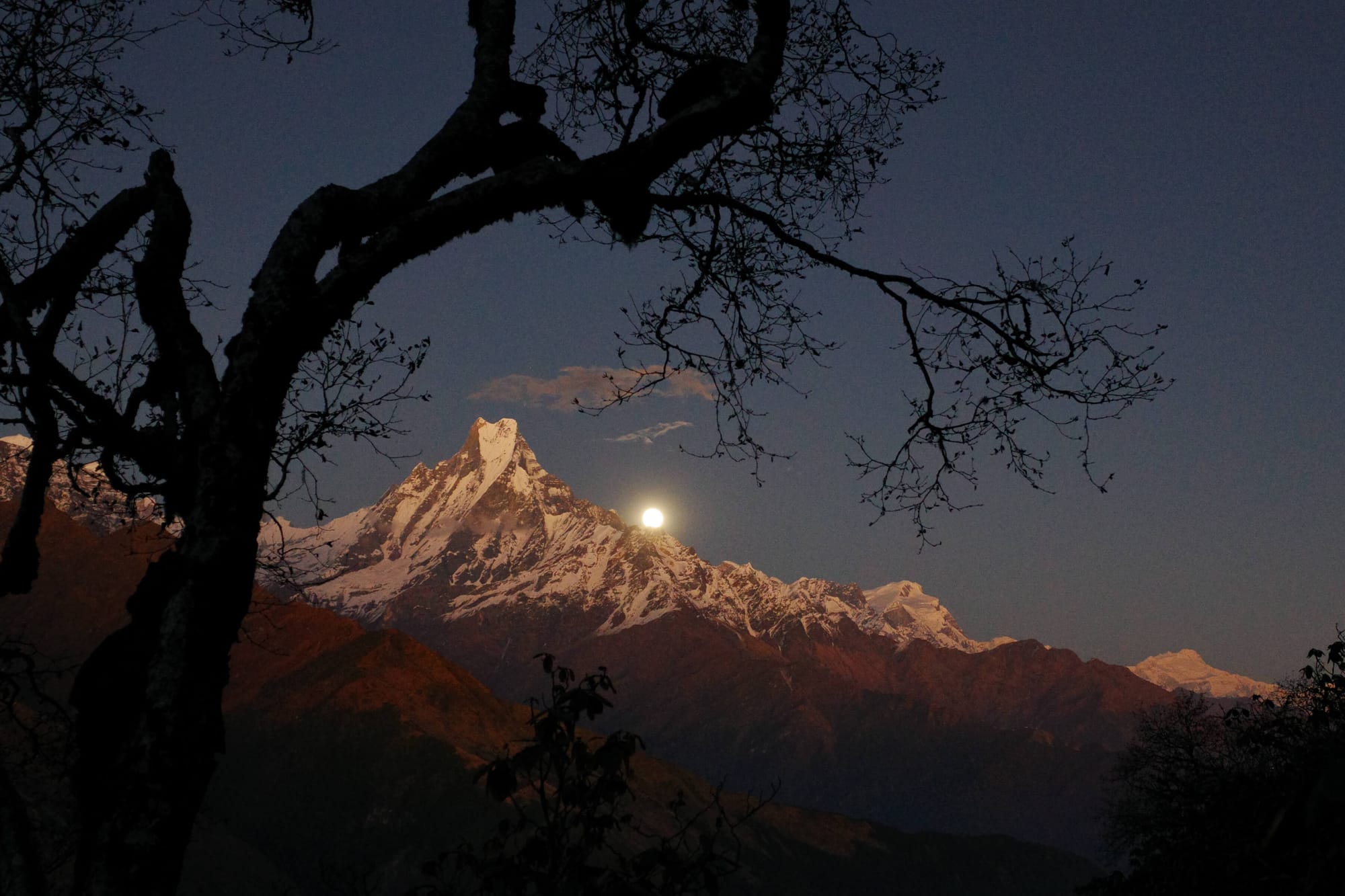
As the sun set behind those rolling mountains, it created a warm yellow horizon that turned red in no time. The white snow-clad mountains turned pink, and then more pink as time went by. Some clouds lingered around the peaks, echoing our own wish to hold on to this scene a little bit longer.
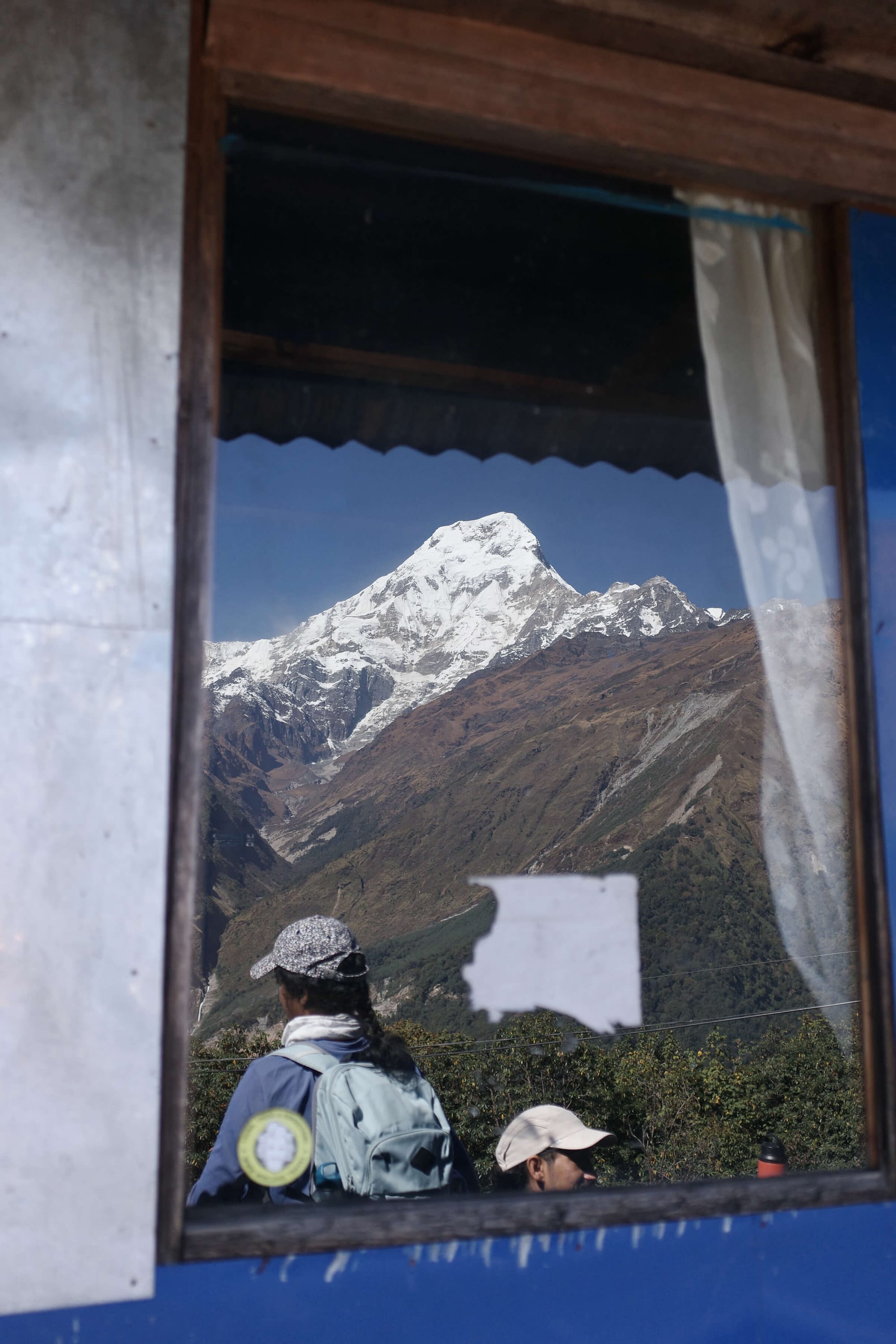
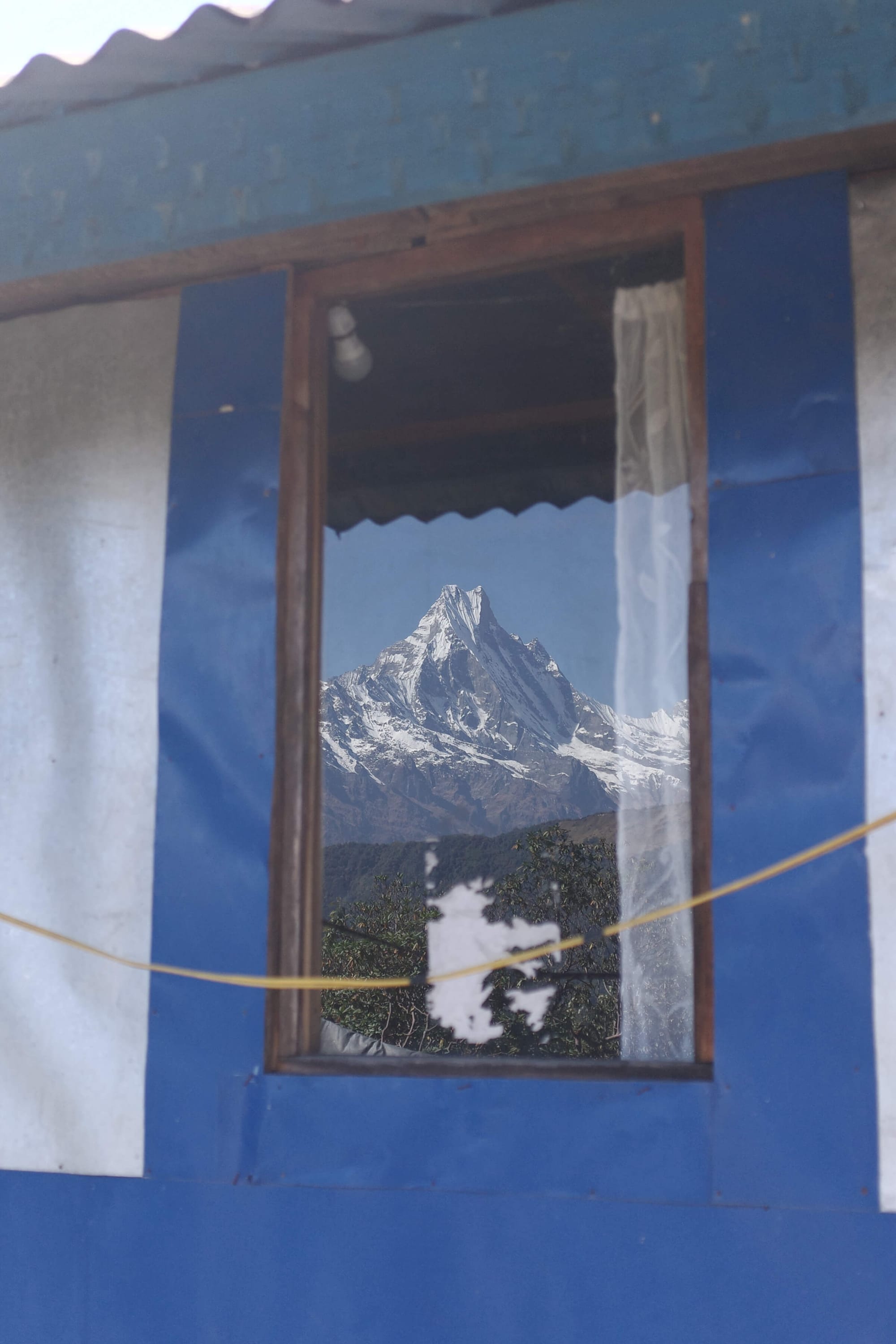
The night was cold. Cold af. It would be the coldest night of this hike. At first, we were all coiled up in the dining hall because there was a fire. Once the fire went out after dinner, we had to go to our rooms. Dobato sits high, on a ridge, so the wind made it worse. The clear sky made it worse still. We put on as many layers as we had and slept under a double layer of blankets. Once in the blanket, forget about nature's call.
Nature called. But nobody answered.
Day 3
Dobato → Chistibang (17,856 steps, 9,900 ft.)
Still in awe from the last evening, and a bit in shock from the last night, we left for Chistibang. The Annapurnas were now a little hidden from sight, and Dhaulagiri was in our main view. The walk was easier, as we had all found our rhythm and the route was without many undulations. Most of the walk was on a ridge (not the Khopra Ridge), and the rest was in the same forest.
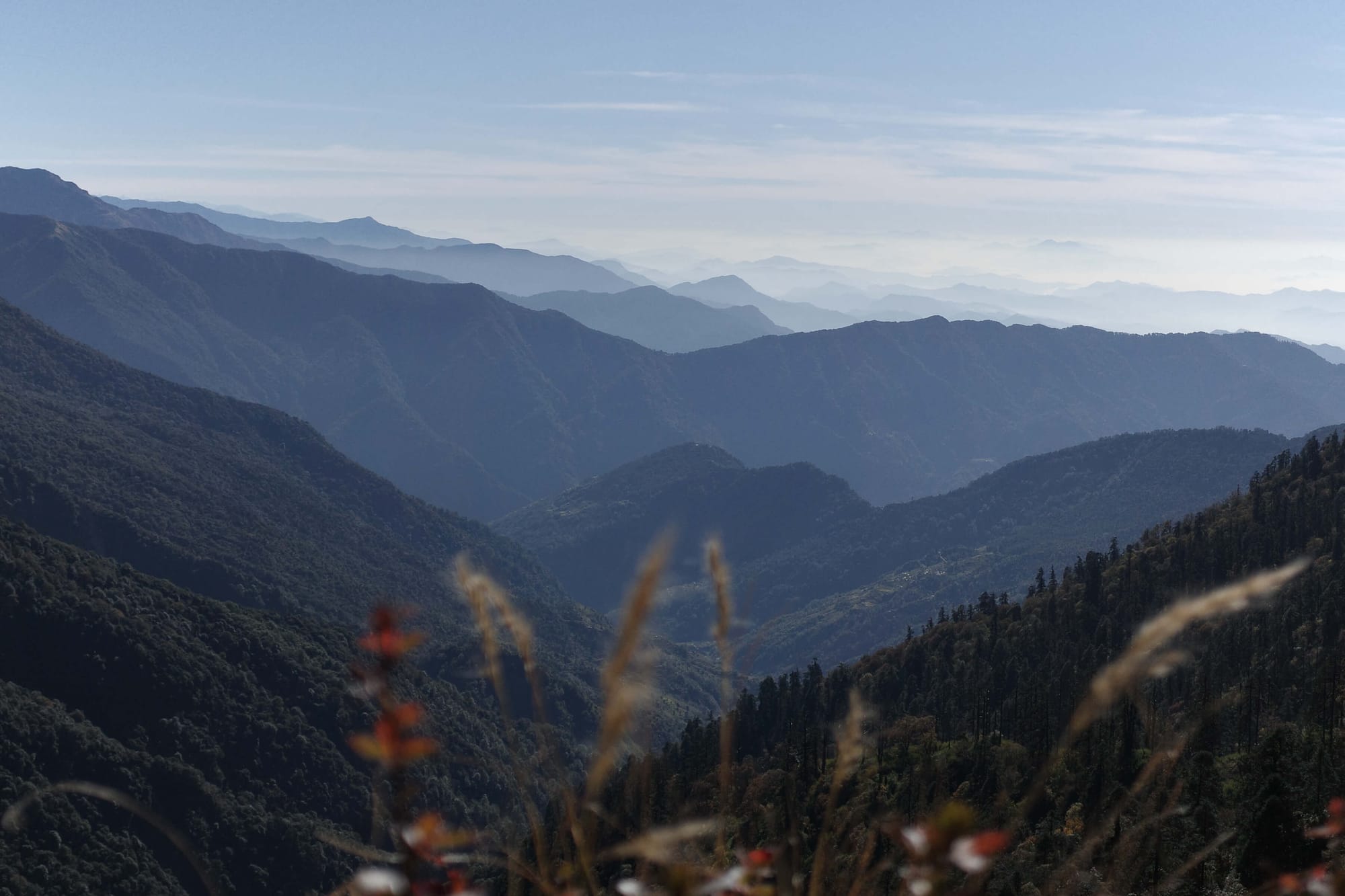
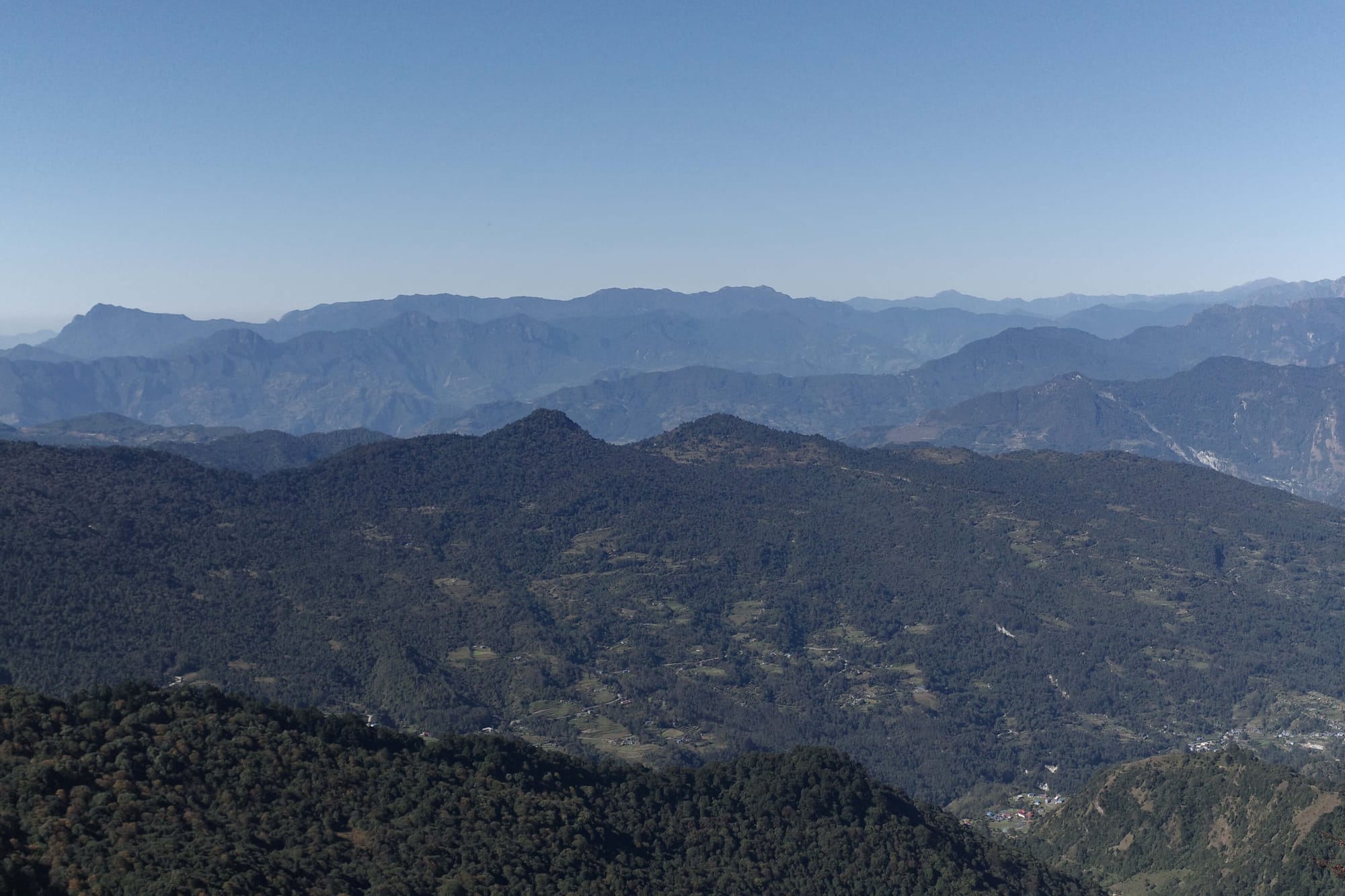
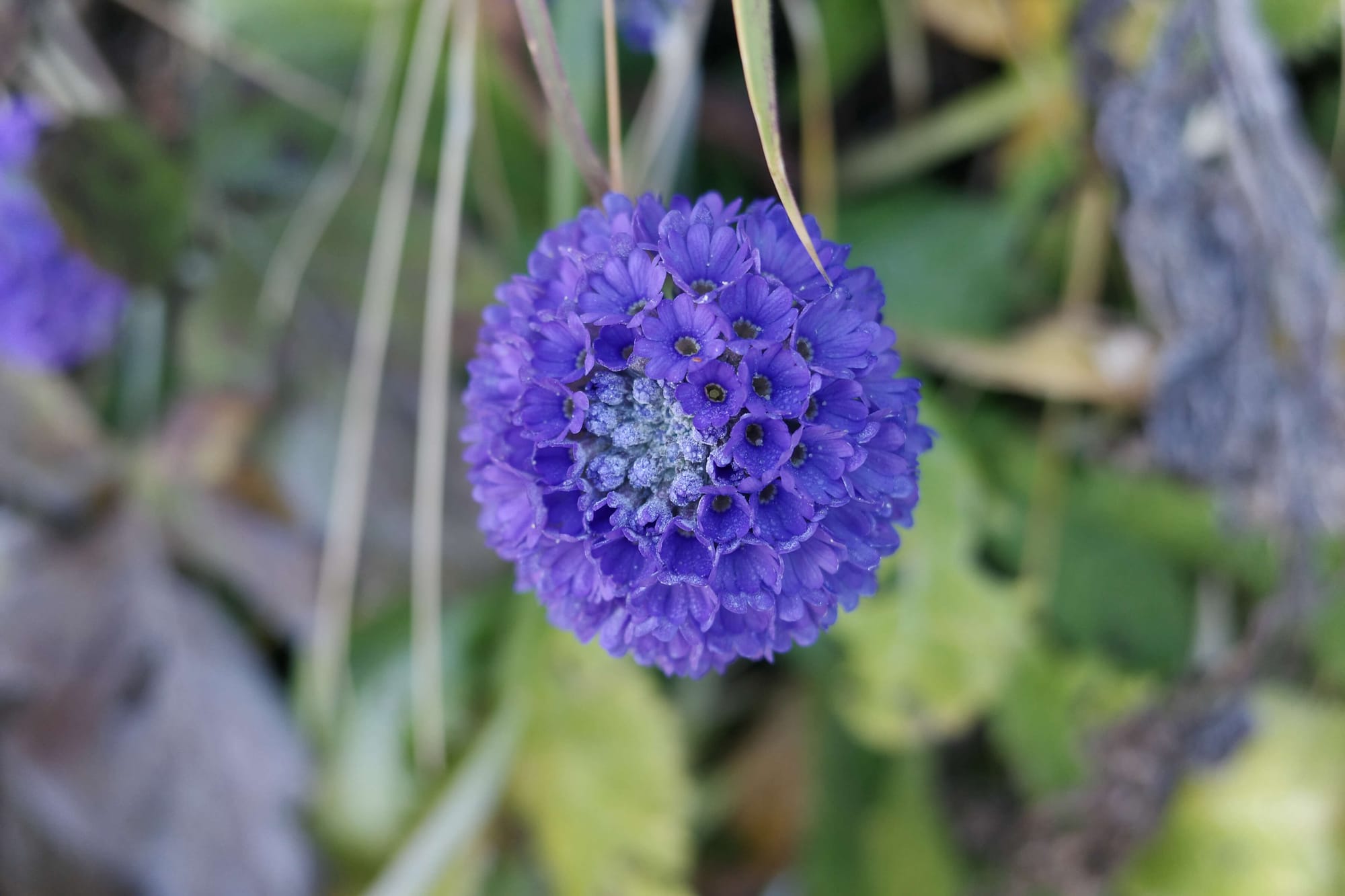
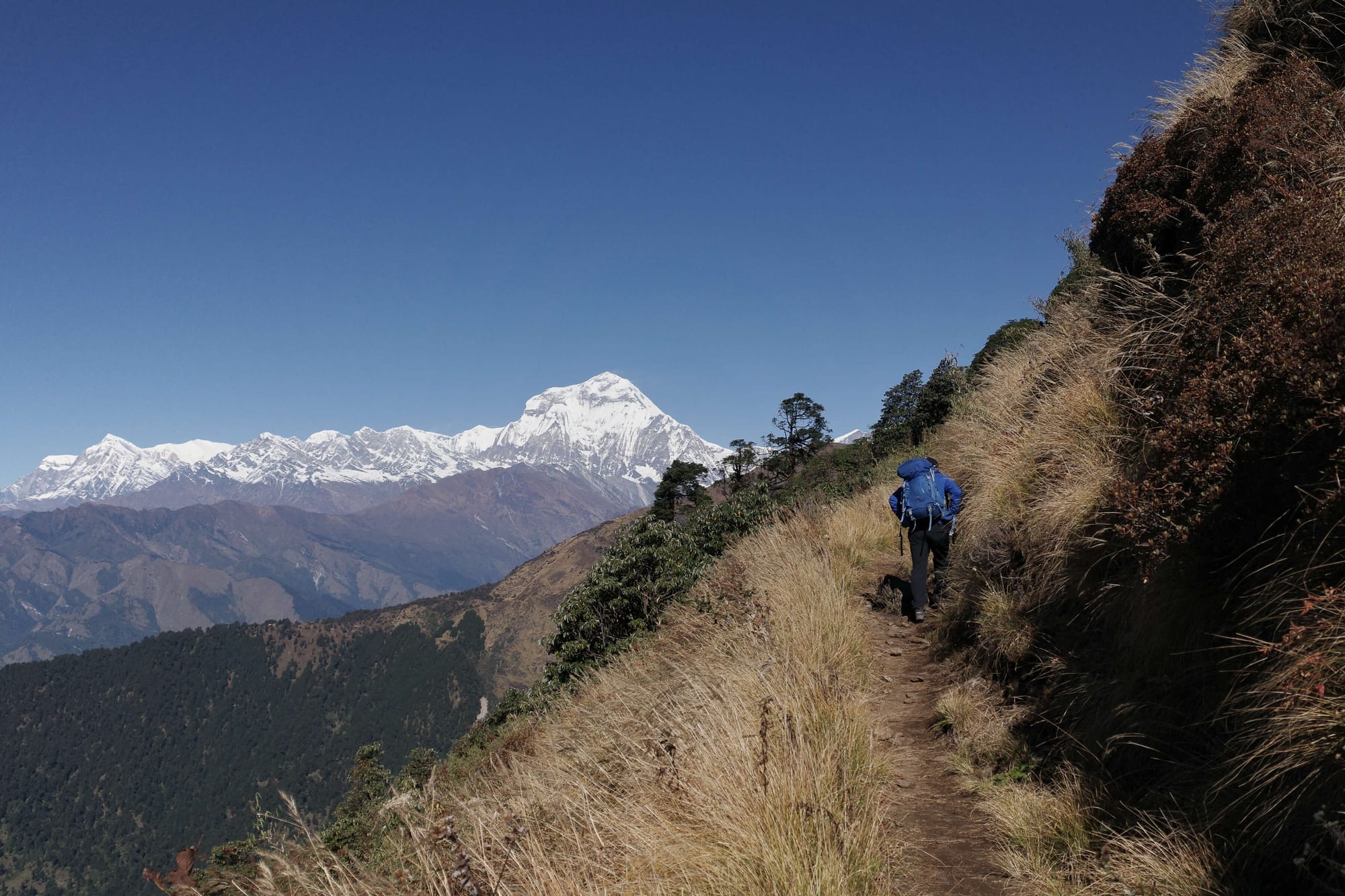
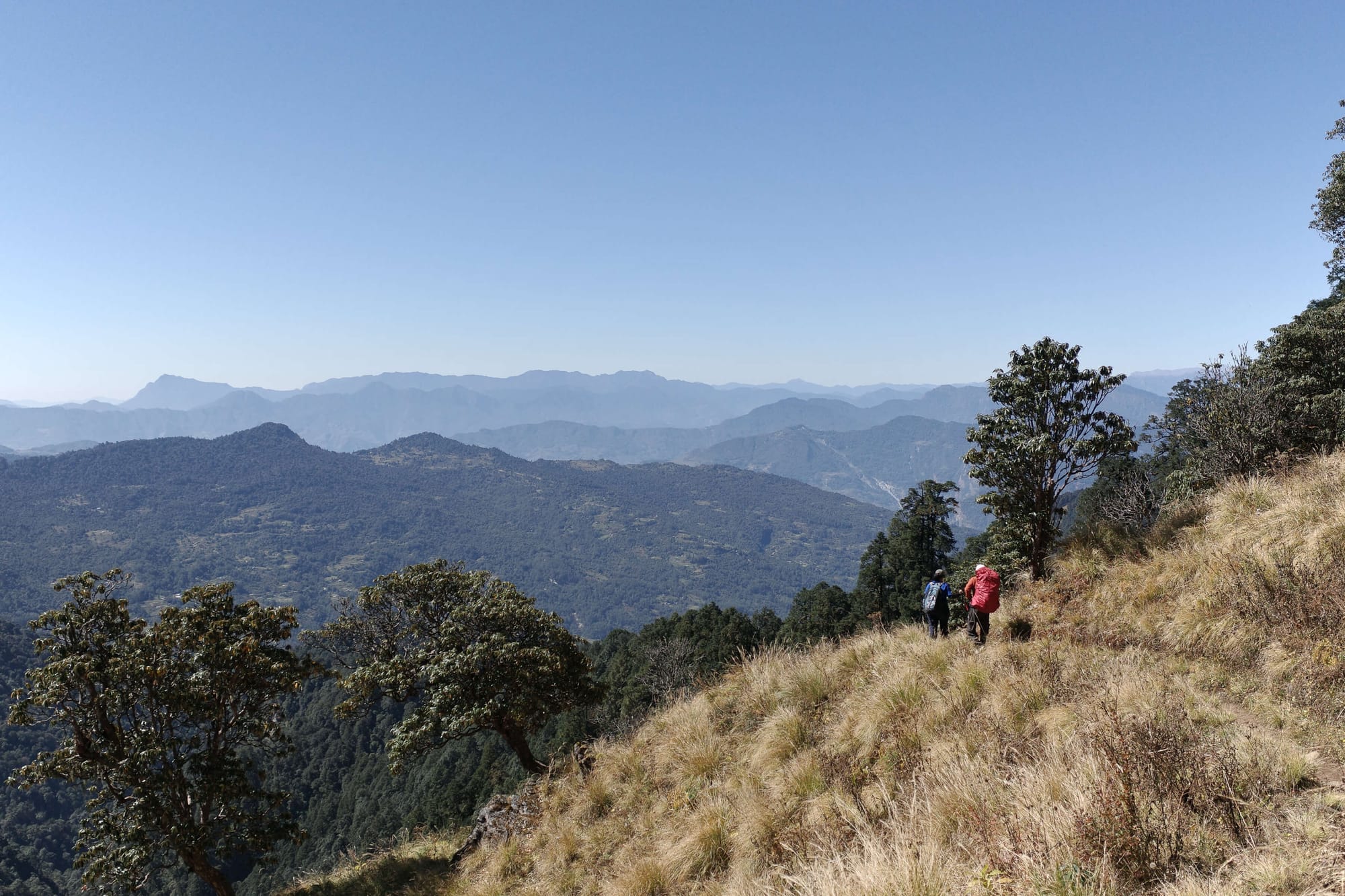
Easy walks like this are made for talking to Subodh. If you strike up a conversation with him about mountains or poetry, you're in for a treat. I would give him prompts, and a few thousand steps later, he would come back with poetry. Sometimes others' poetry, and sometimes his own, like this:
पेड़ से गिरते हुए पत्तों को जो देखा तो ये ख़याल आया,
बहारों के दिन भी गिनती के होते हैं।
– Subodh
Day 4
Chistibang → Khopra Ridge (15,964 steps, 12,000 ft.)
By now, the group had had enough of dal bhat. Anything but dal bhat. Cardboard over dal bhat. Just not dal bhat.
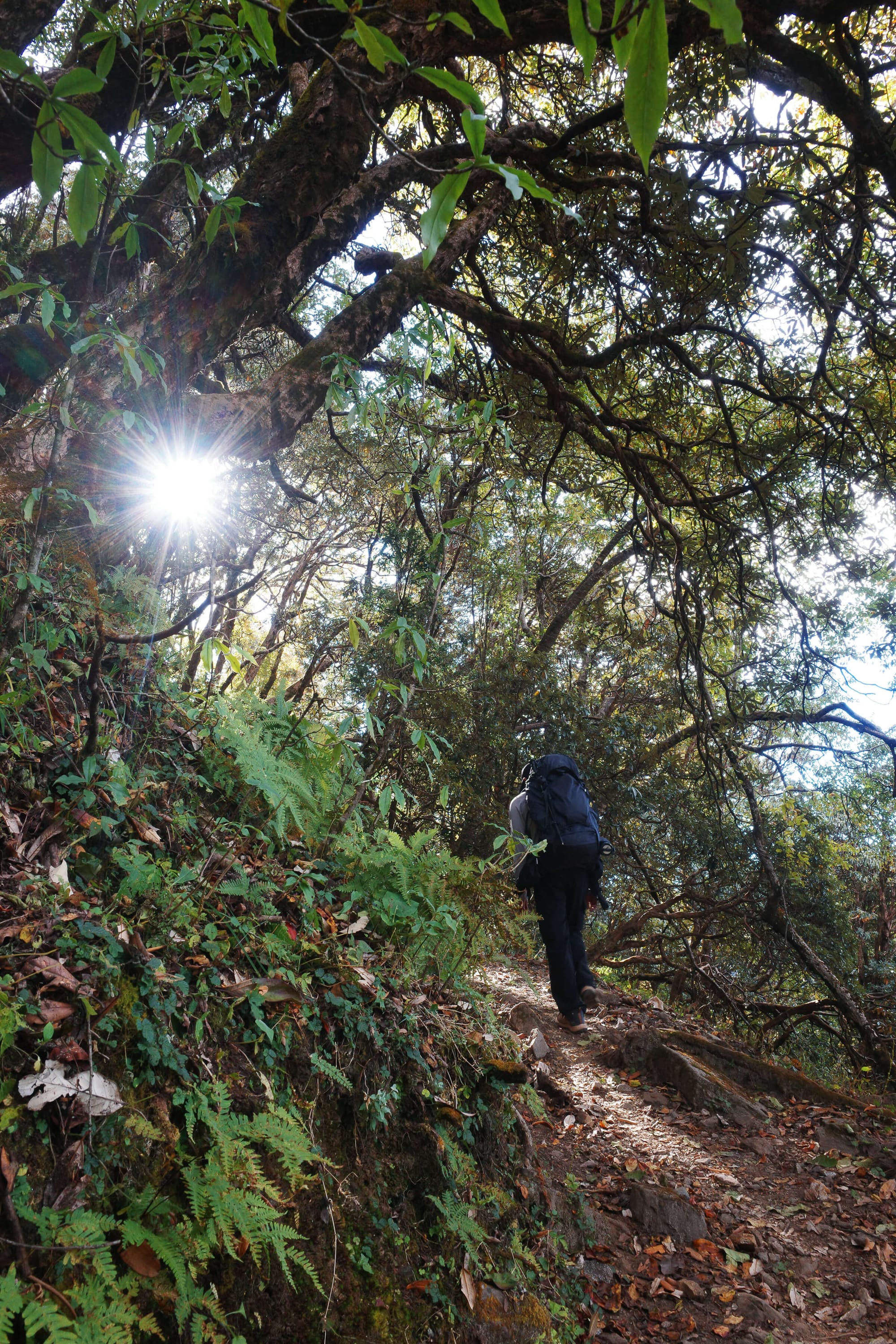
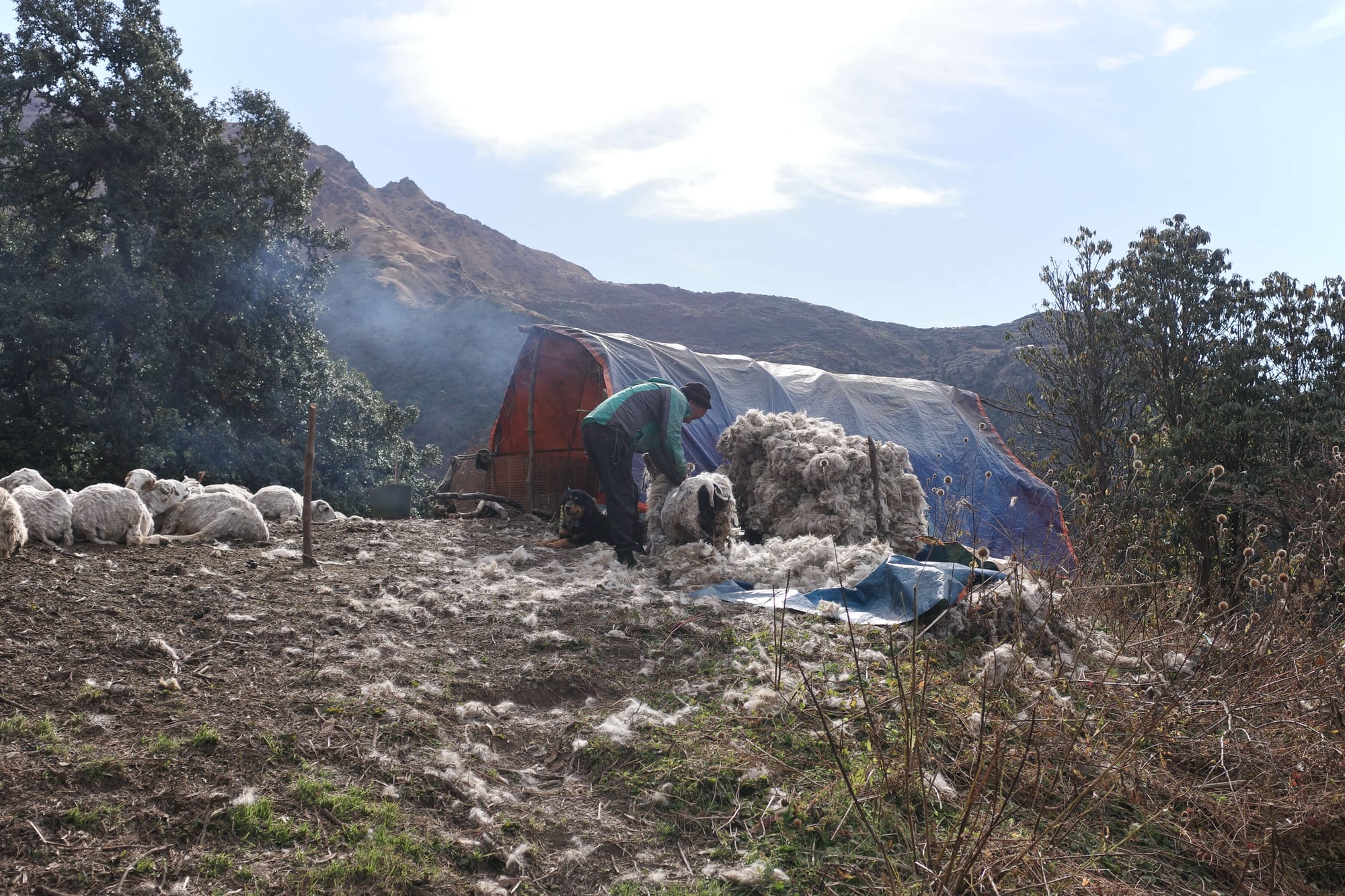
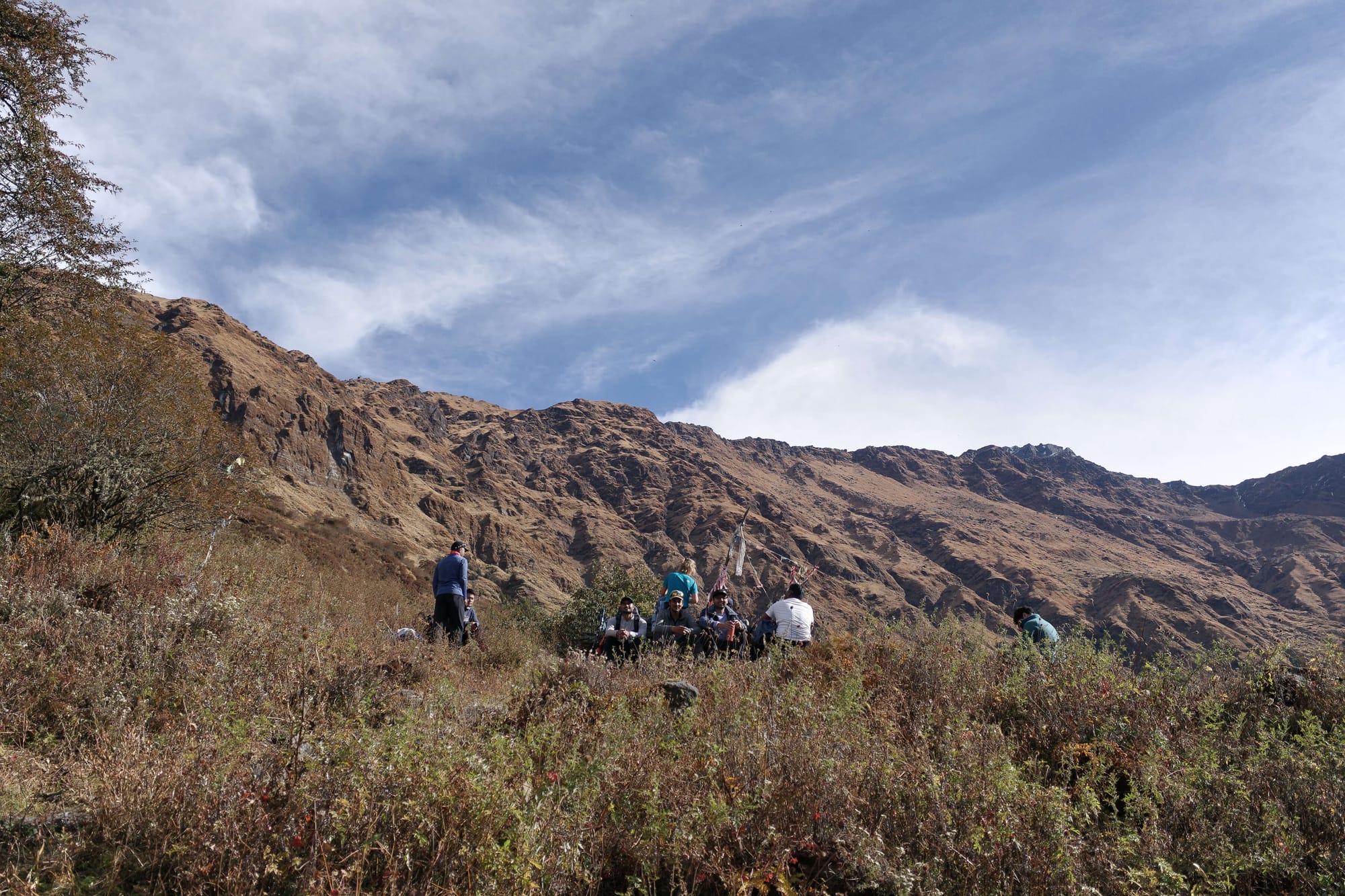
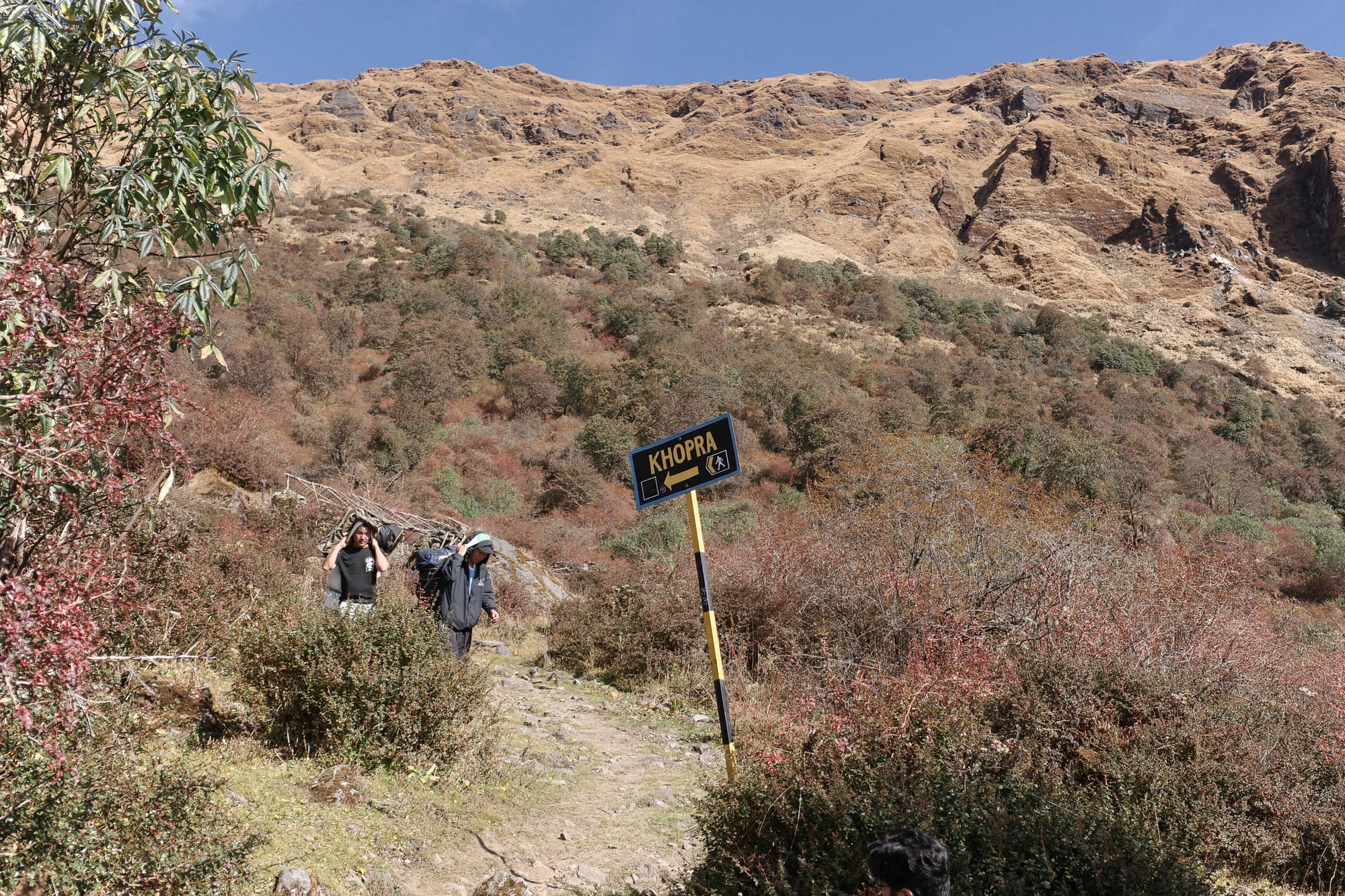
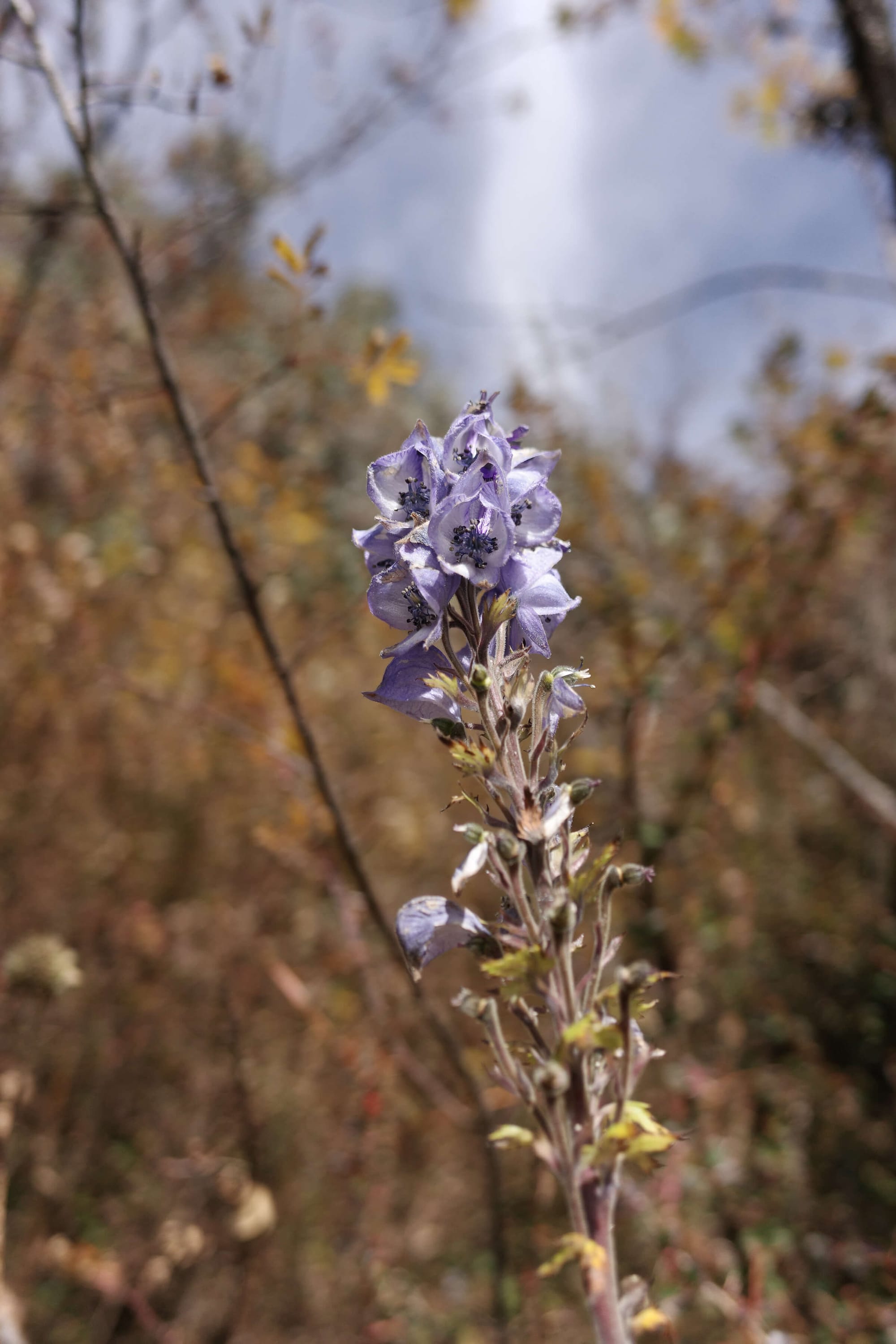
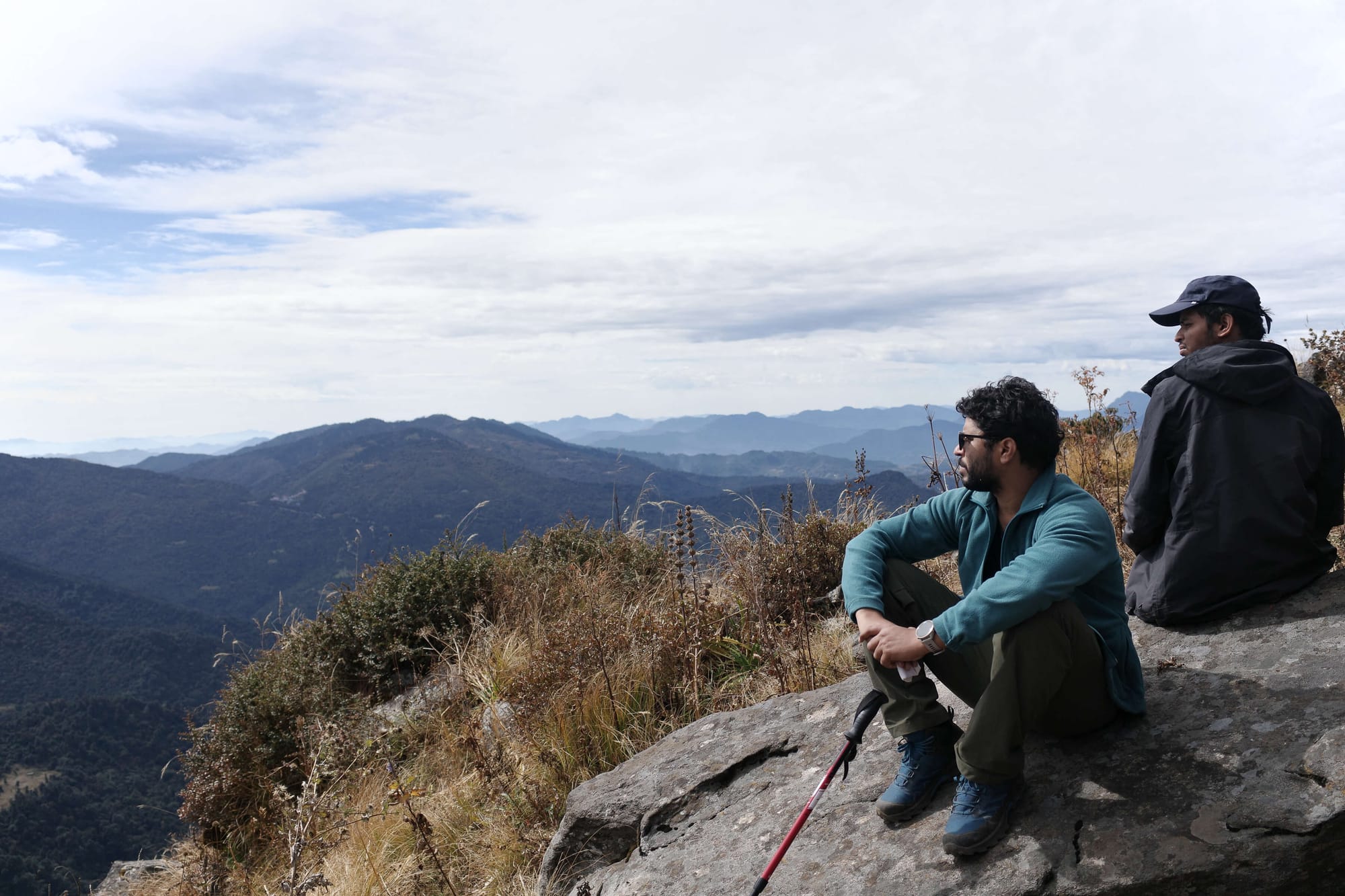
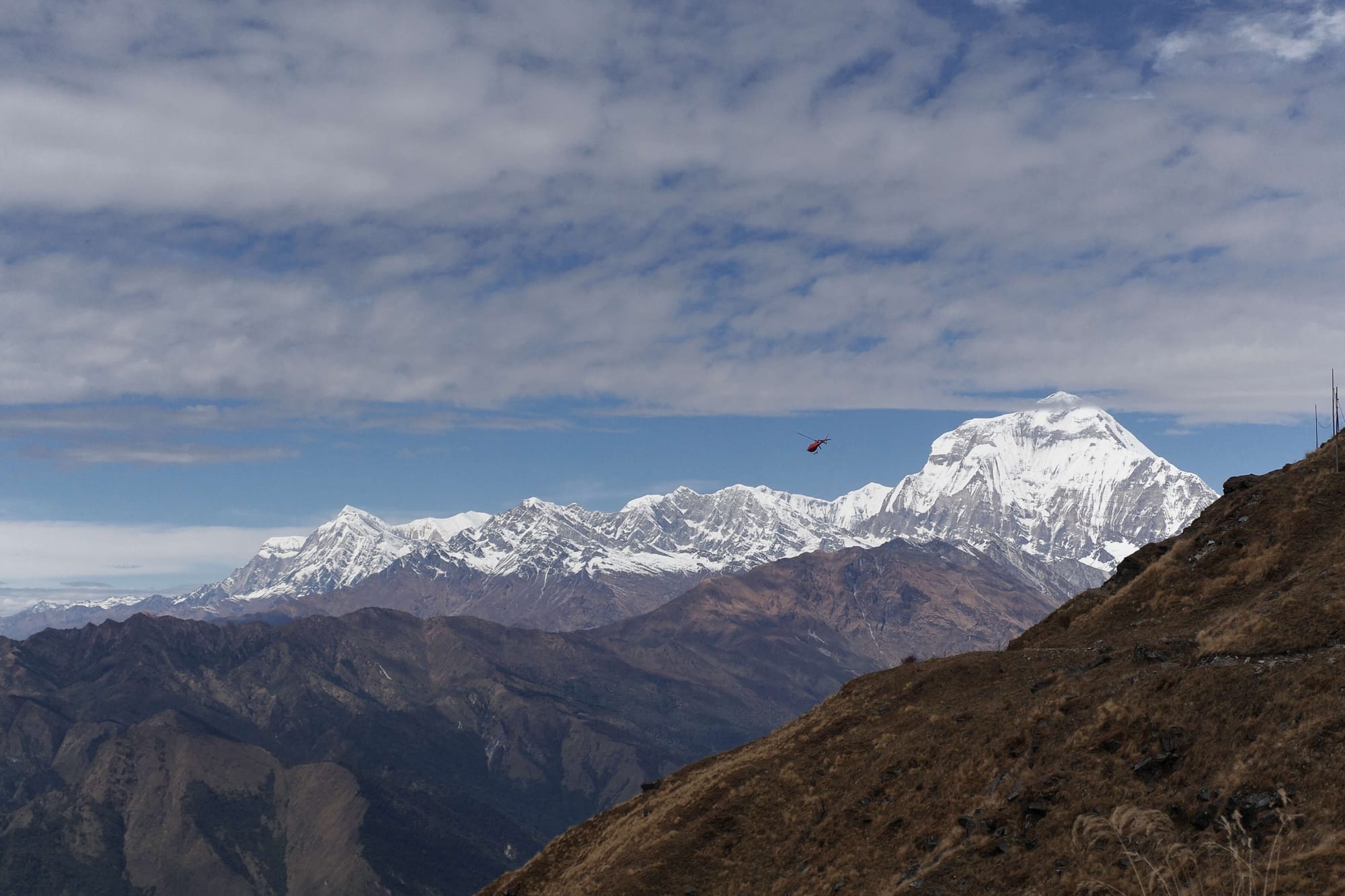
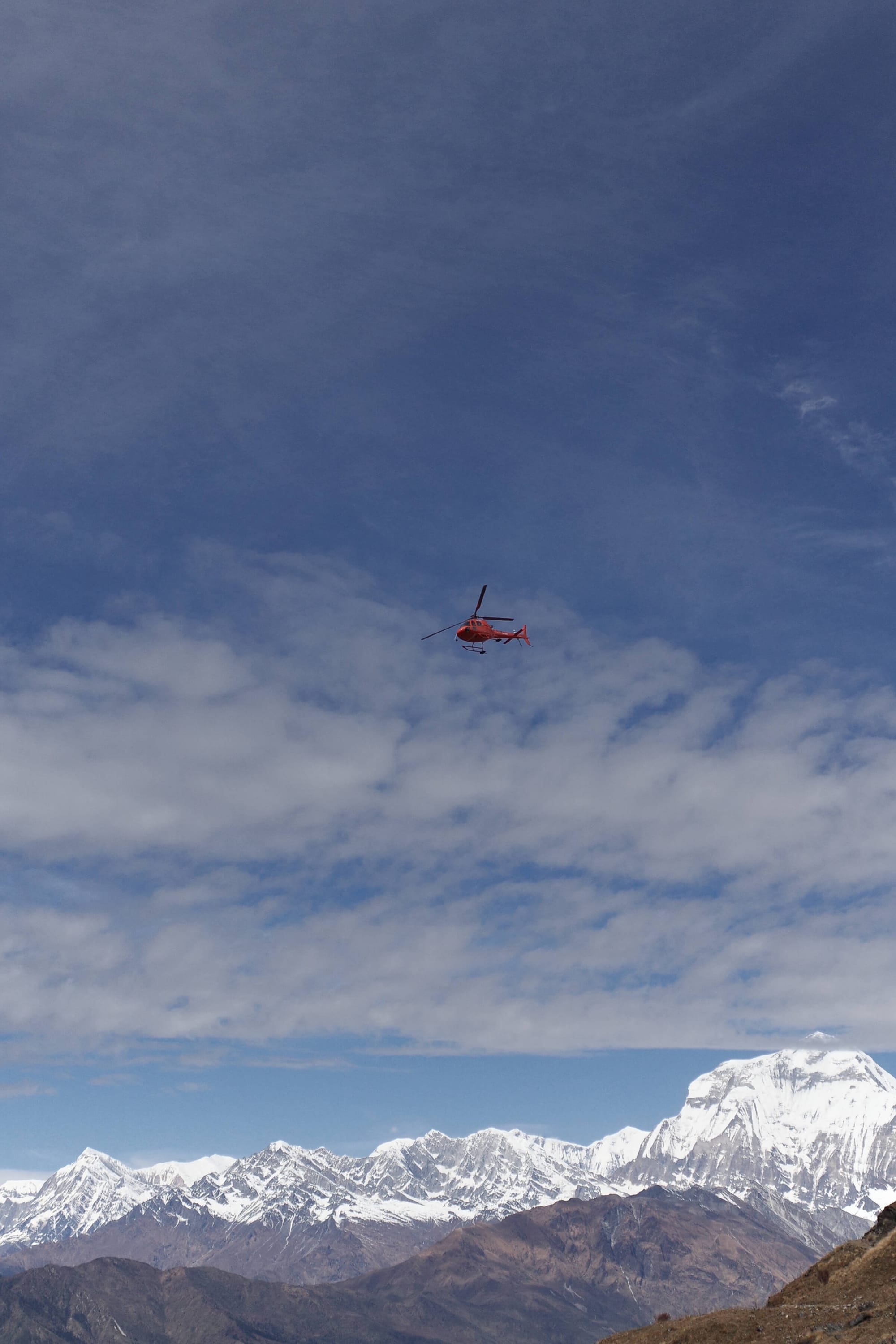
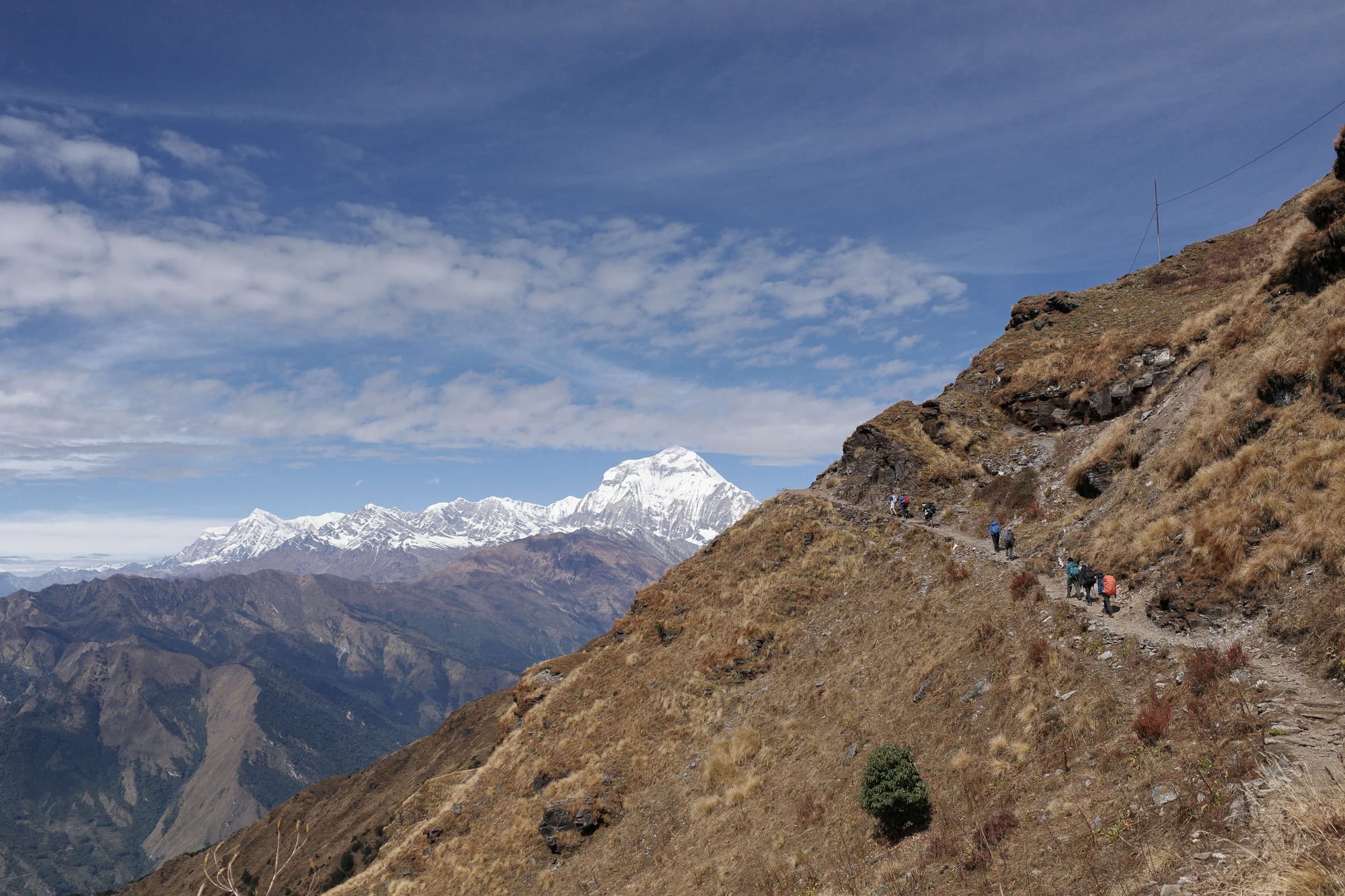
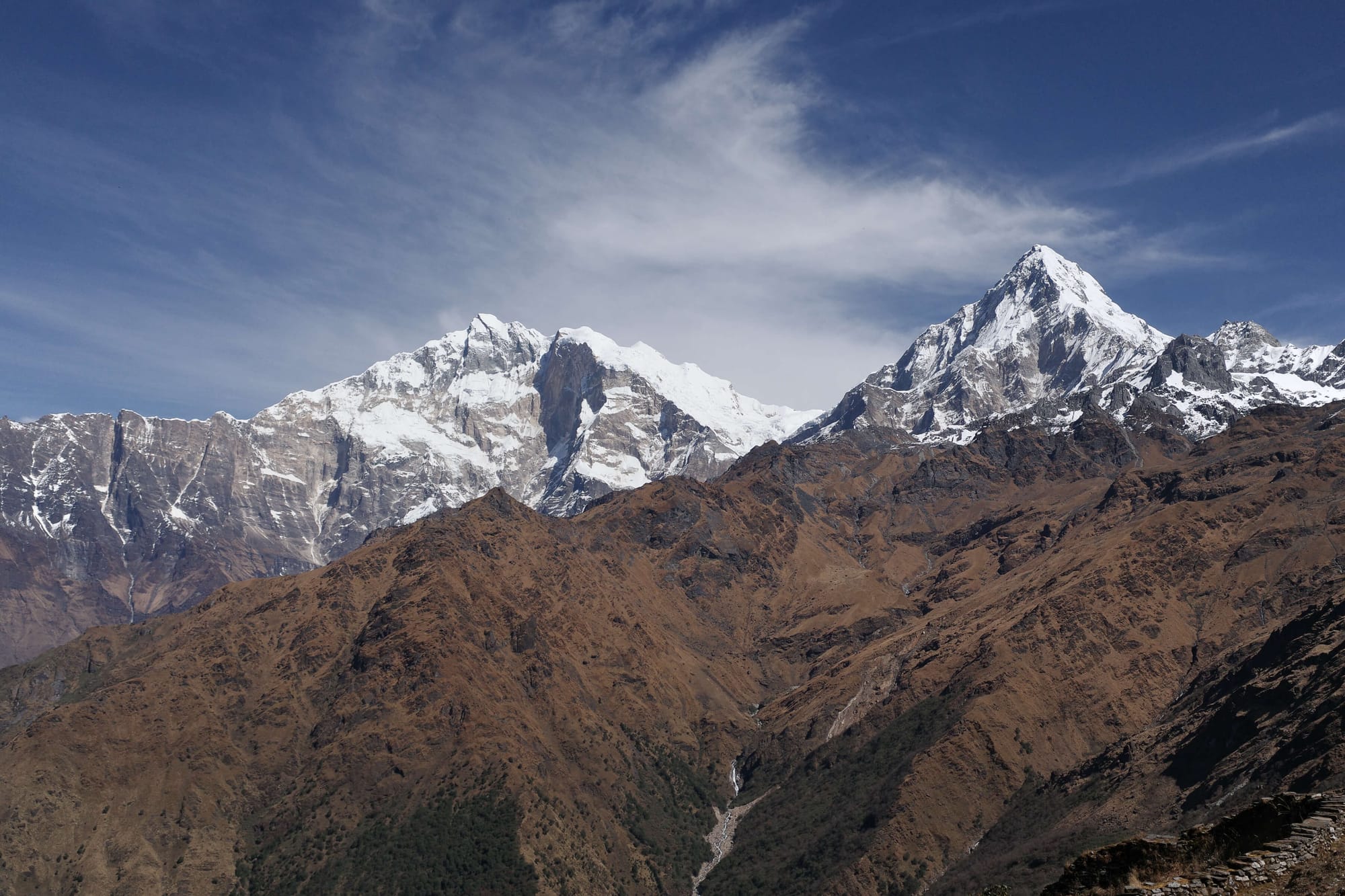
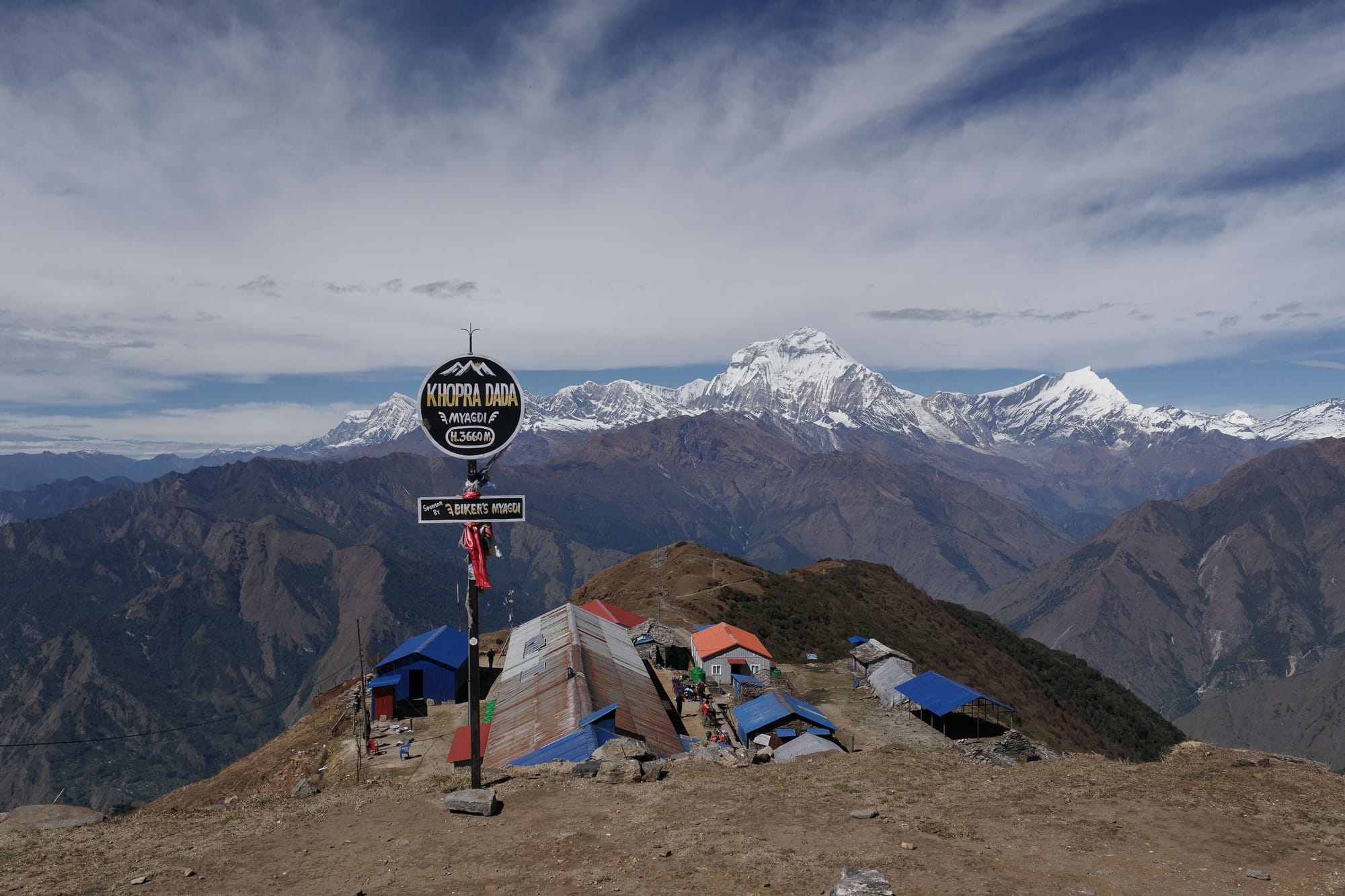
From Chistibang, Khopra Ridge isn't that far, but it seemed far while walking because we would be gaining about 2,100 ft. With every step, the breath became lighter and harder at the same time. We had to negotiate every ascent with our backpacks. It turns out it's not a good idea to skip leg day at the gym.
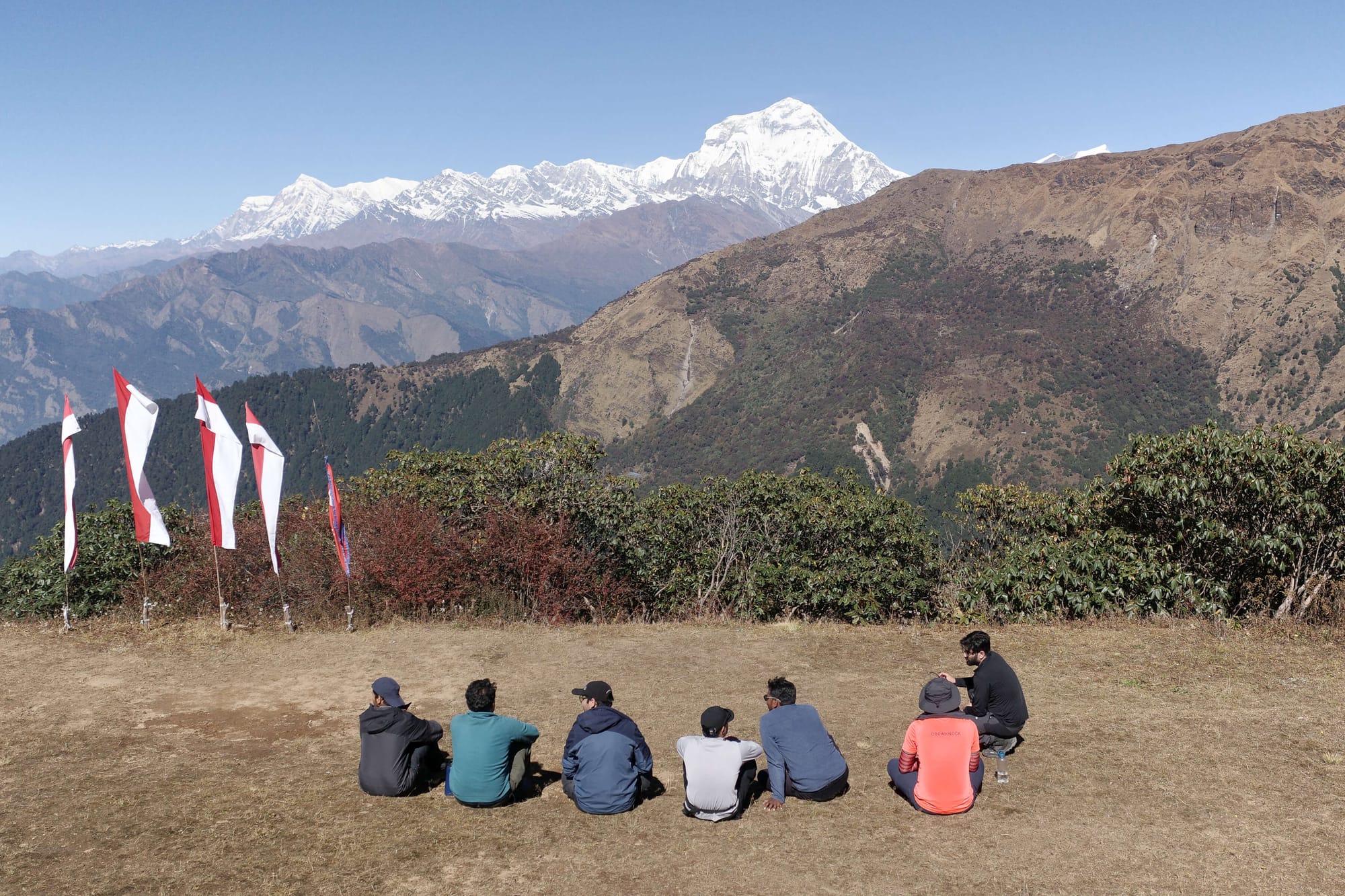
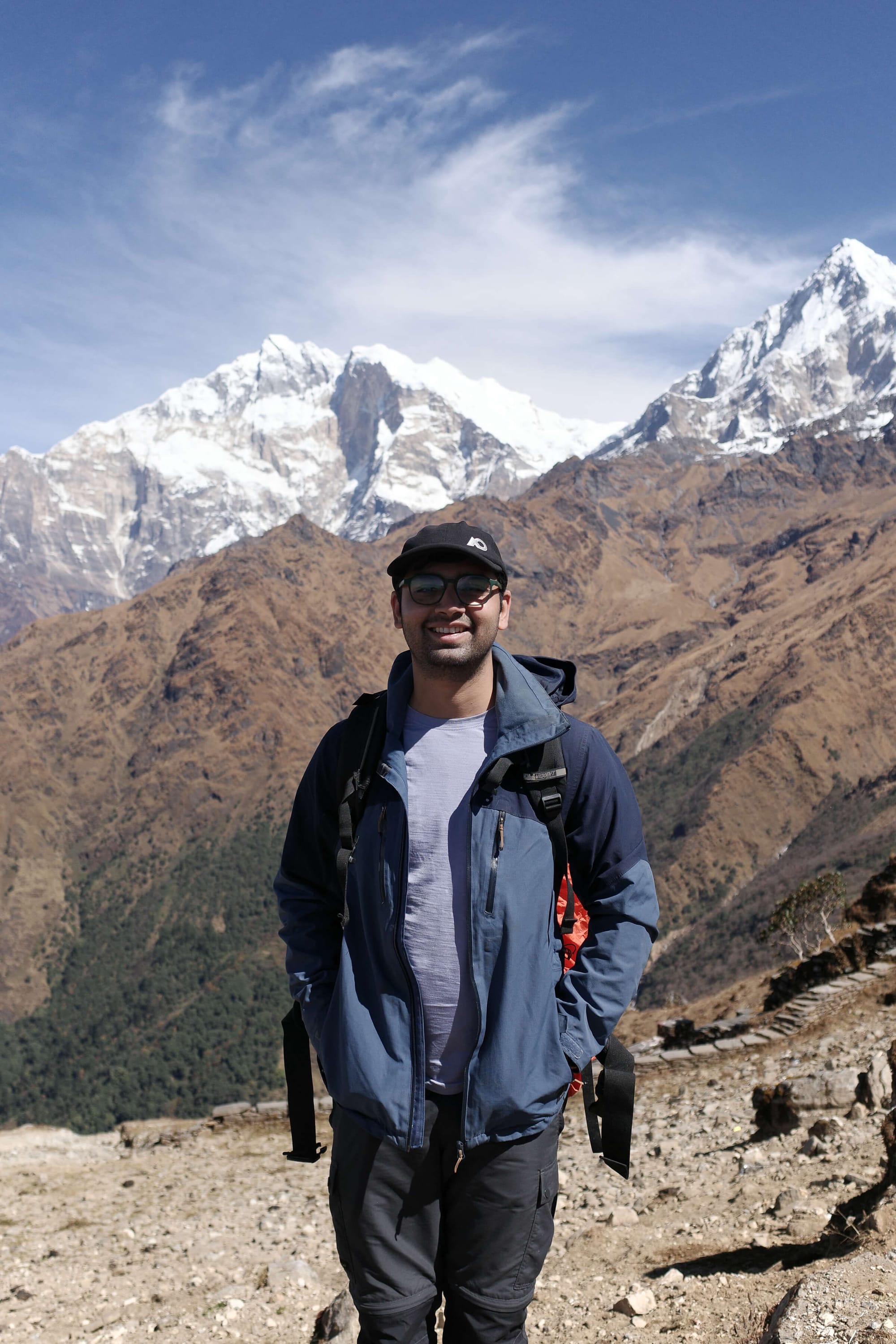
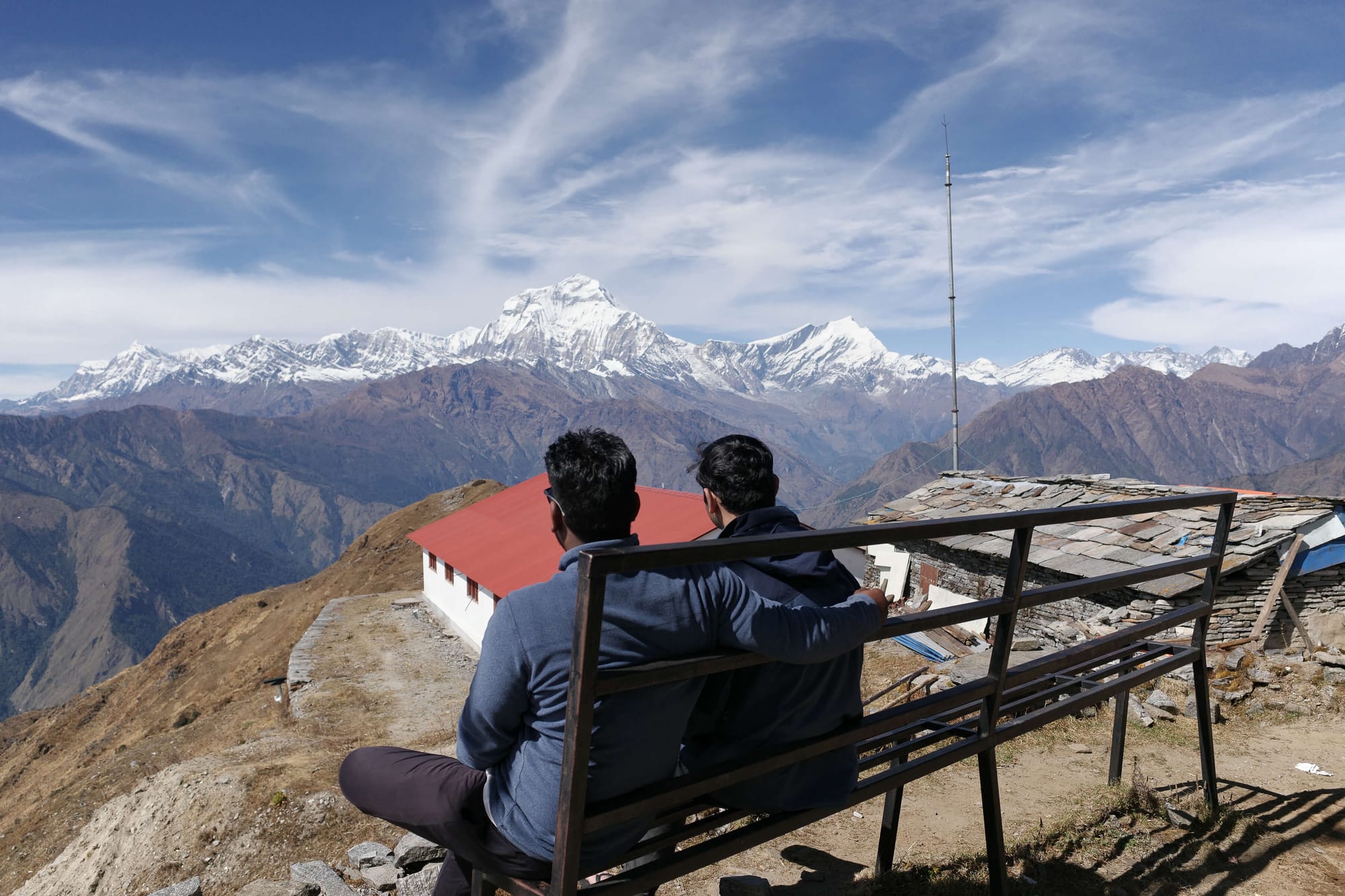
After huffing and a bit of puffing, when we finally reached Khopra Ridge, we had to pick our jaws up from the floor. The weather gods treated us to unobstructed views of Dhaulagiri in front, and the Nilgiris and Annapurnas on the right. We could not believe our luck, or our eyes. People in our group who had walked this last year weren't able to see the Annapurnas because of bad weather. So even for them, this walk was well worth it again.
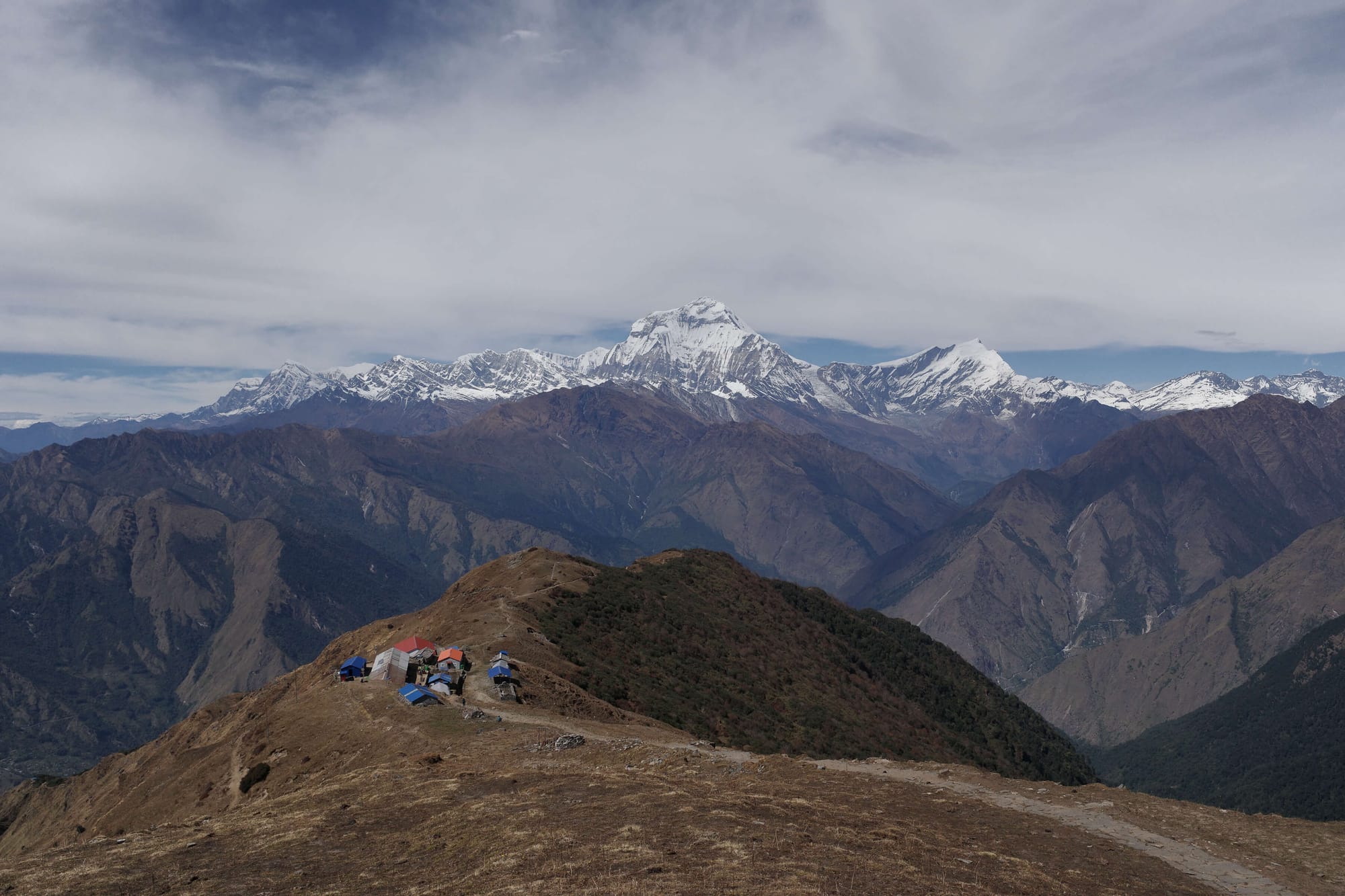
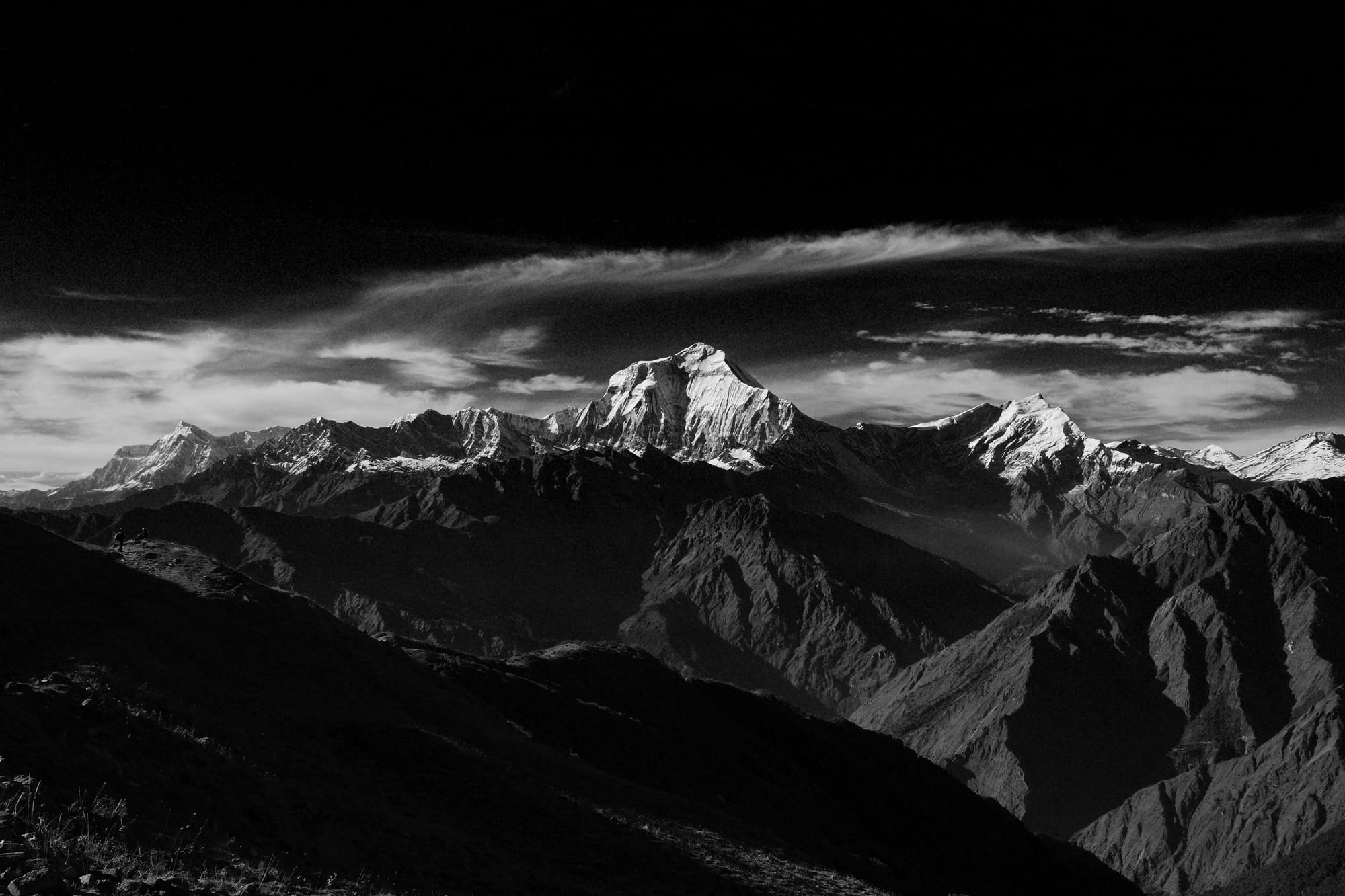
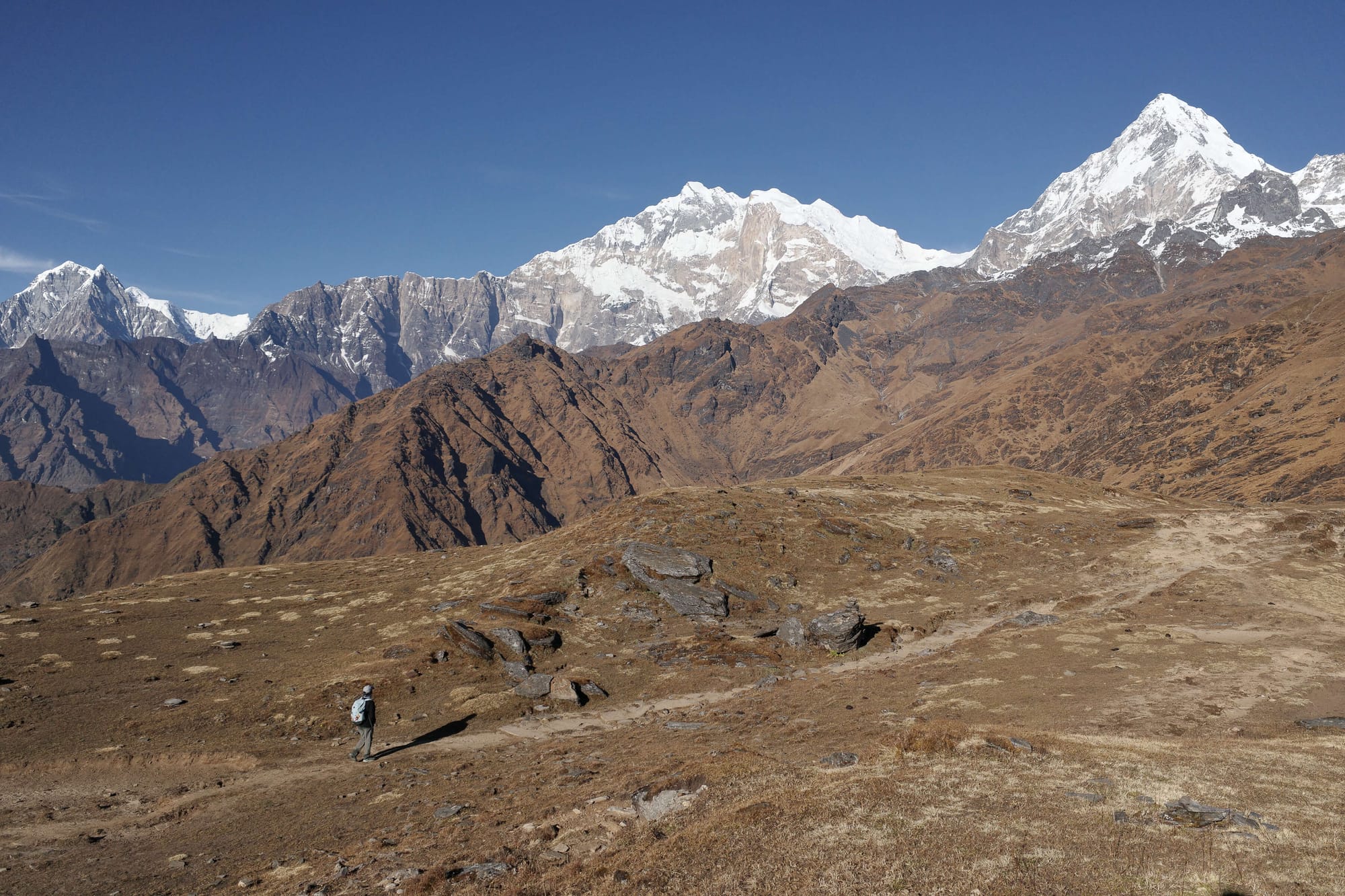
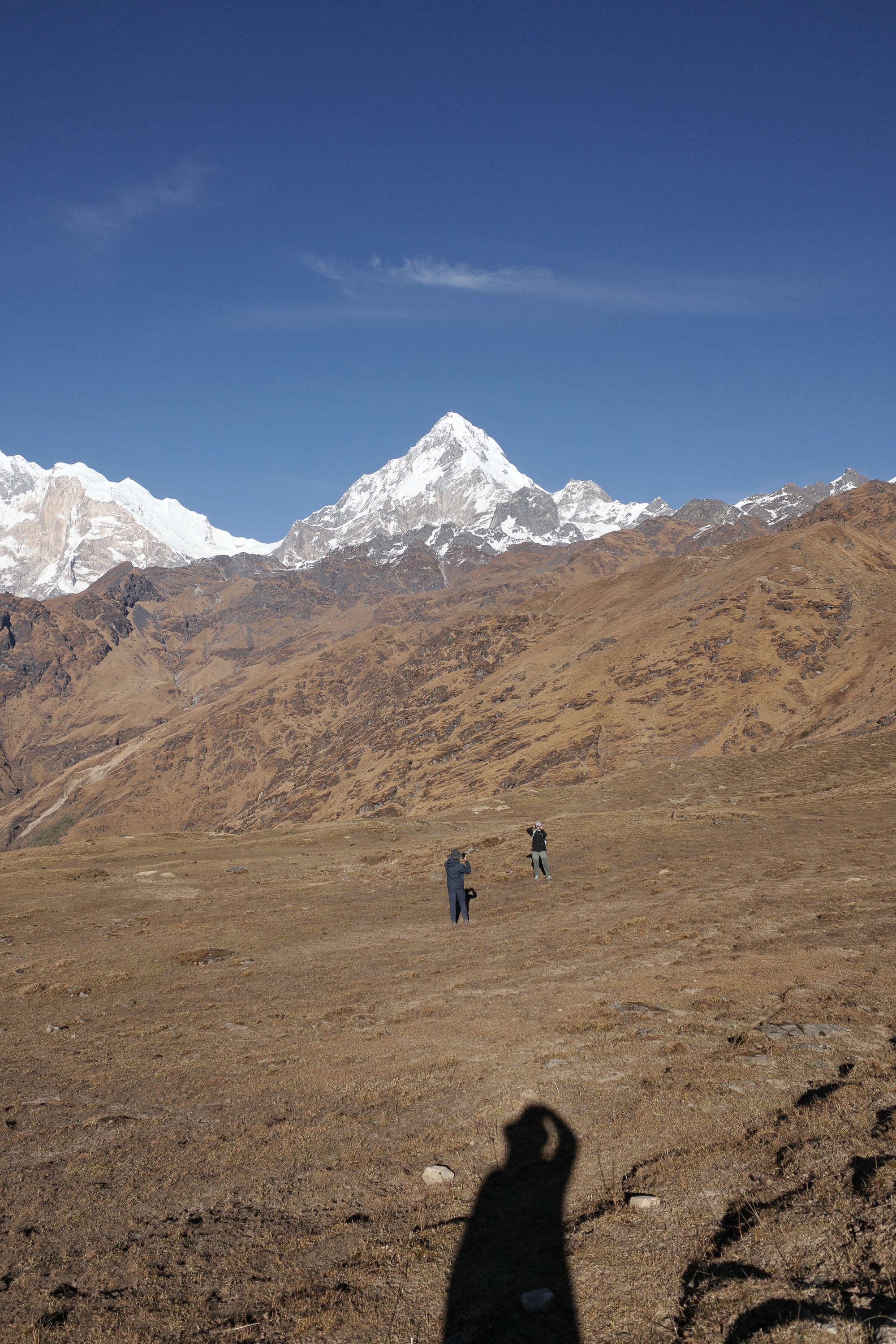
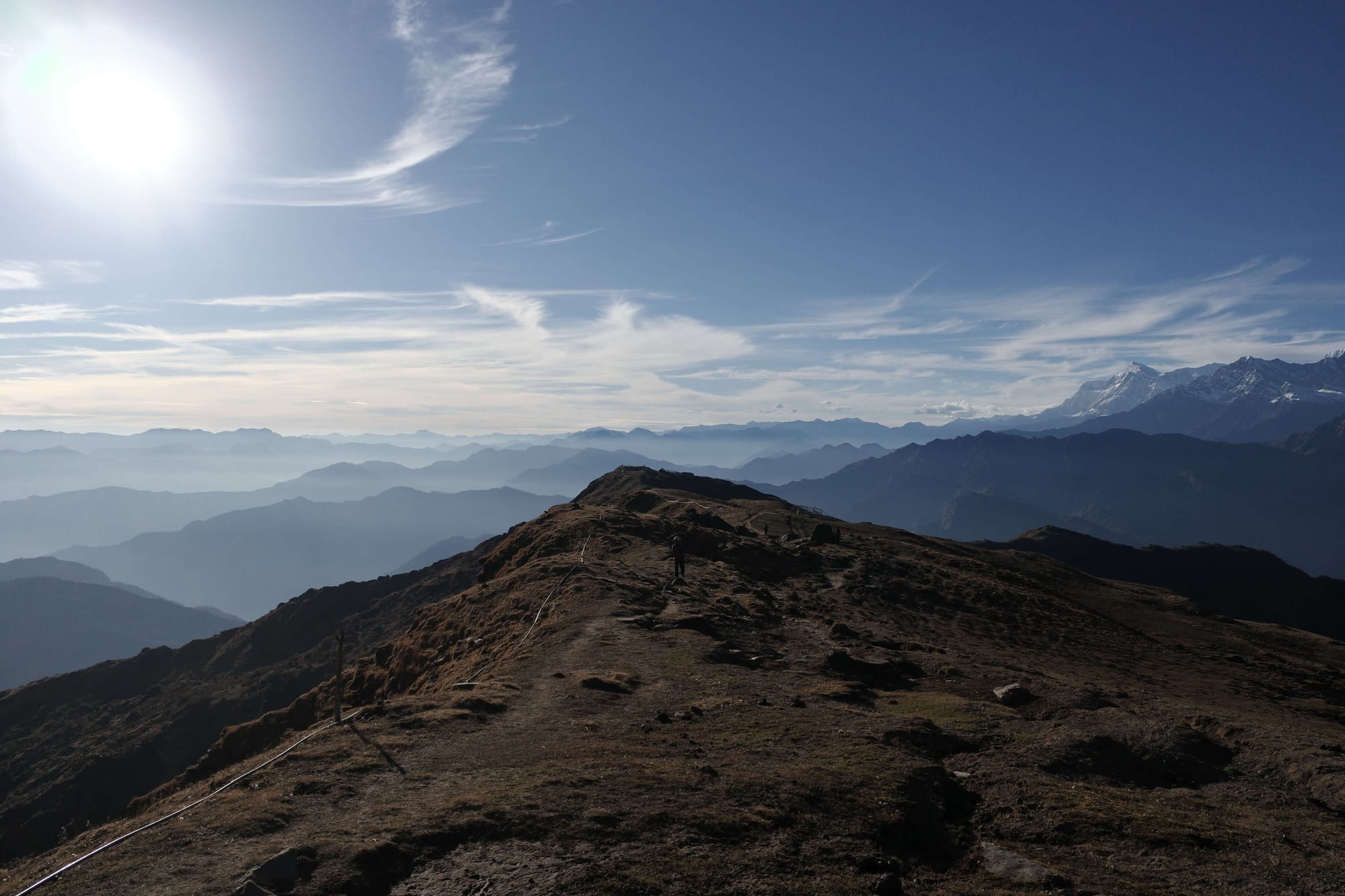
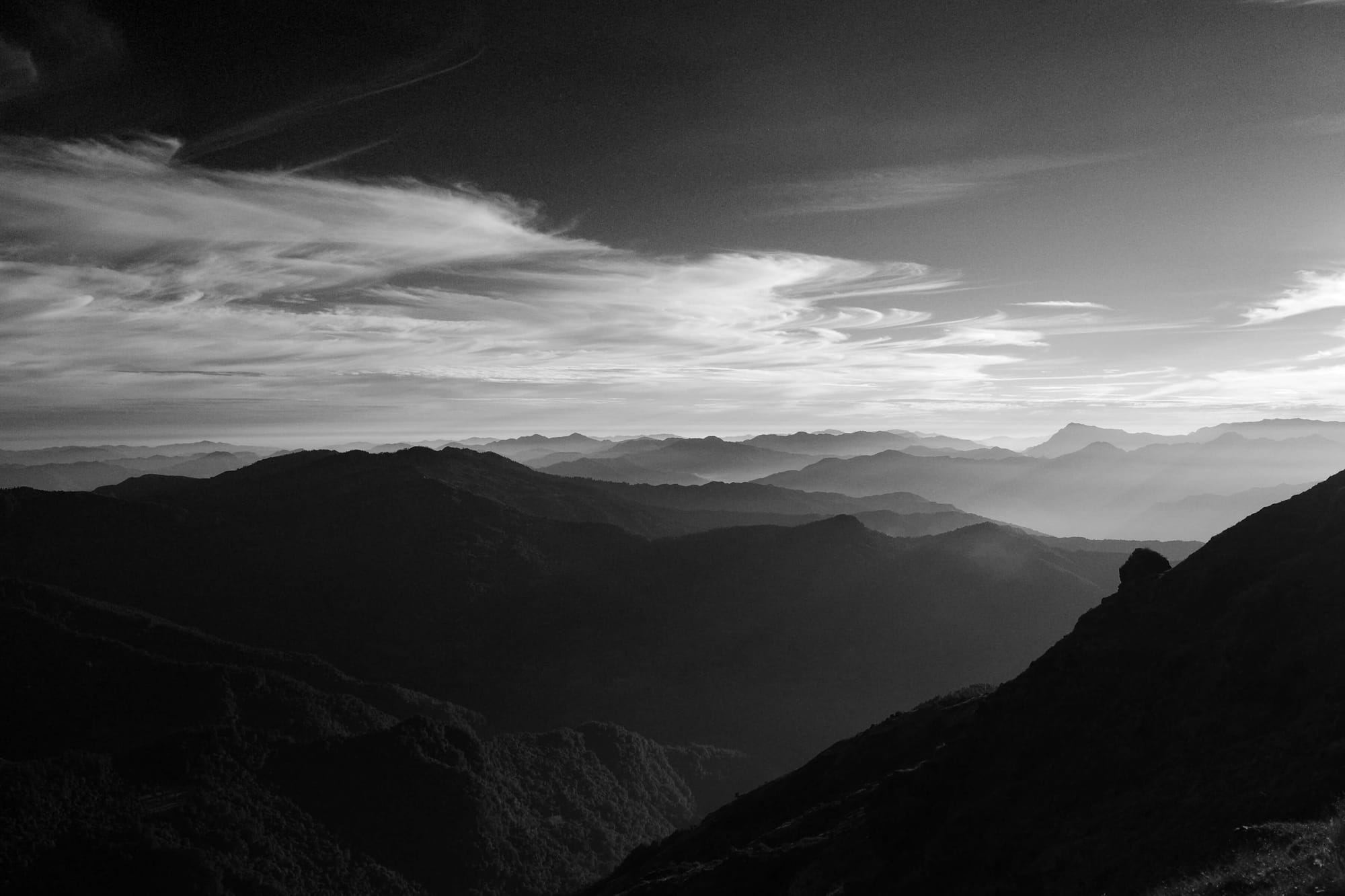
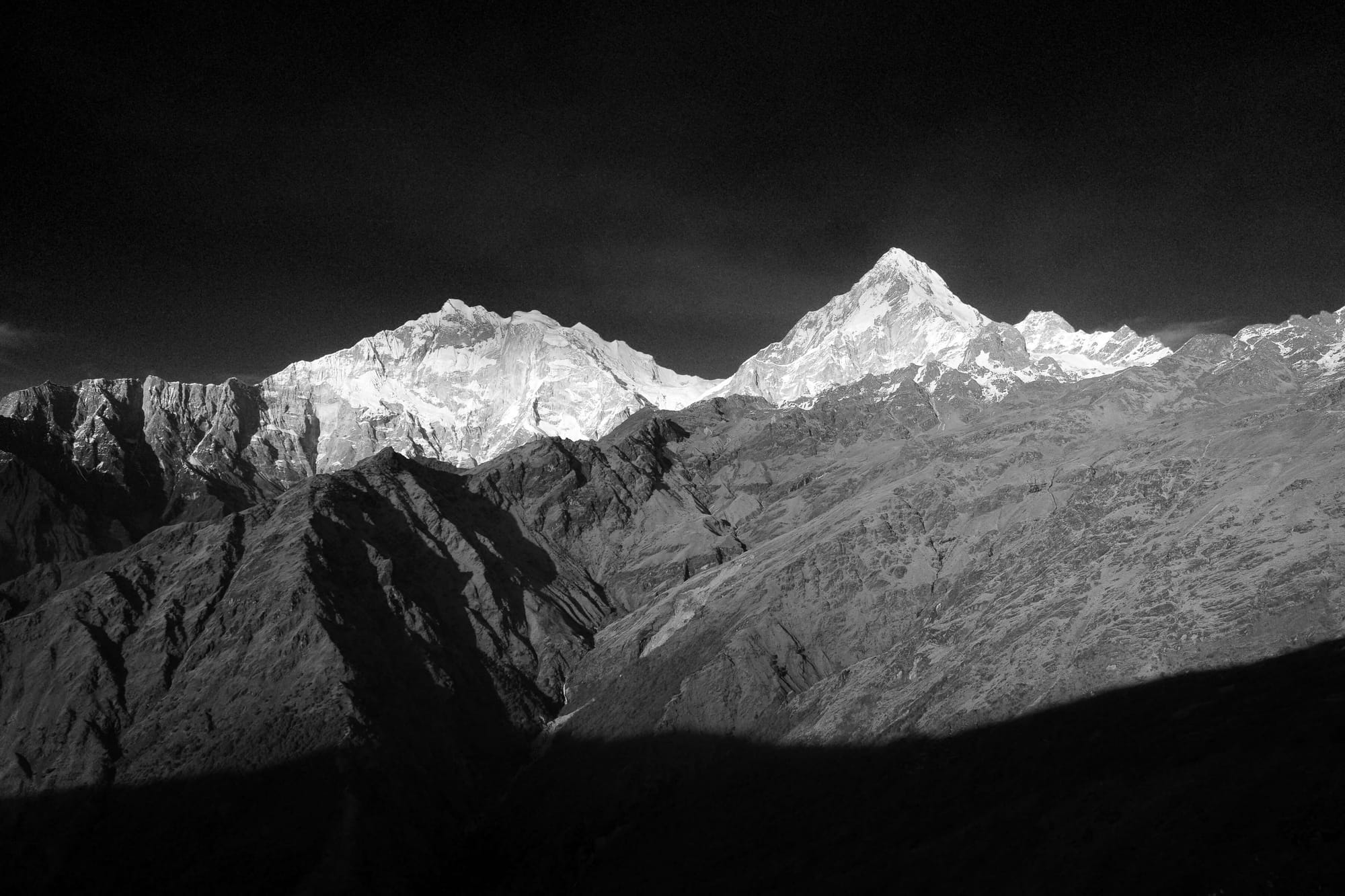
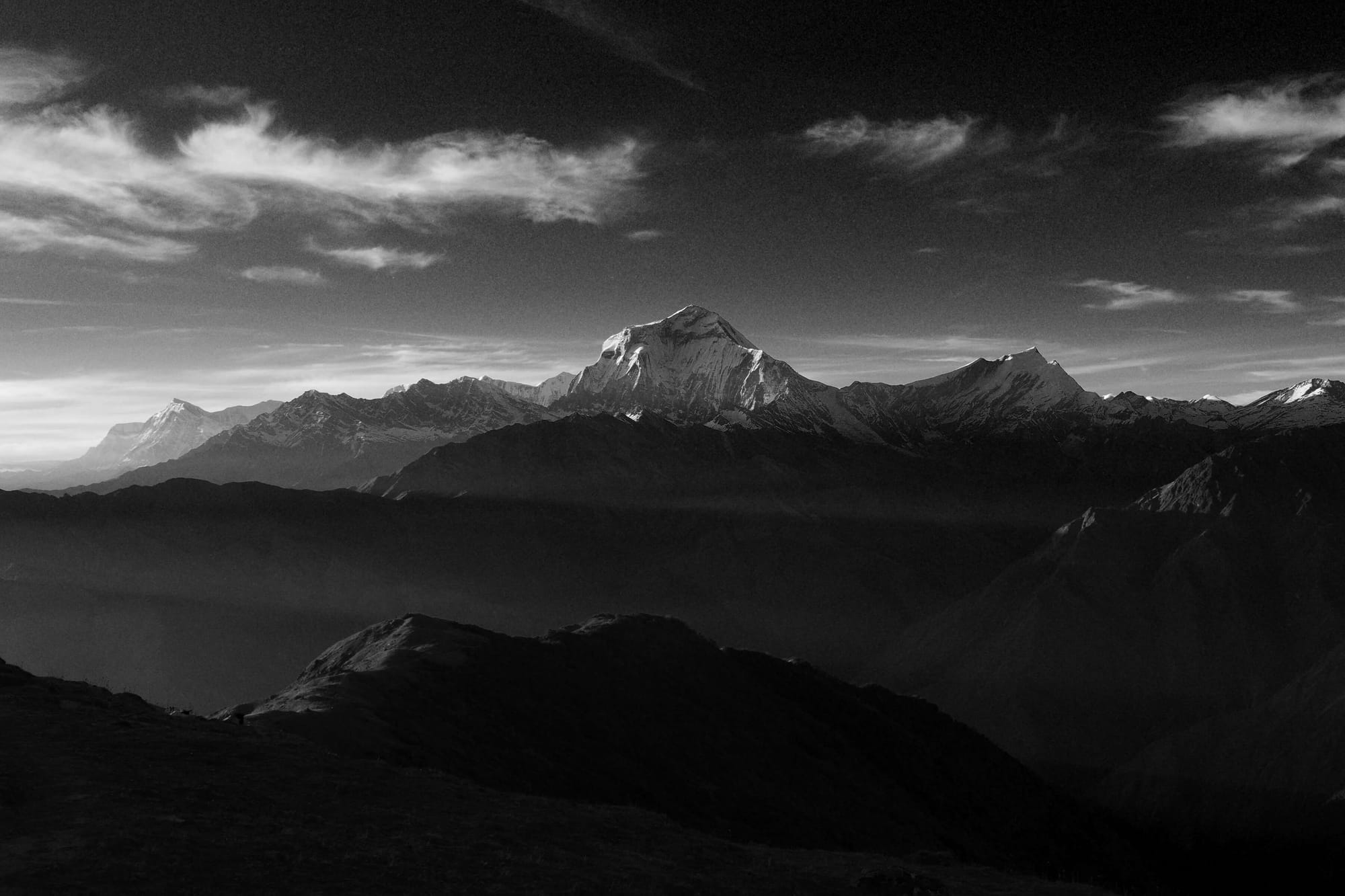
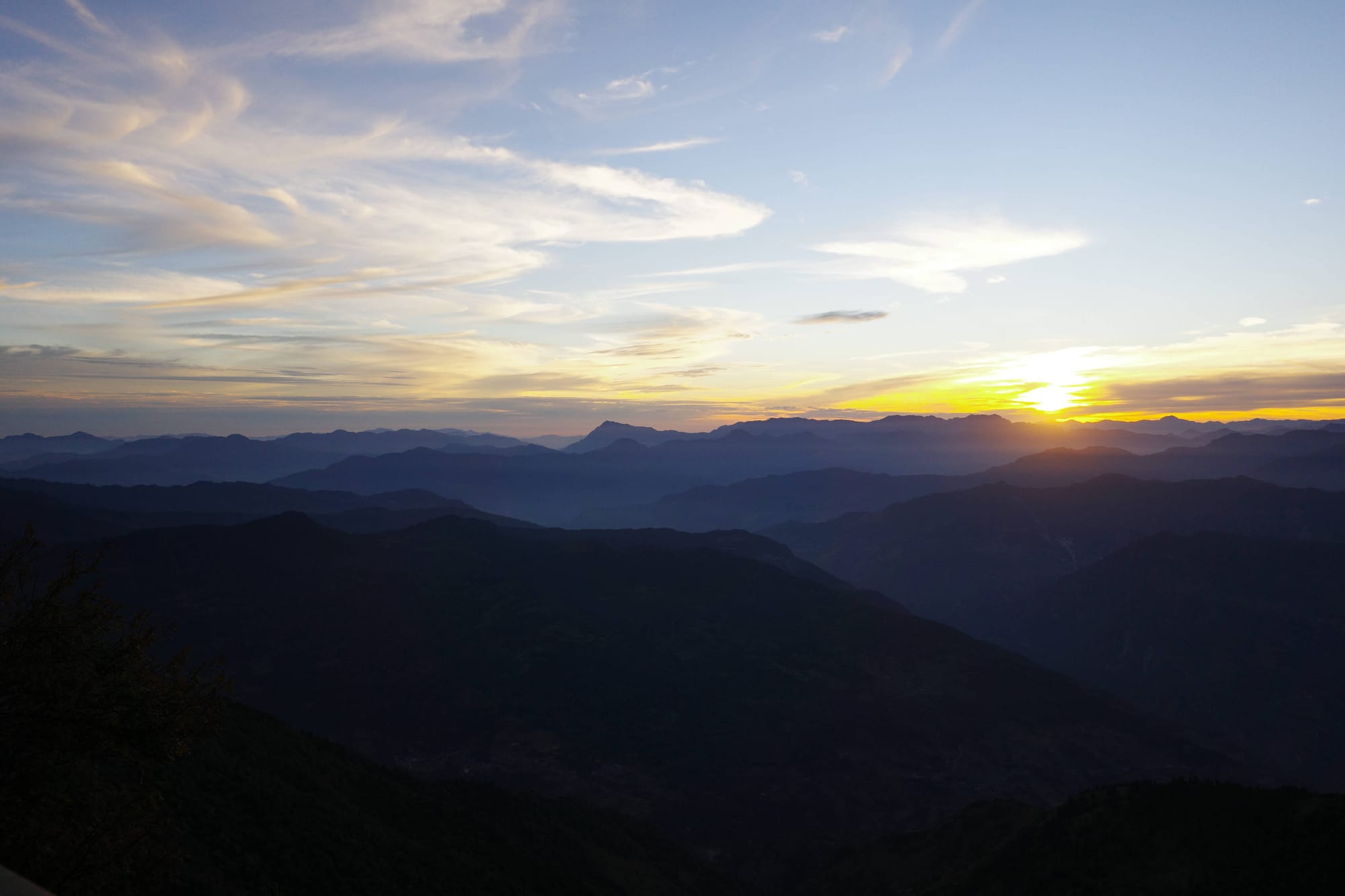
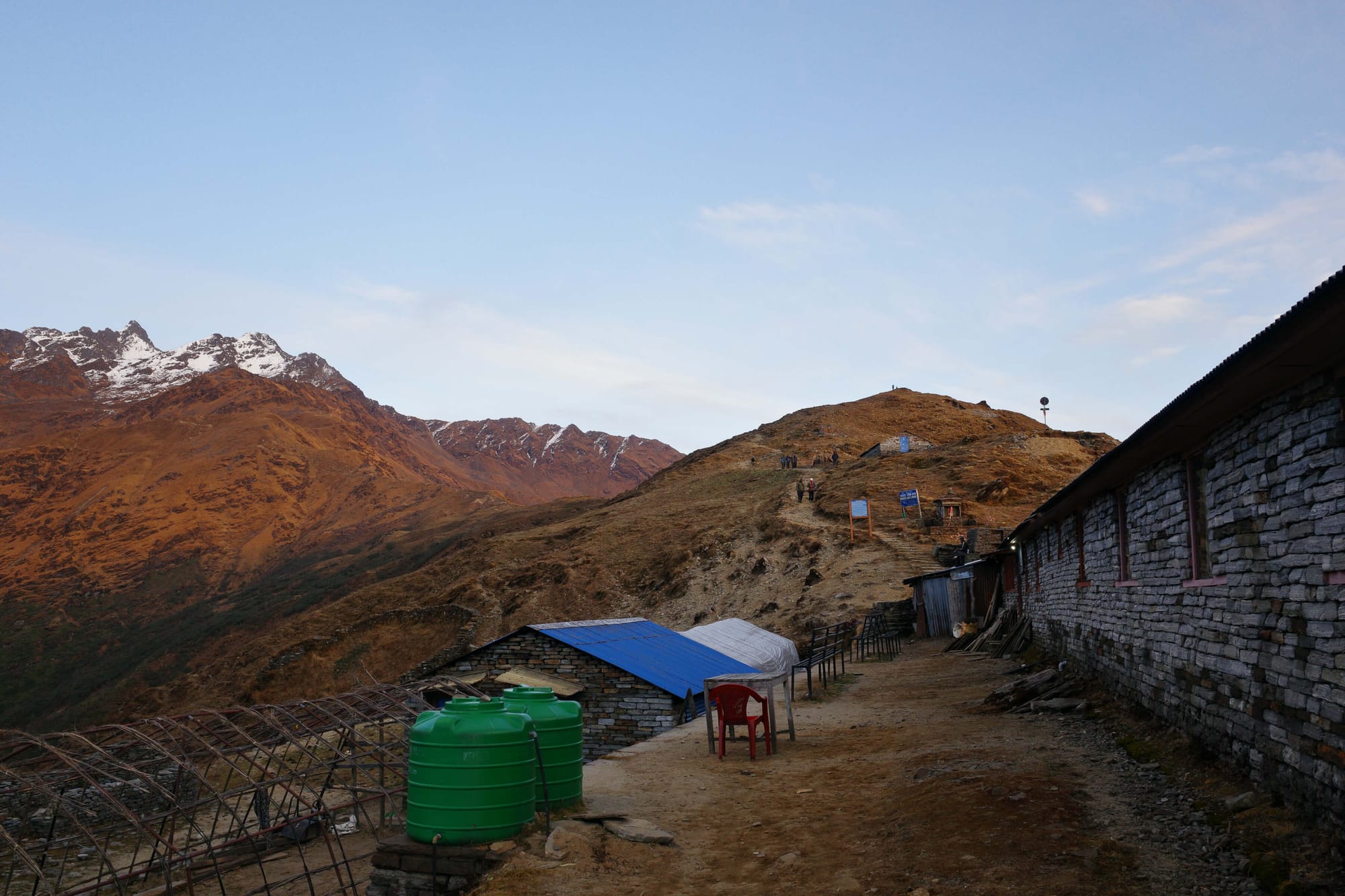
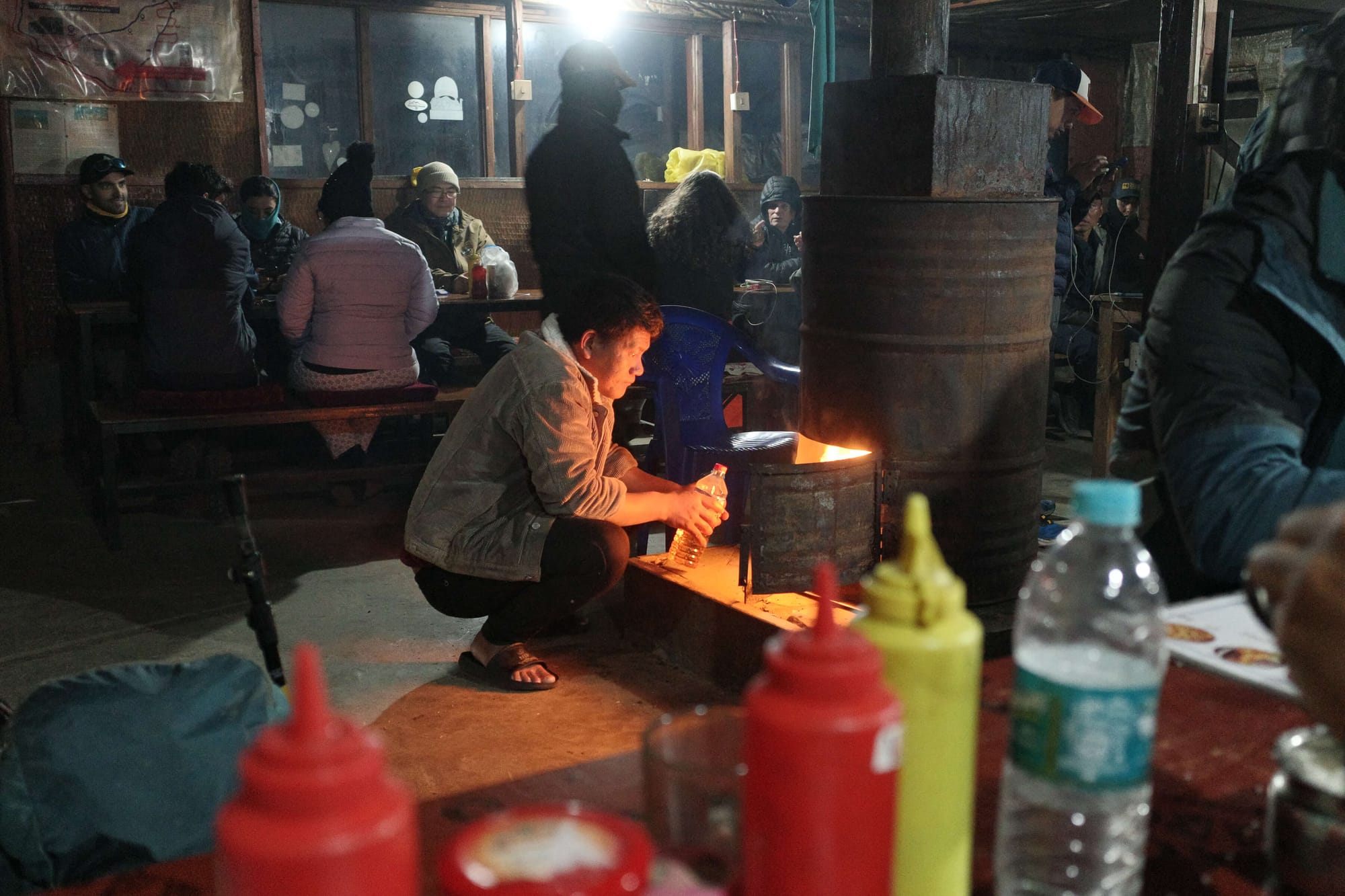
That night, clouds covered the sky while we slept, so we hardly felt the cold. However, the gratitude for the weather was short-lived, as we would have to cut our walk short by one day.
Day 5
Khopra Ridge → Swanta (22,626 steps, 7,260 ft.)
With Arnab knocking on Nepal's door, cautions were issued and the sky turned grey. It was October 29, the first day of the nationwide high alert. What was majestic the day before became a bit scary the next. By the itinerary, today we had to go to Khayer Lake and stay at Khopra Ridge for another night. But snowstorms were being predicted, so Subodh decided we would go down. We had sort of known this in advance. That was the reason we skipped the night in Ghandruk.
We had breakfast and, without looking around much (everything was covered in clouds), we started down to Swanta.
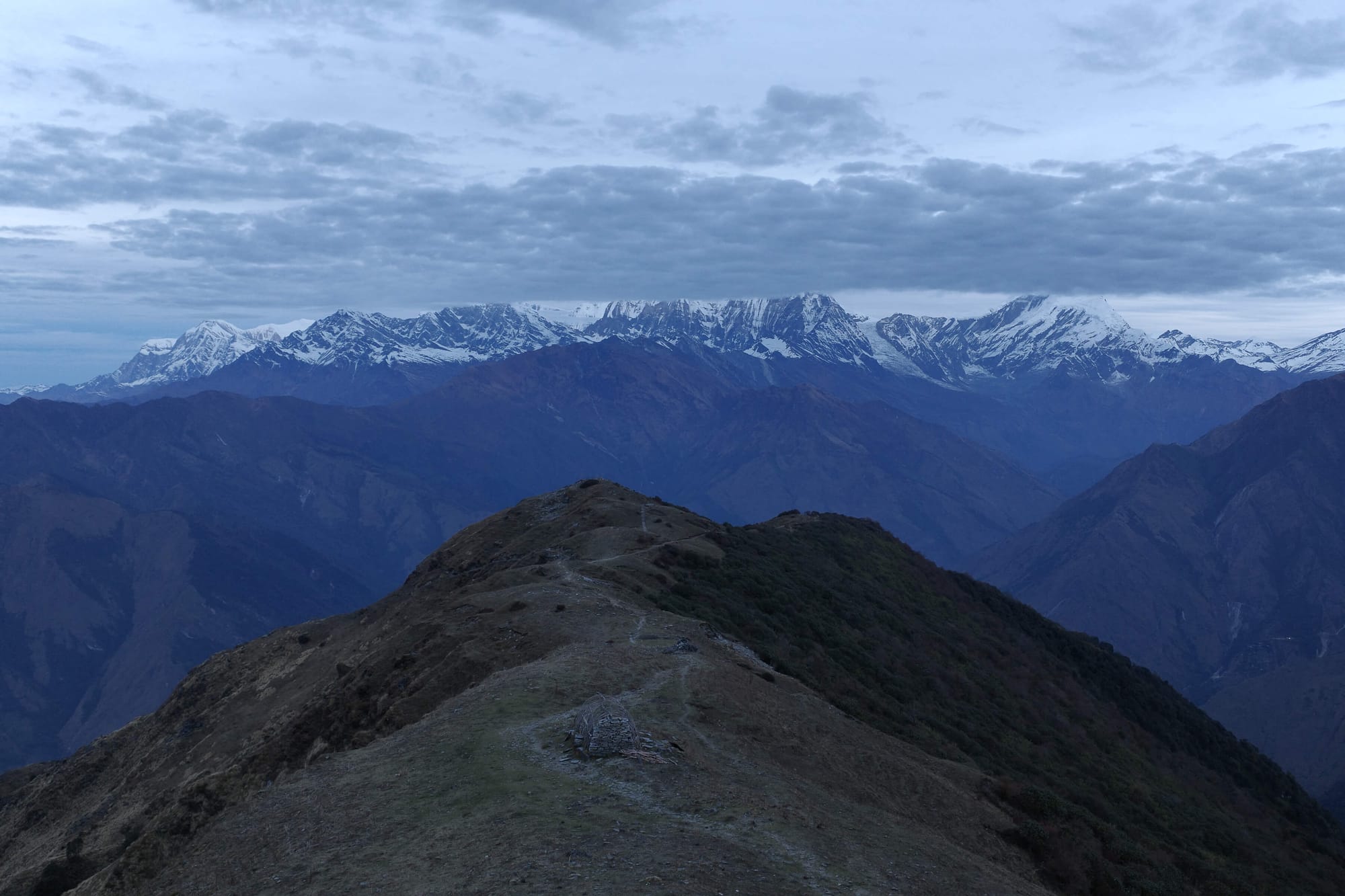
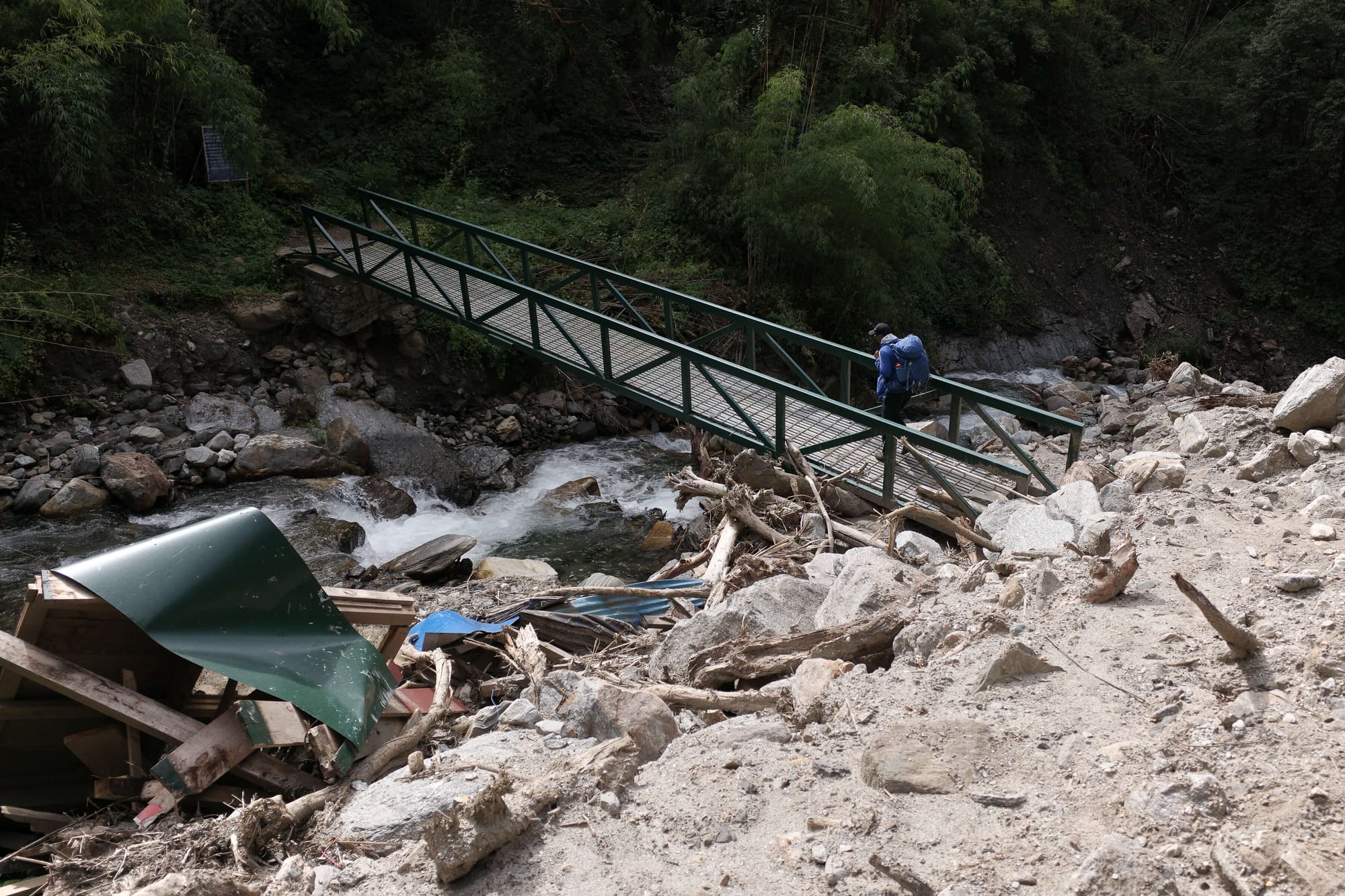
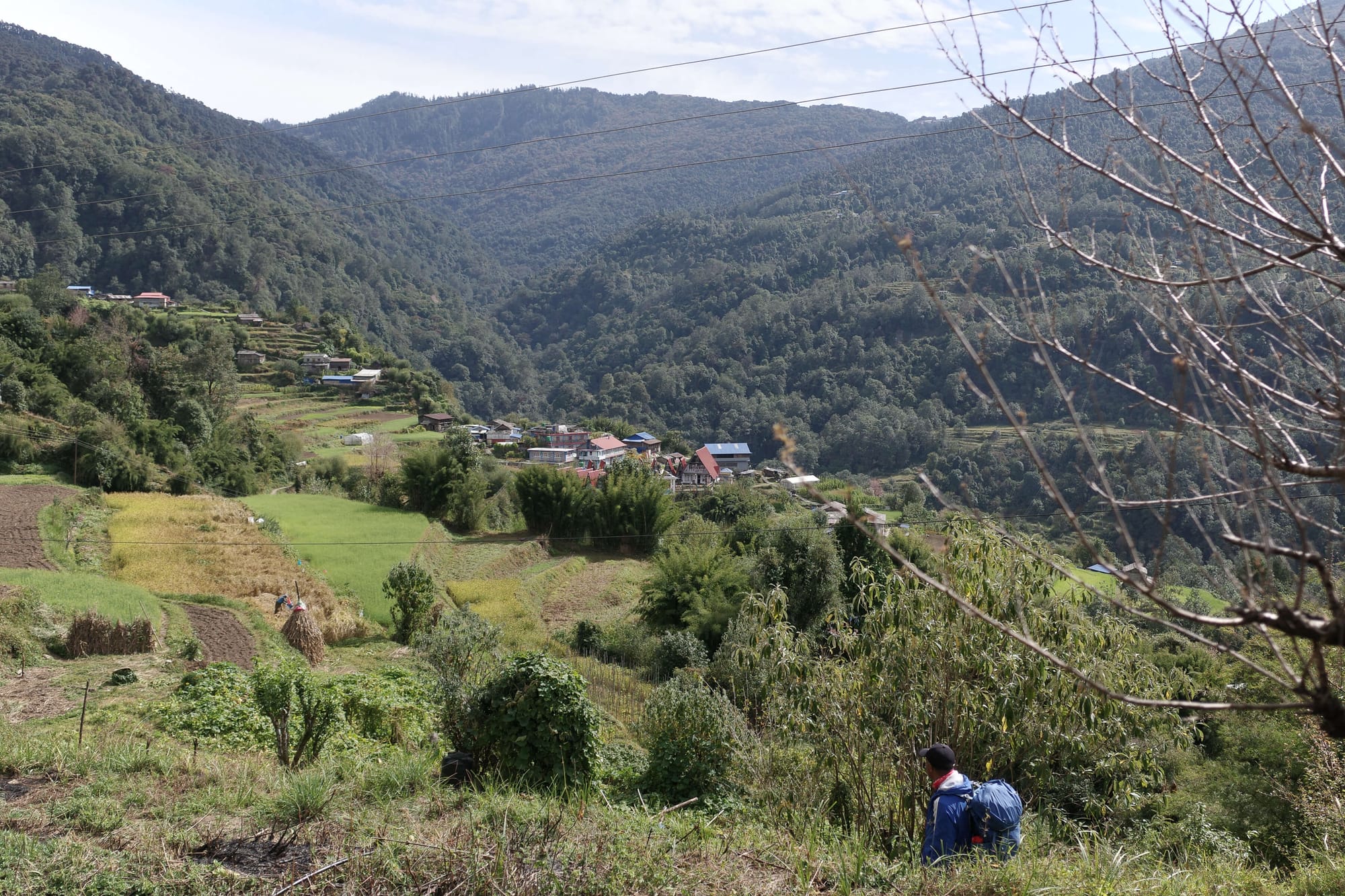
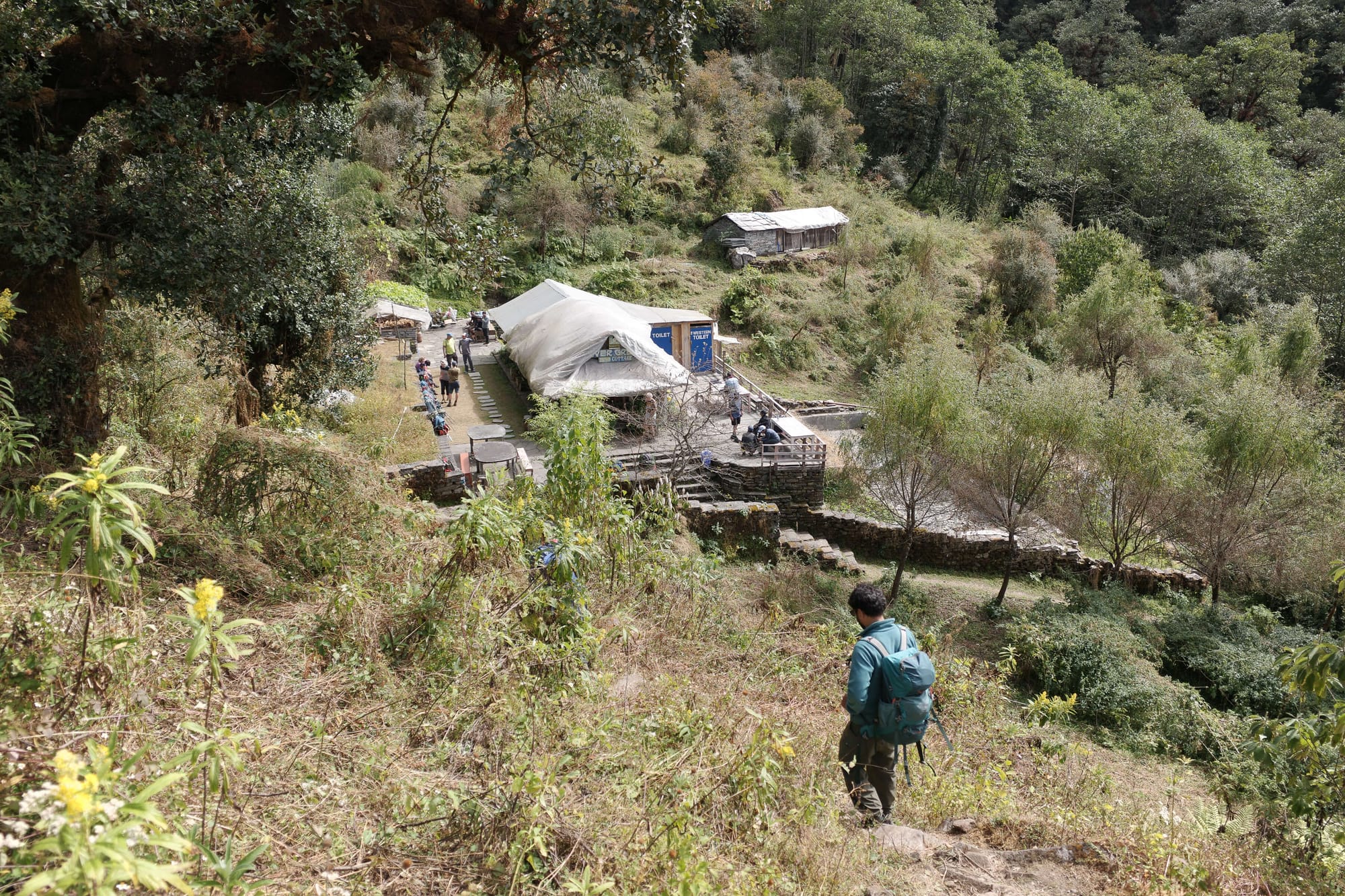
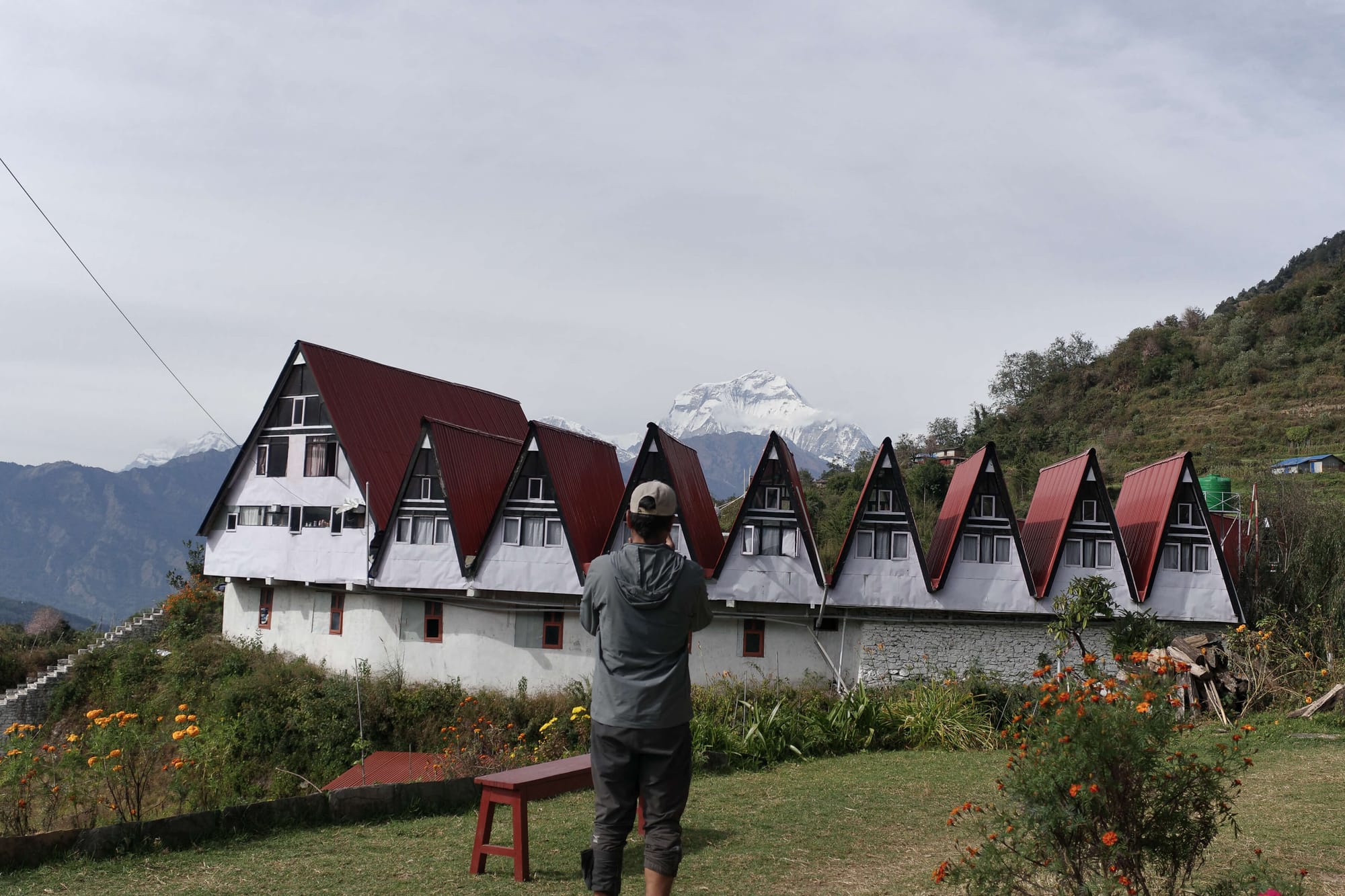
The rain did not catch up with us on the way down, which was a relief. After we reached Swanta, yet another picturesque little village, we looked back at Dhaulagiri, but could only see it in bits and pieces through the clouds. The rain finally caught up in the night, while we slept restfully, knowing we were out of harm's way.
Day 6
Swanta → Ghara → Pokhara (19,267 steps, 2,700 ft.)
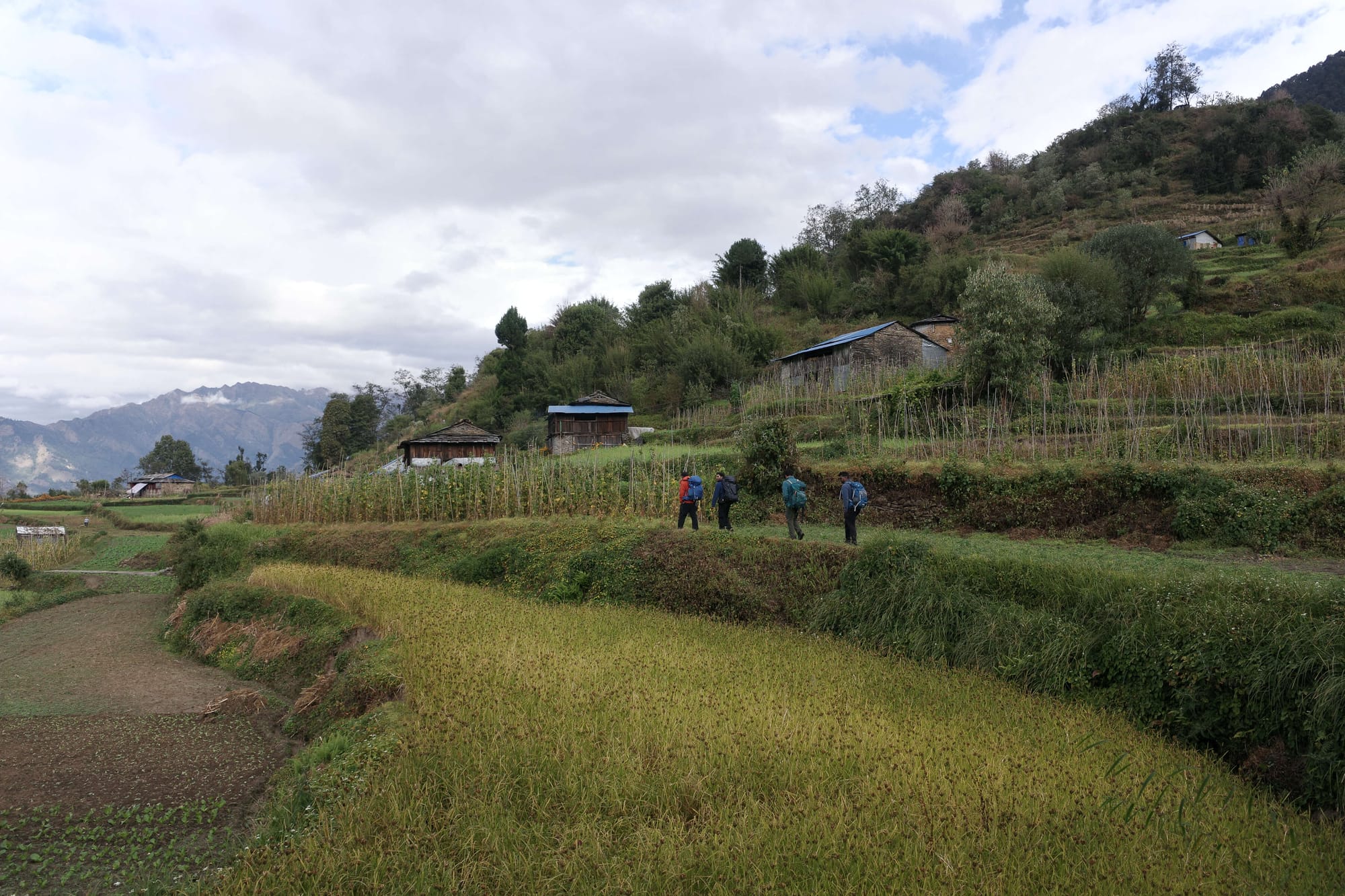
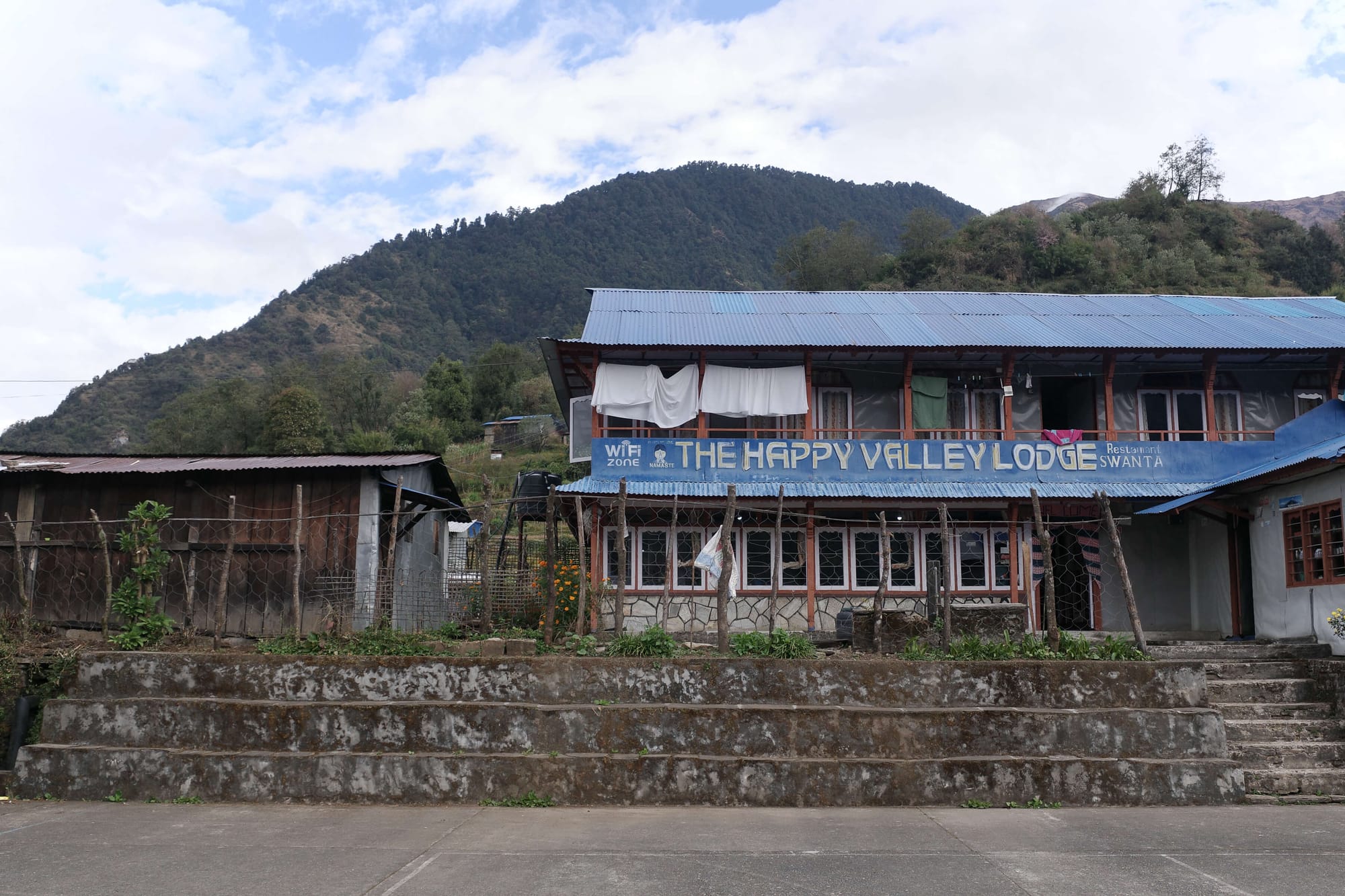
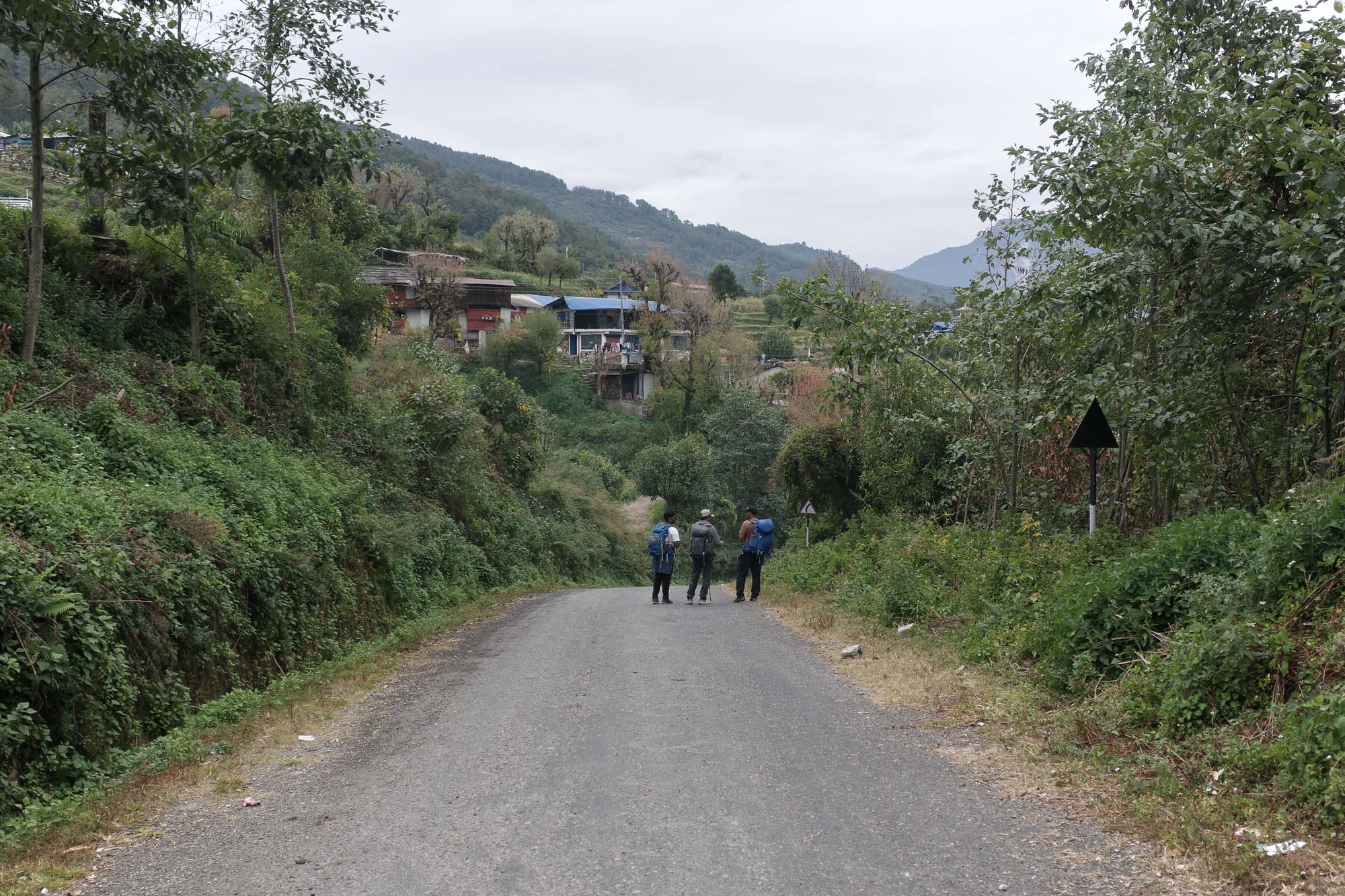
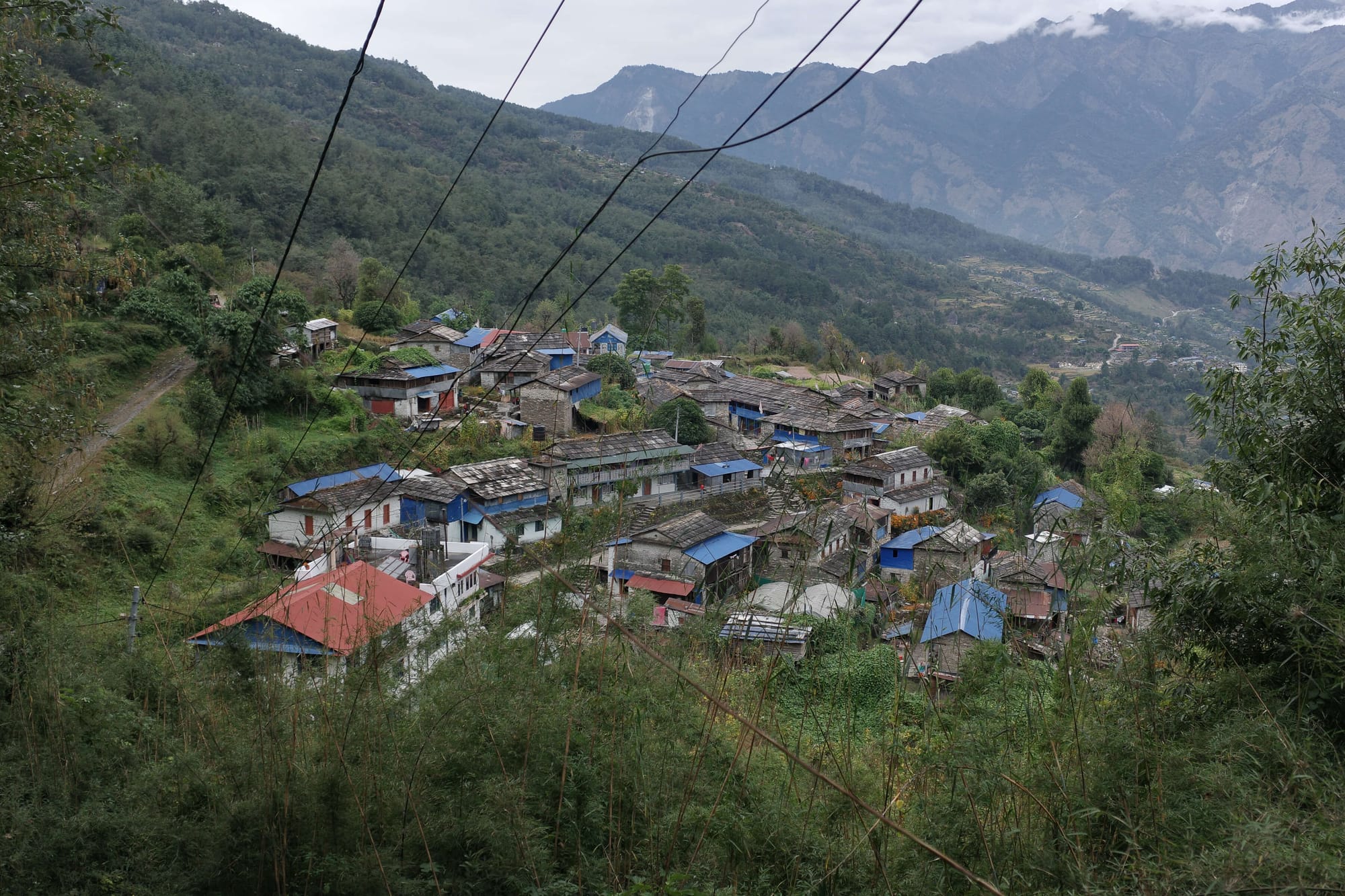
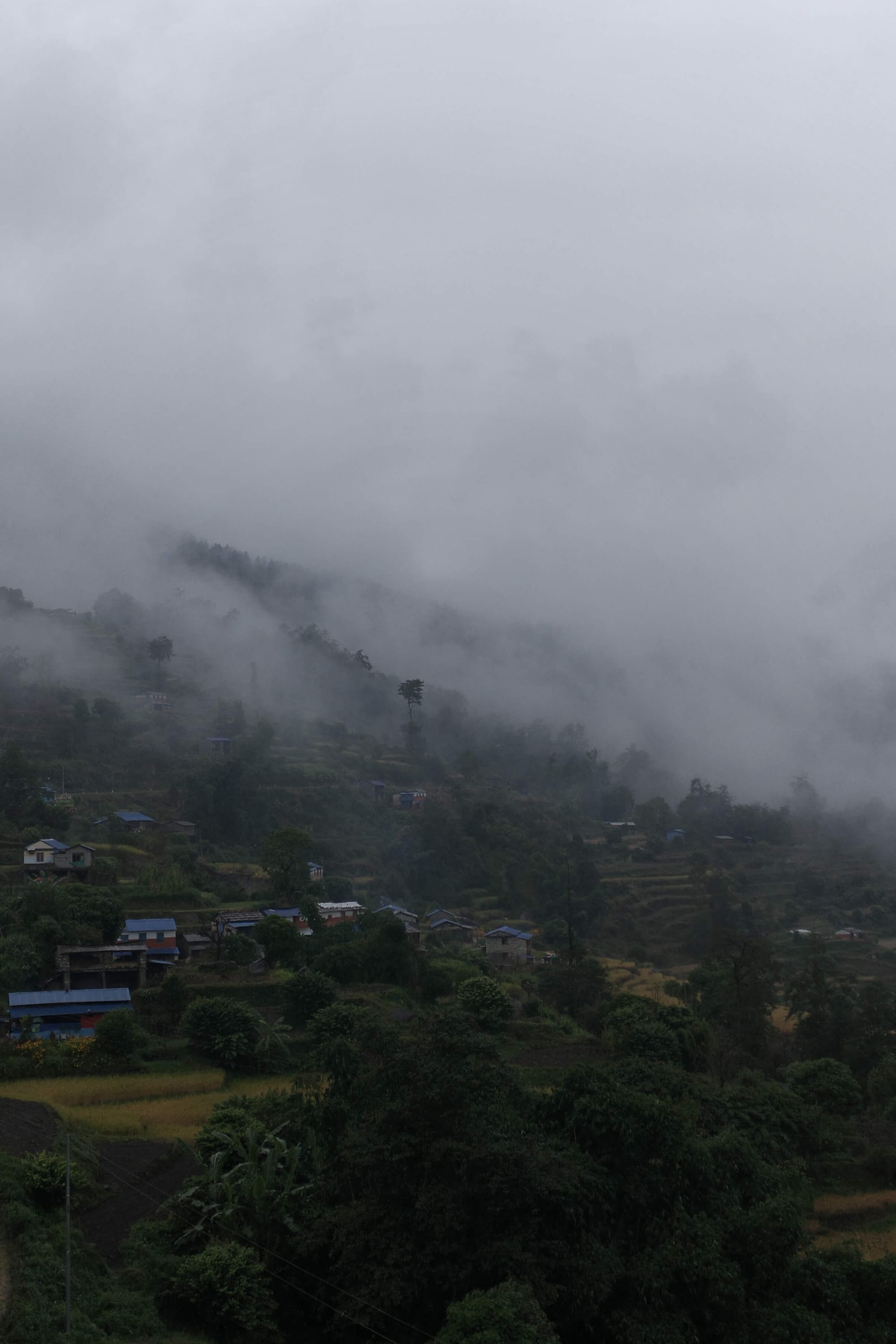
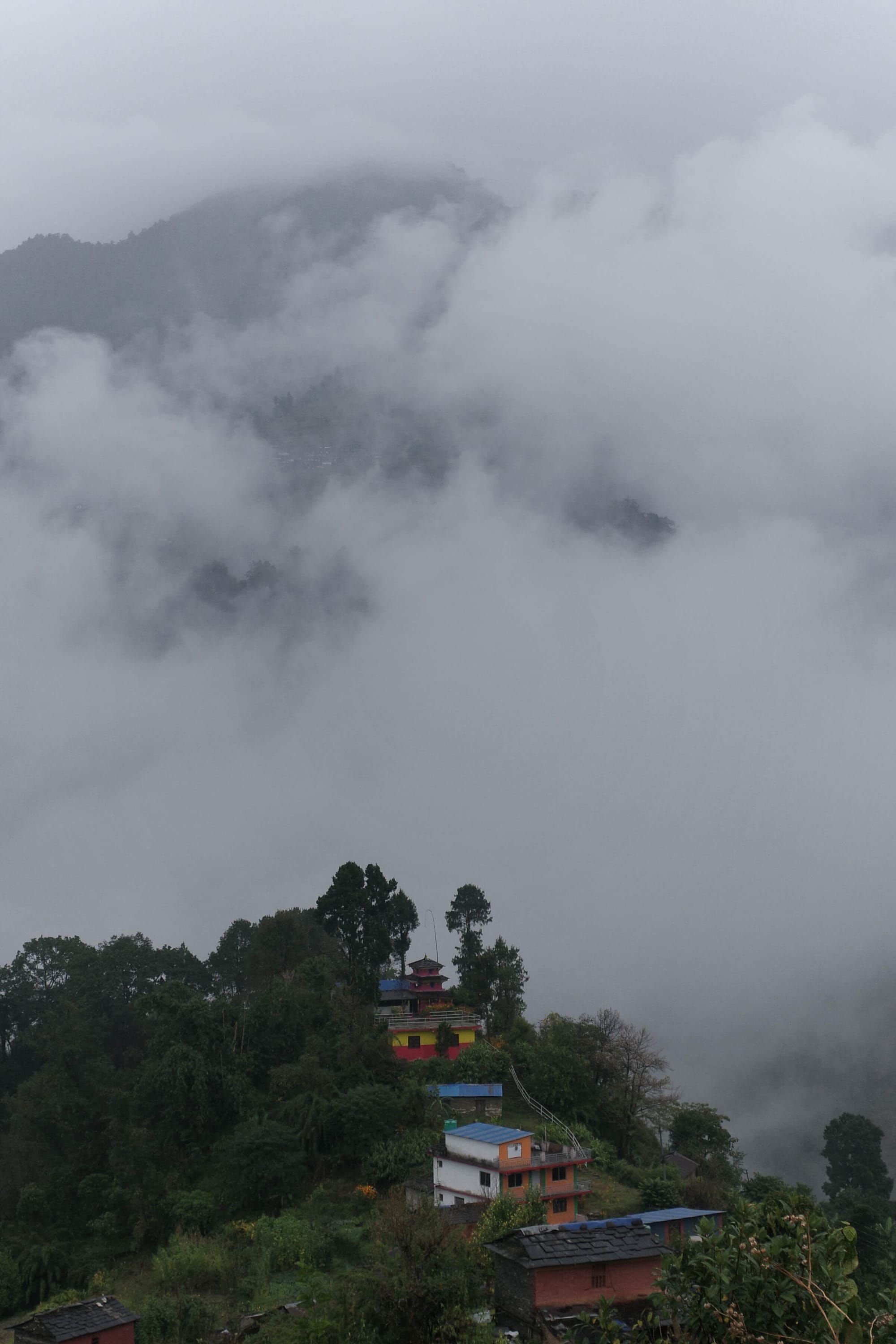
The next morning was just a customary walk down to where we could catch the jeeps to Pokhara. It drizzled, but not enough to wet us. After lunch, we got in the jeep and made our way to Pokhara.
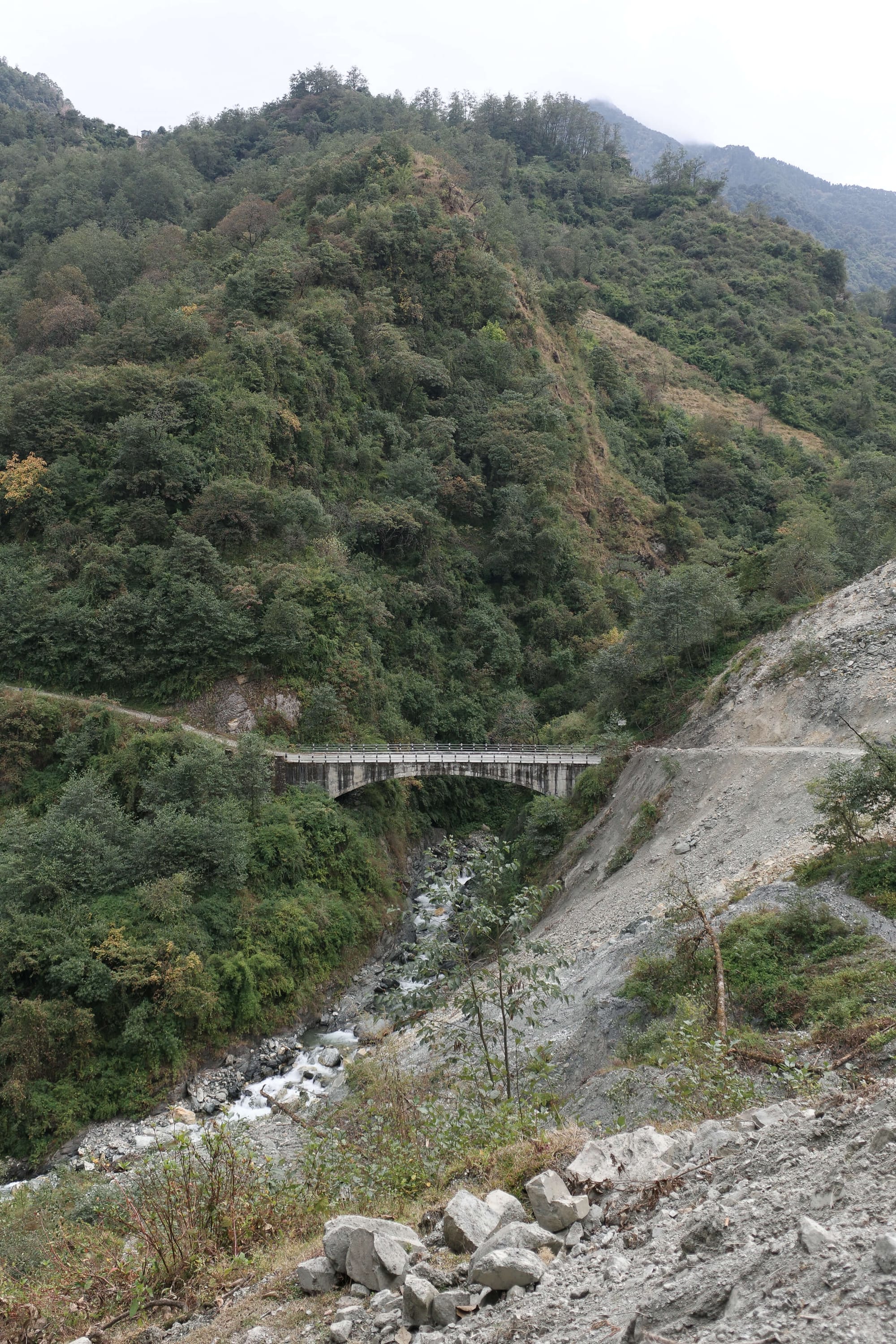
On the way, we saw the Kali Gandaki river, which had flooded massively in late September. The flood took away the bridges and most of the highway that hugged the river. Now that the water level had dropped, the remnants of what had been there still lingered in the river. The flowing water appeared black and flowed ferociously. There was nothing calming about it as we drove on whatever was left of the road.
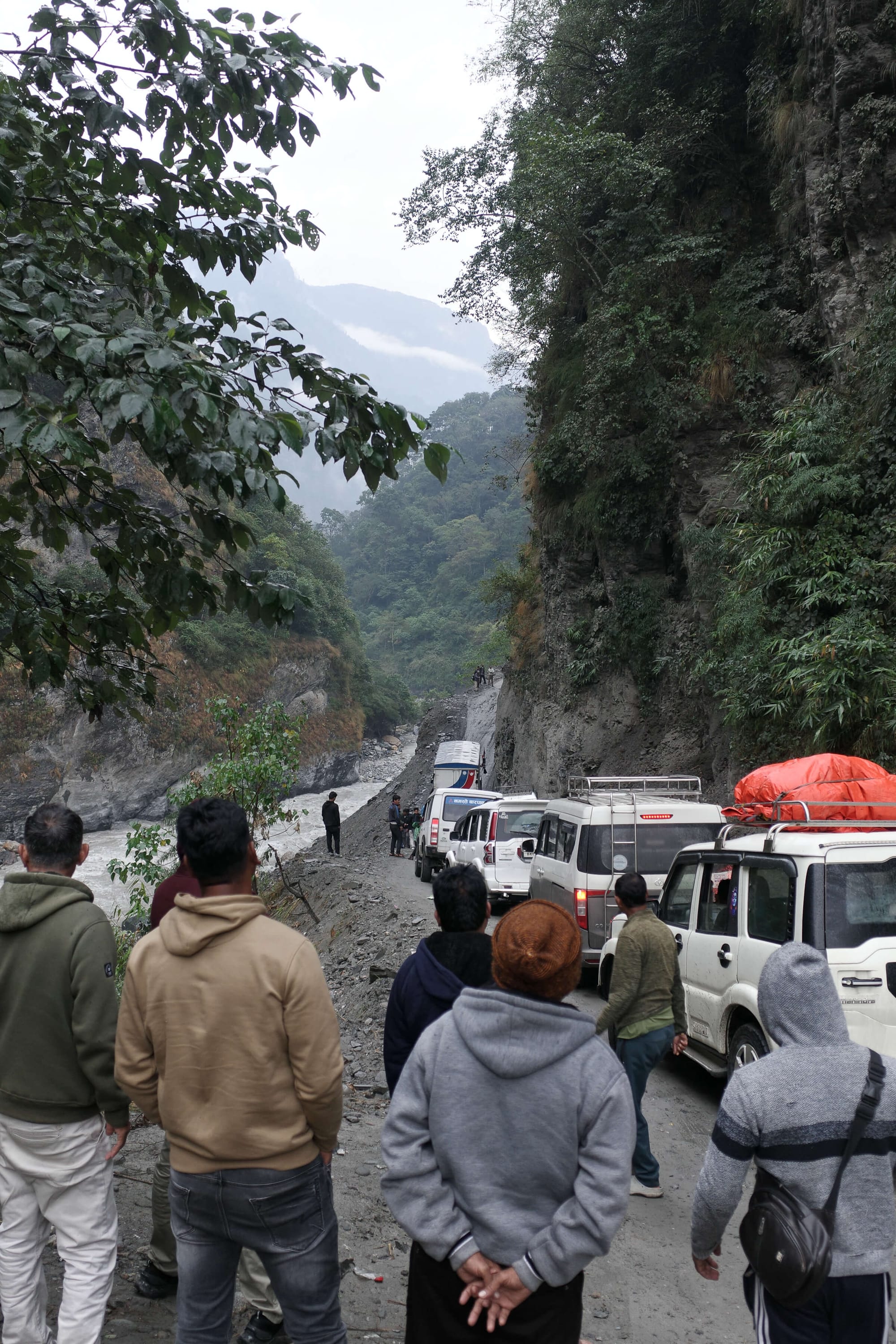
By the time we reached Pokhara, the rain had already caught up with us. But we were glad that we were just seeing it and not walking in it.
We were bummed to miss Khayer Lake. But we walked the length, and we spent the week talking. Every lunch and every dinner spilled over into hours of conversation. Mountains. Mountaineers. AI (like it or not, it's a thing to talk about).
For me and most of us, a walk like this is a year in review. Over a week of dal bhat, we go through the whole year. What we did. What we plan. What we got wrong.
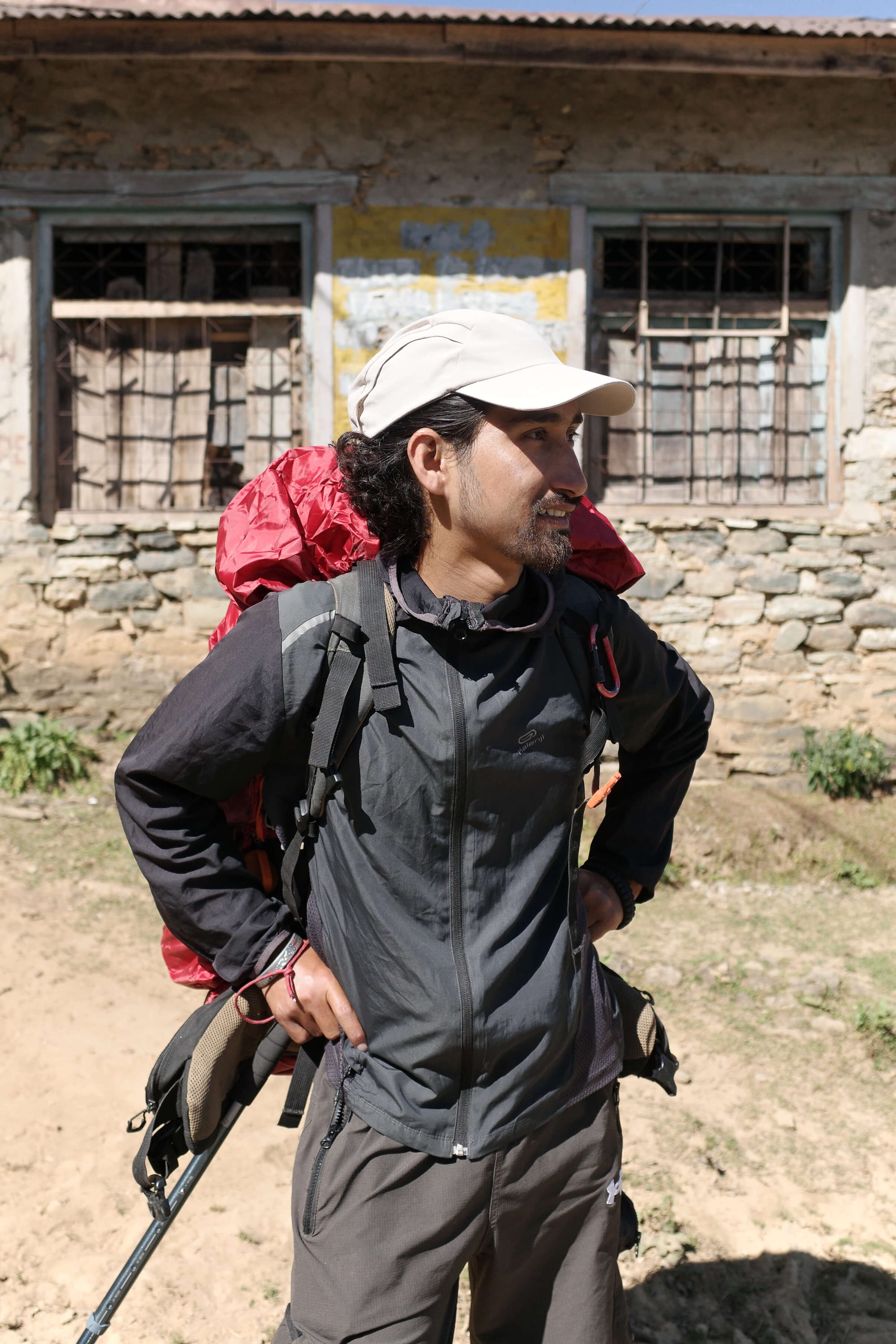
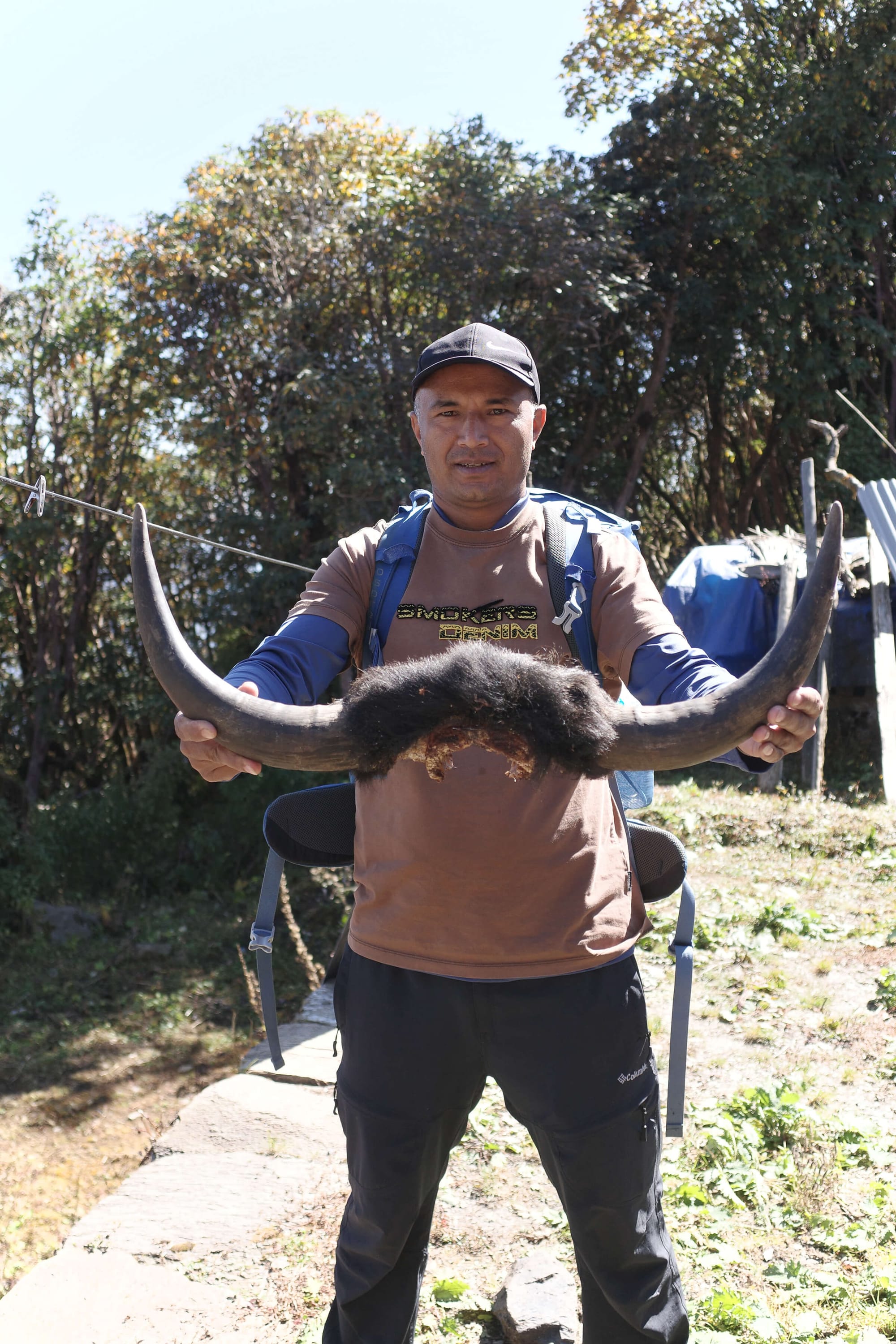
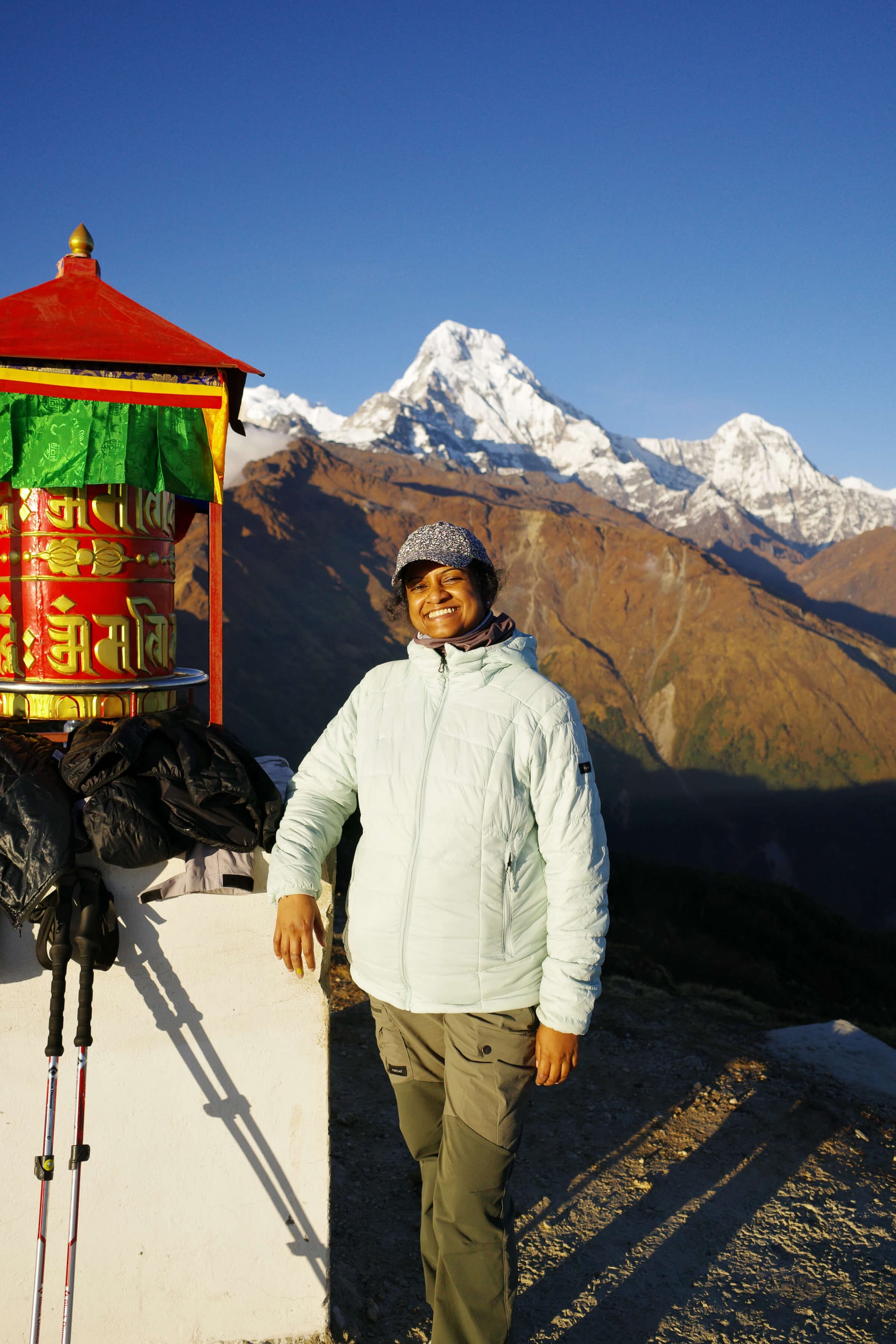
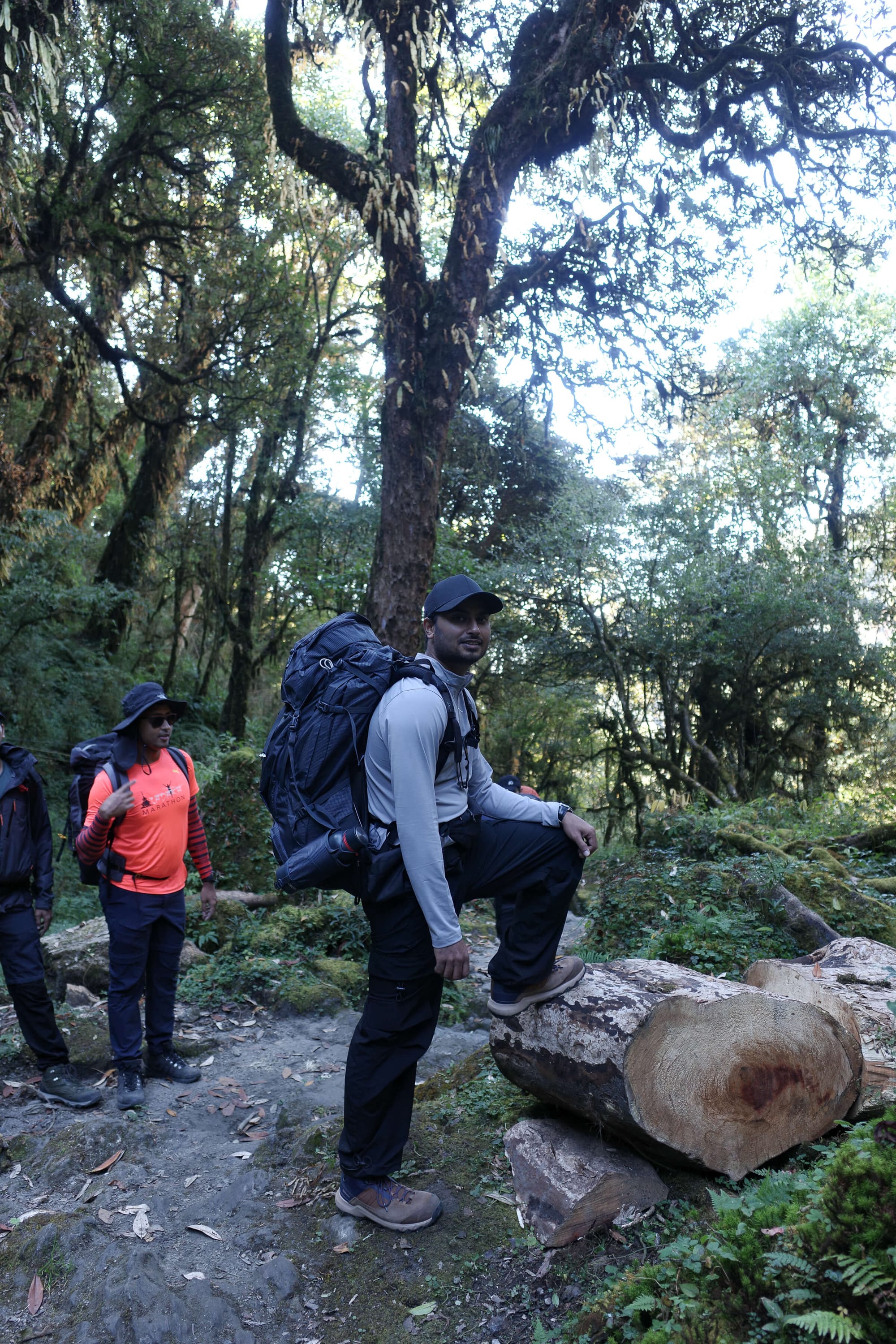
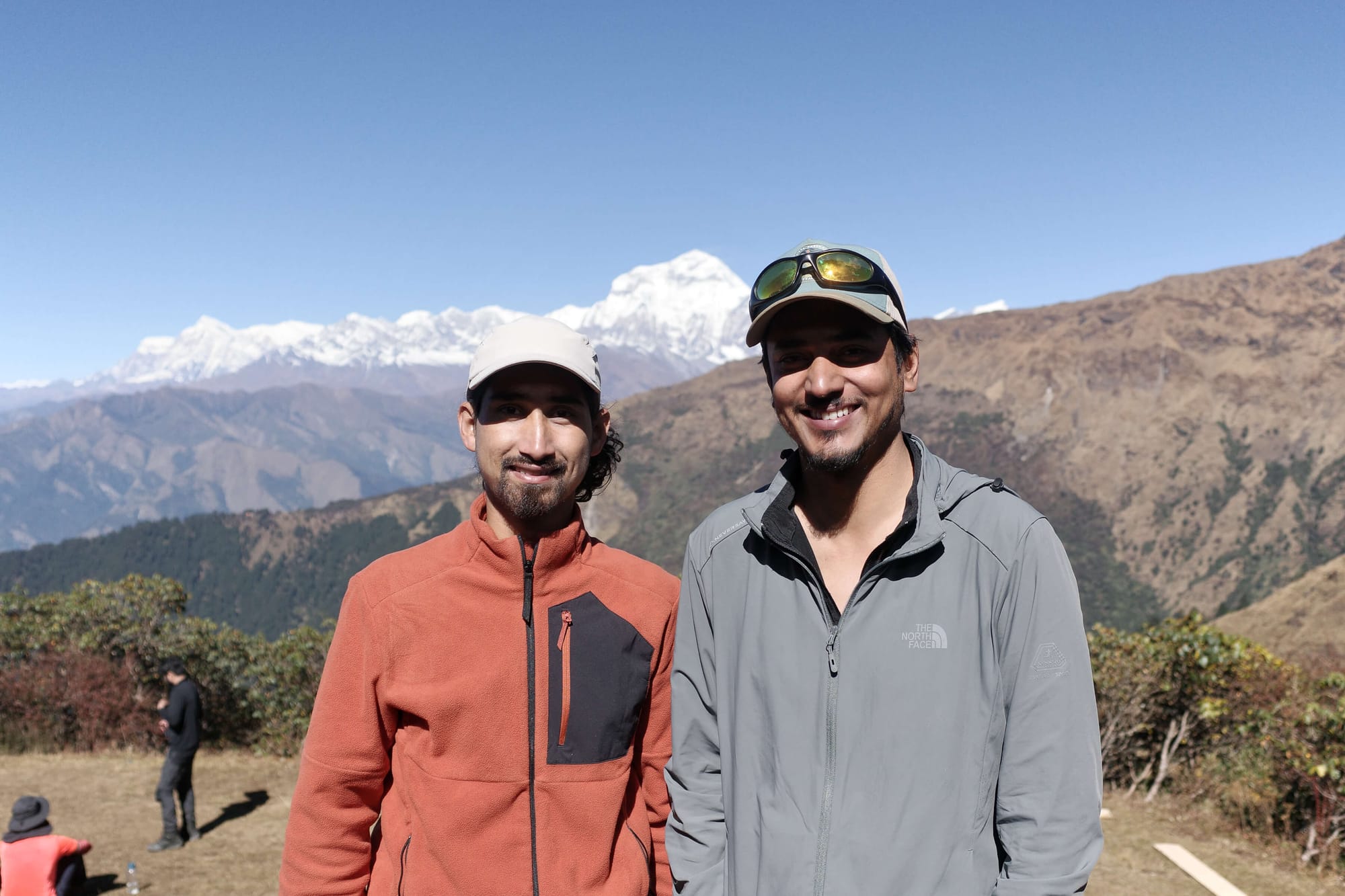
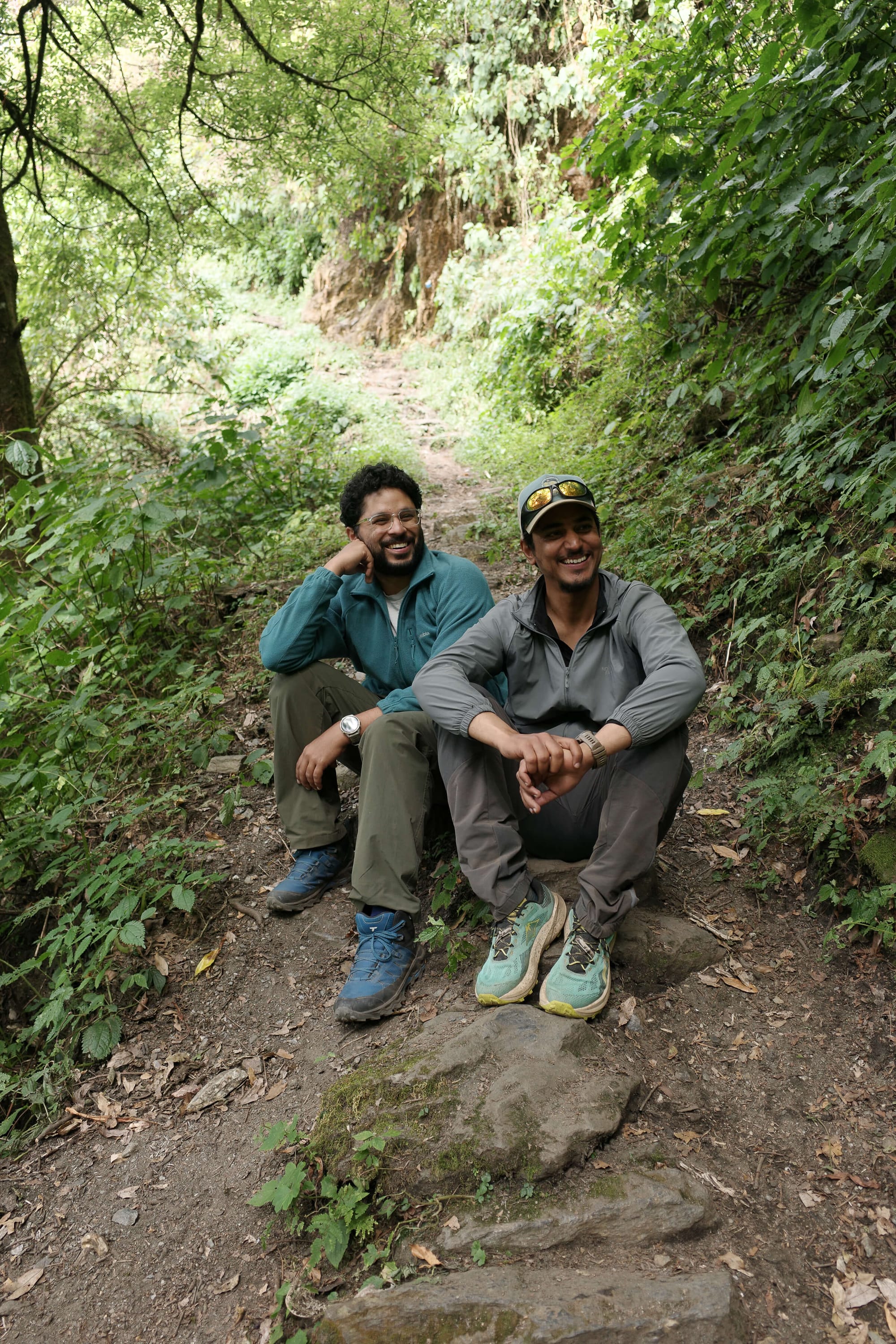
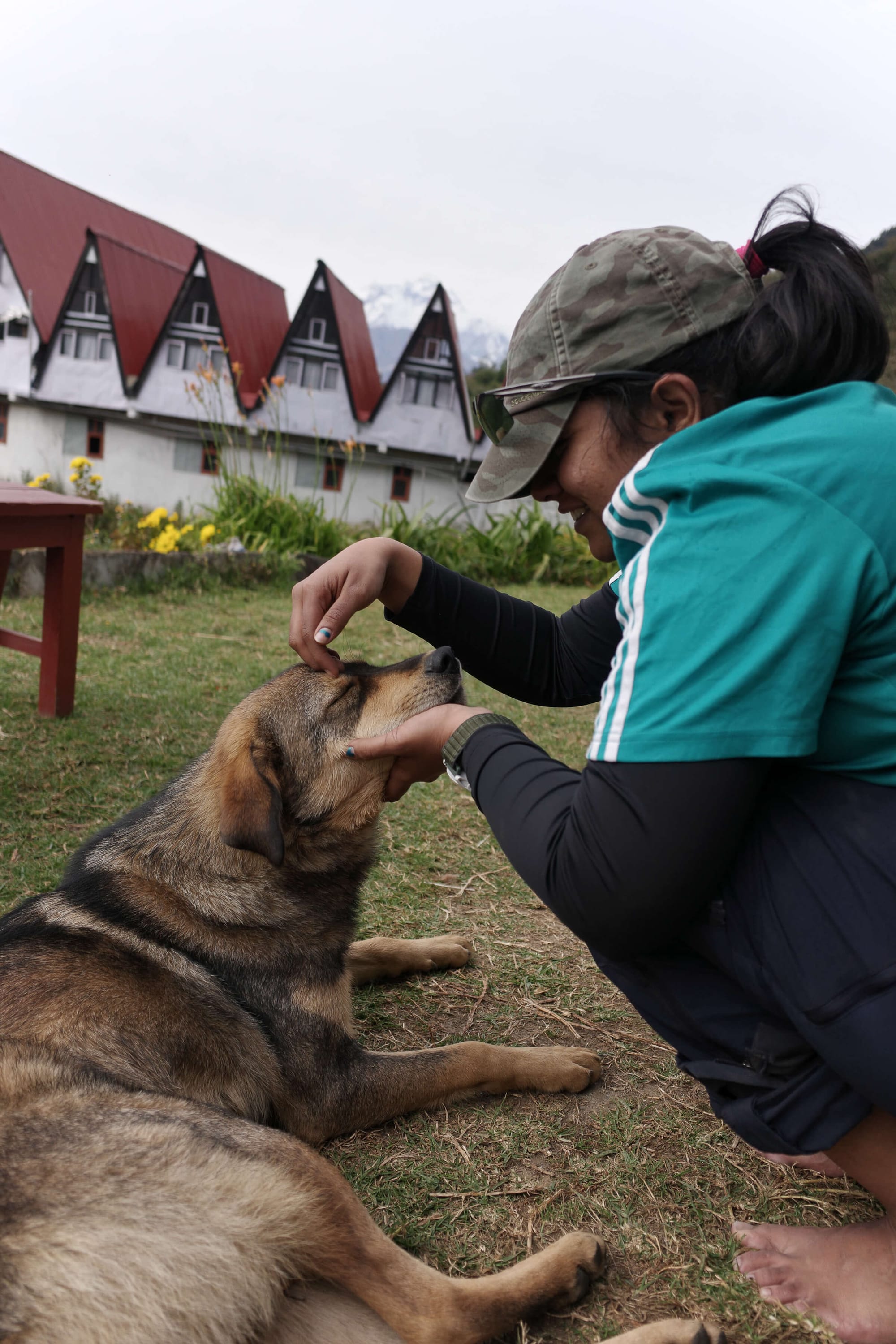
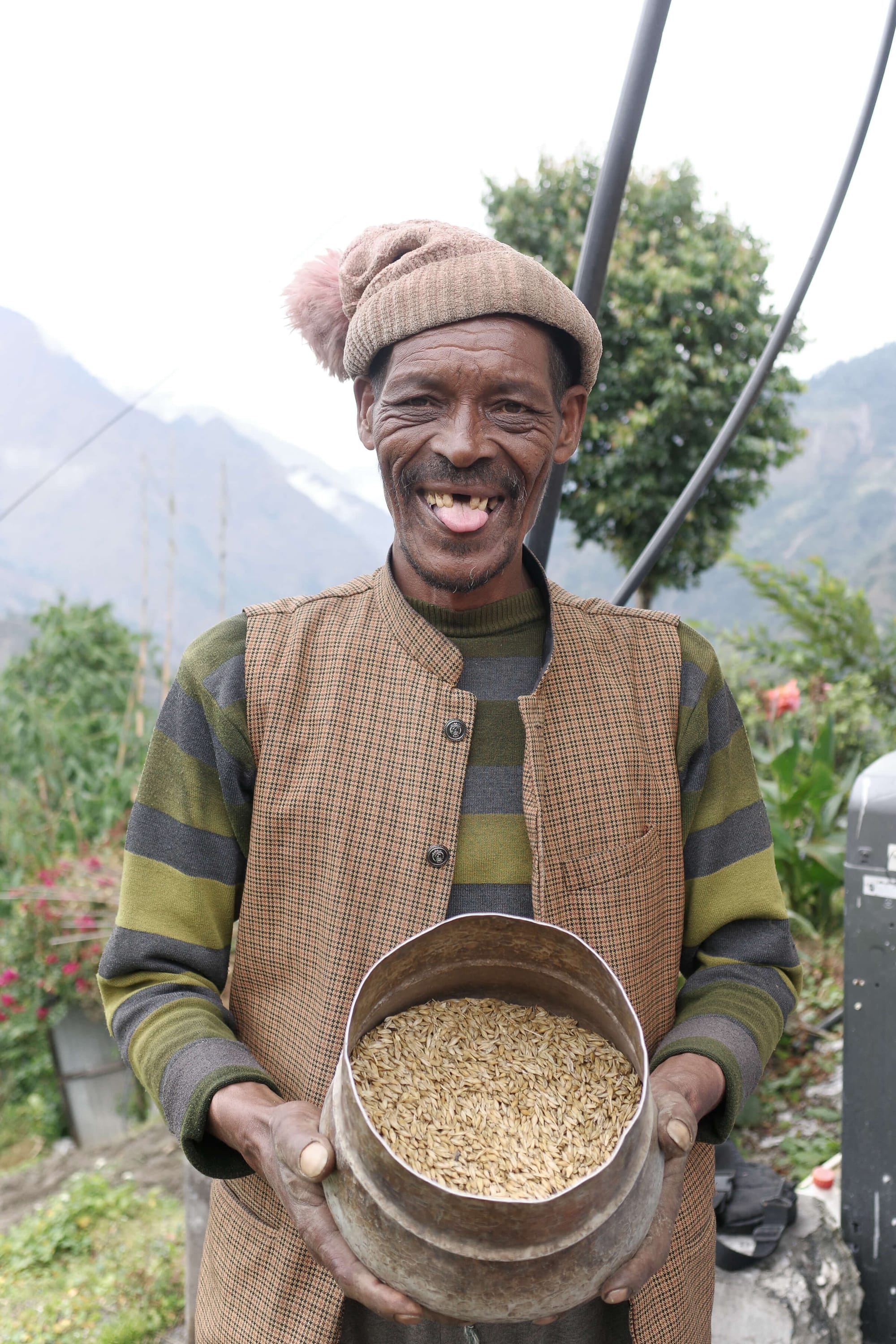
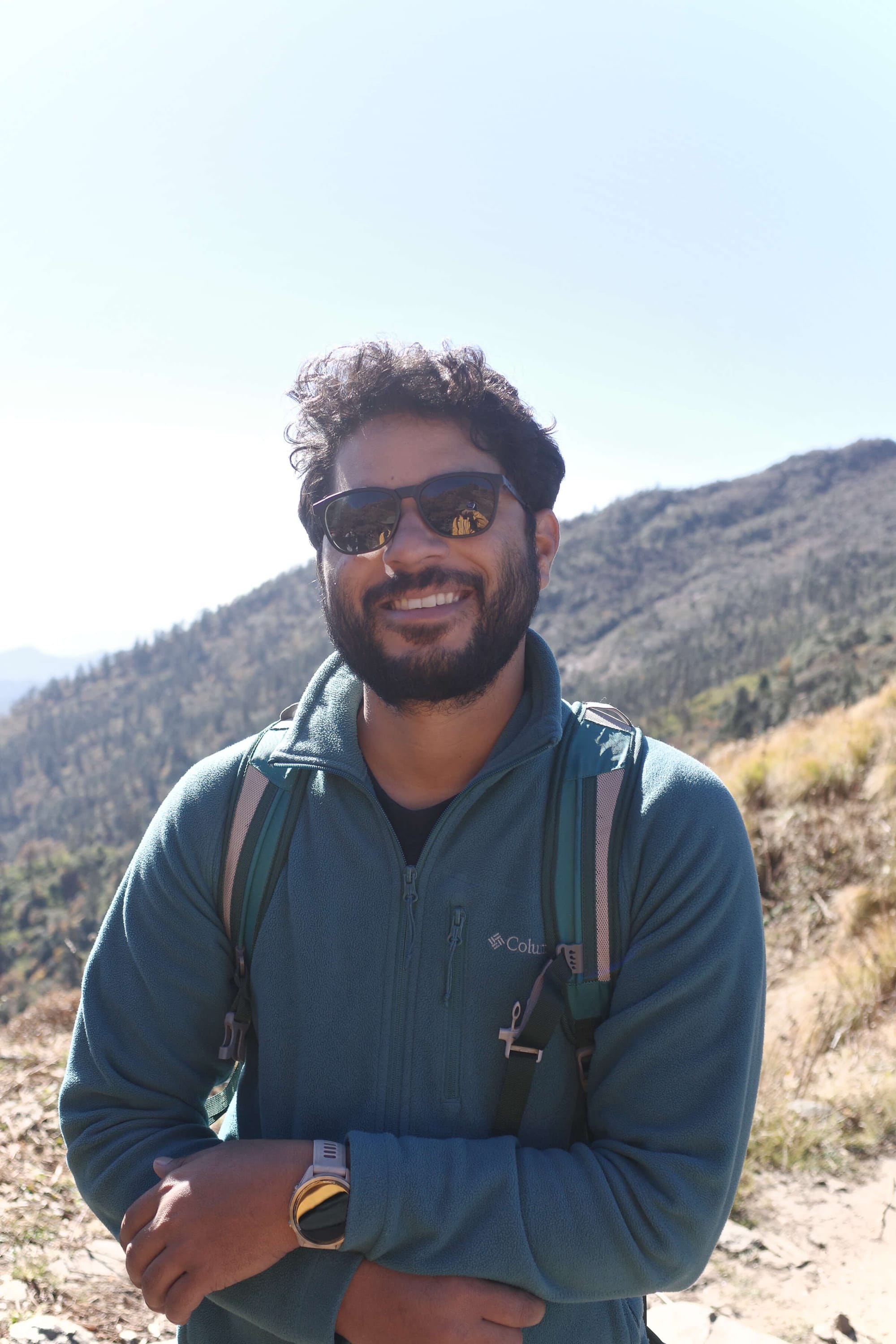
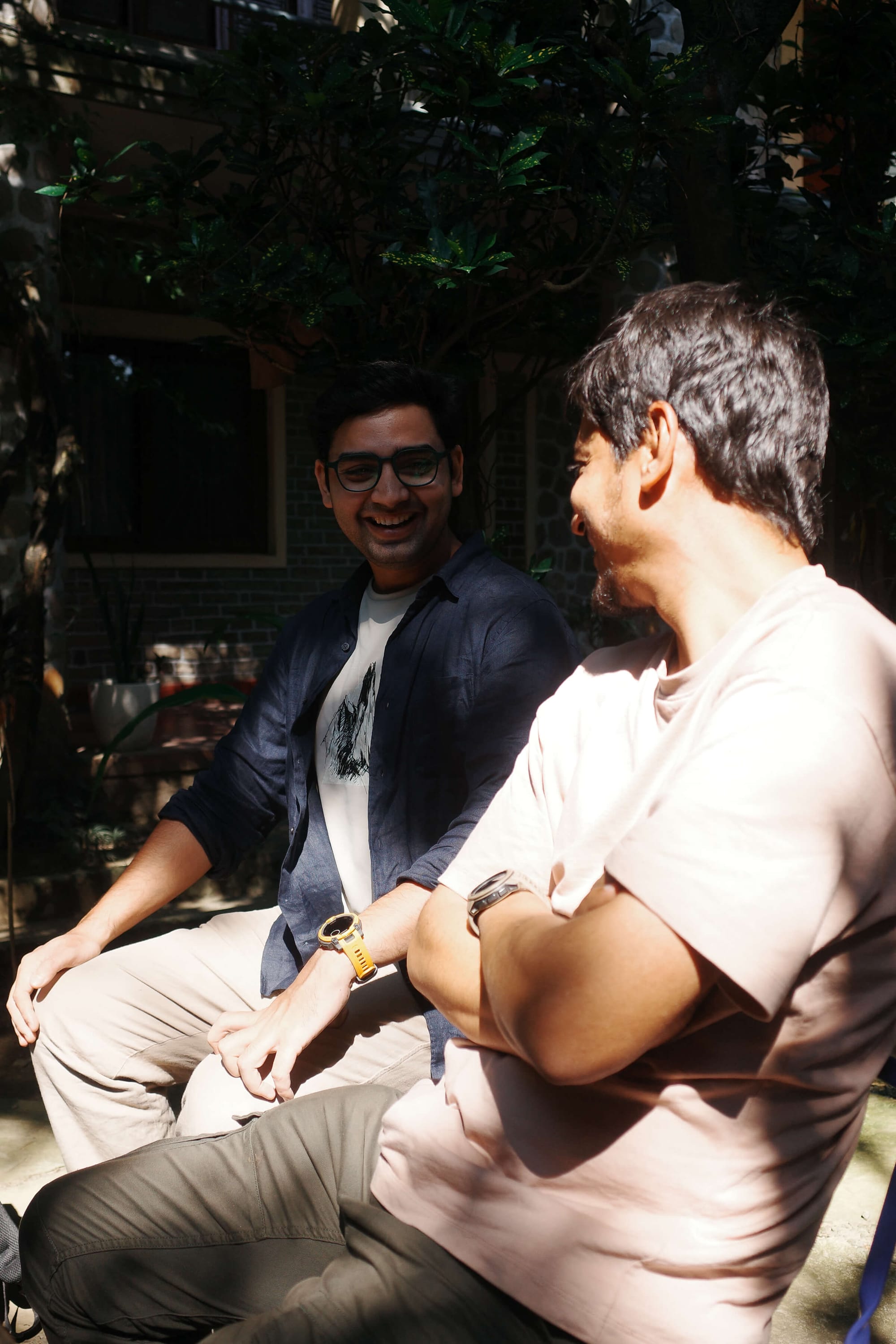
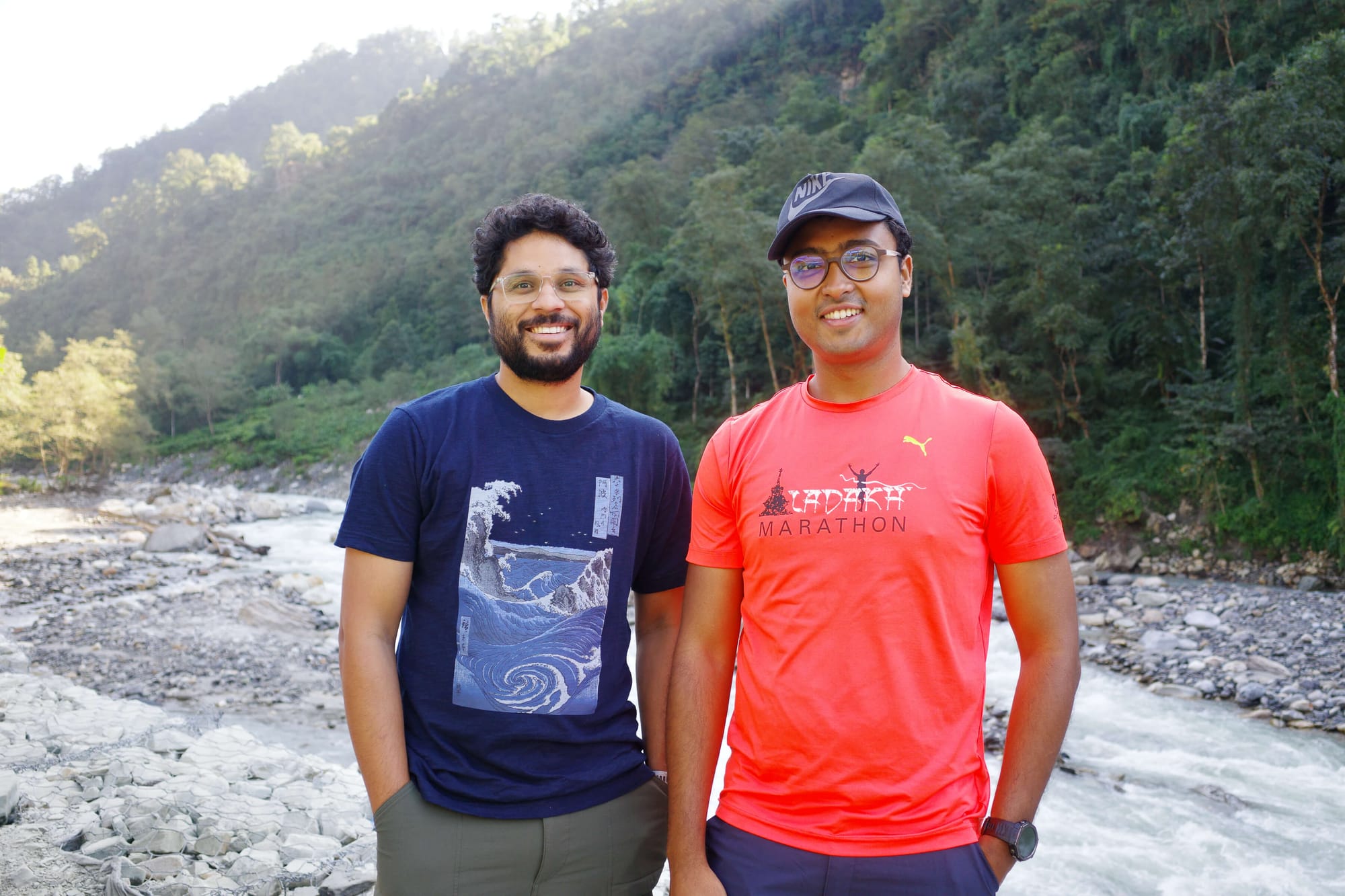
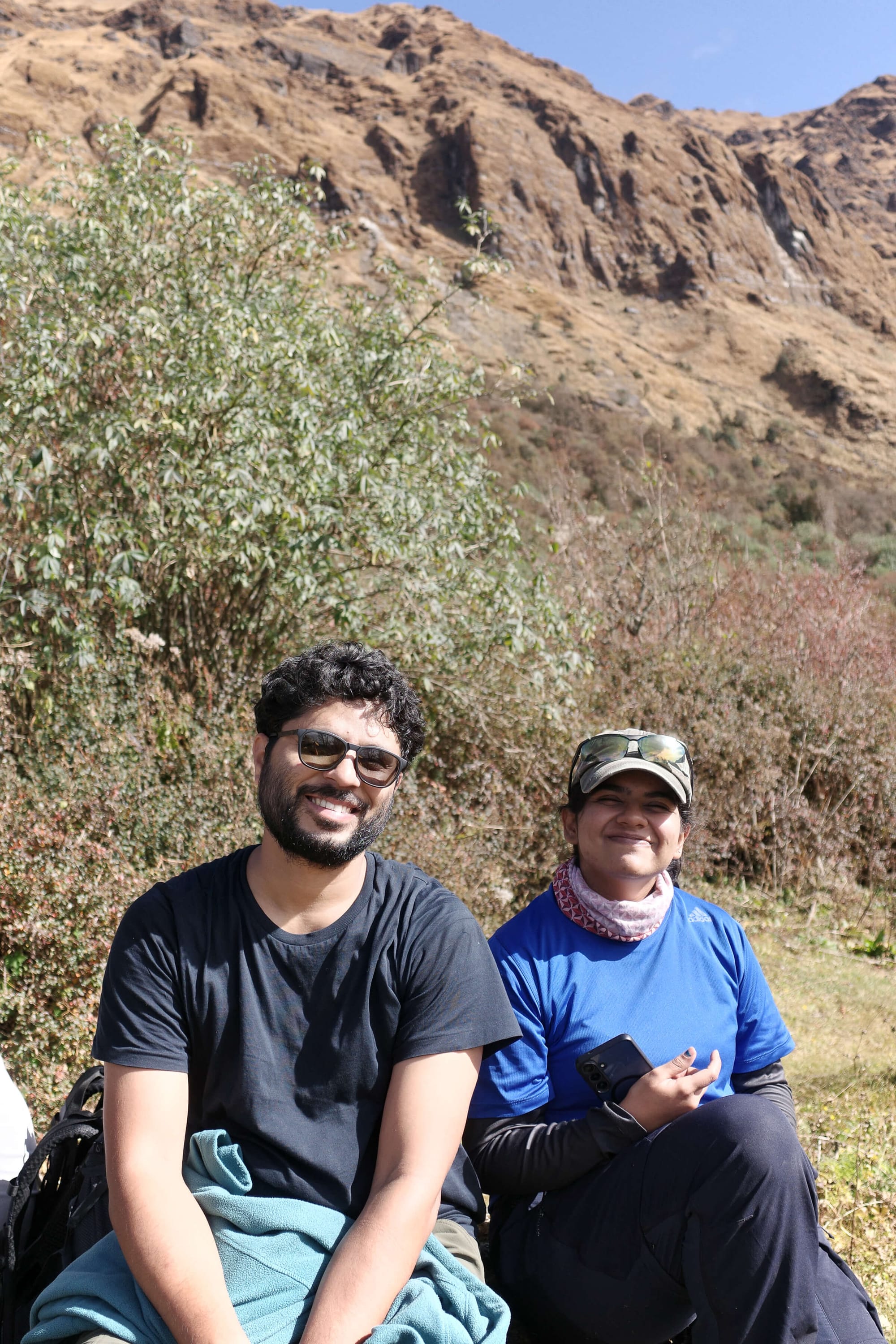
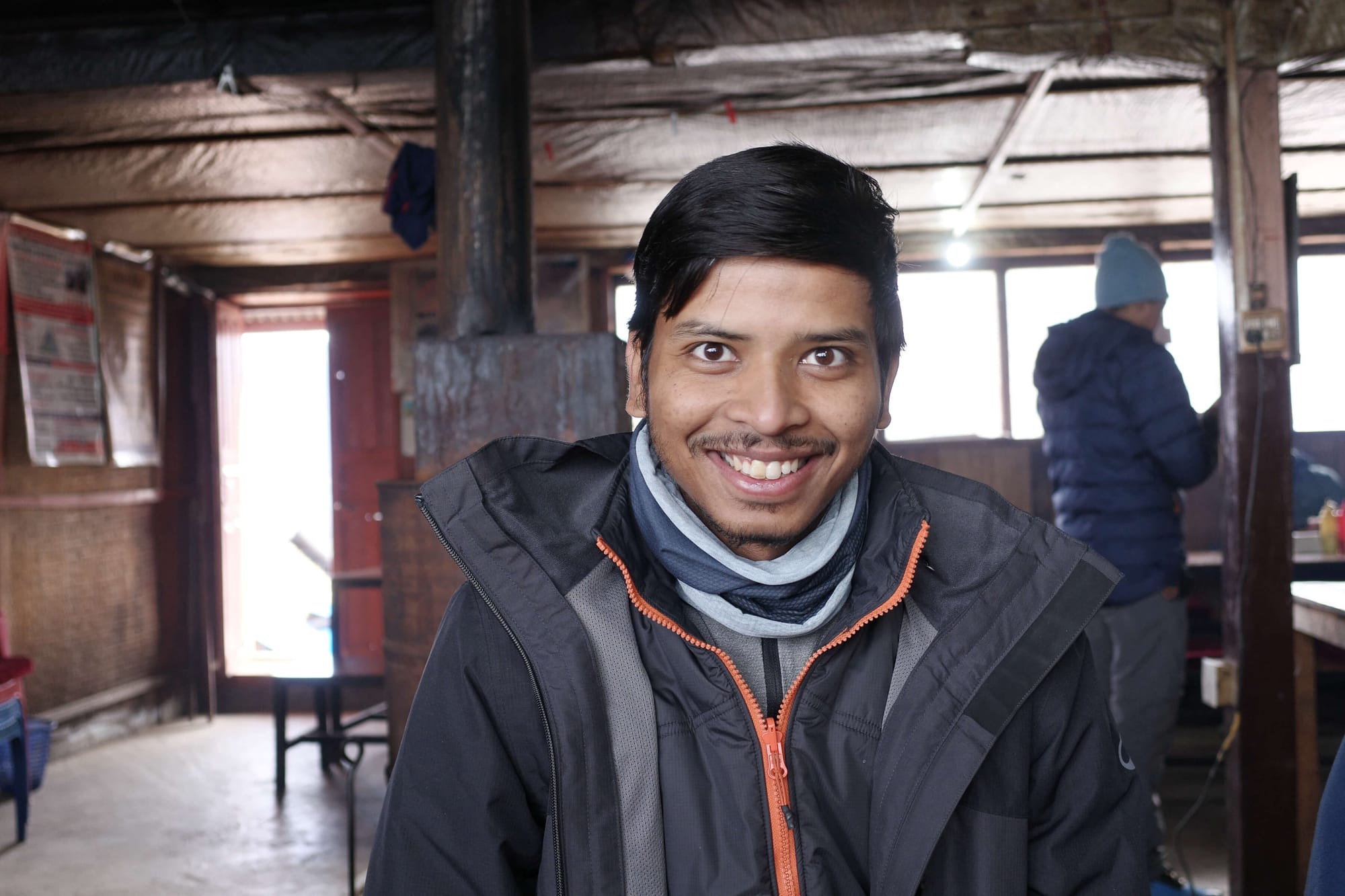
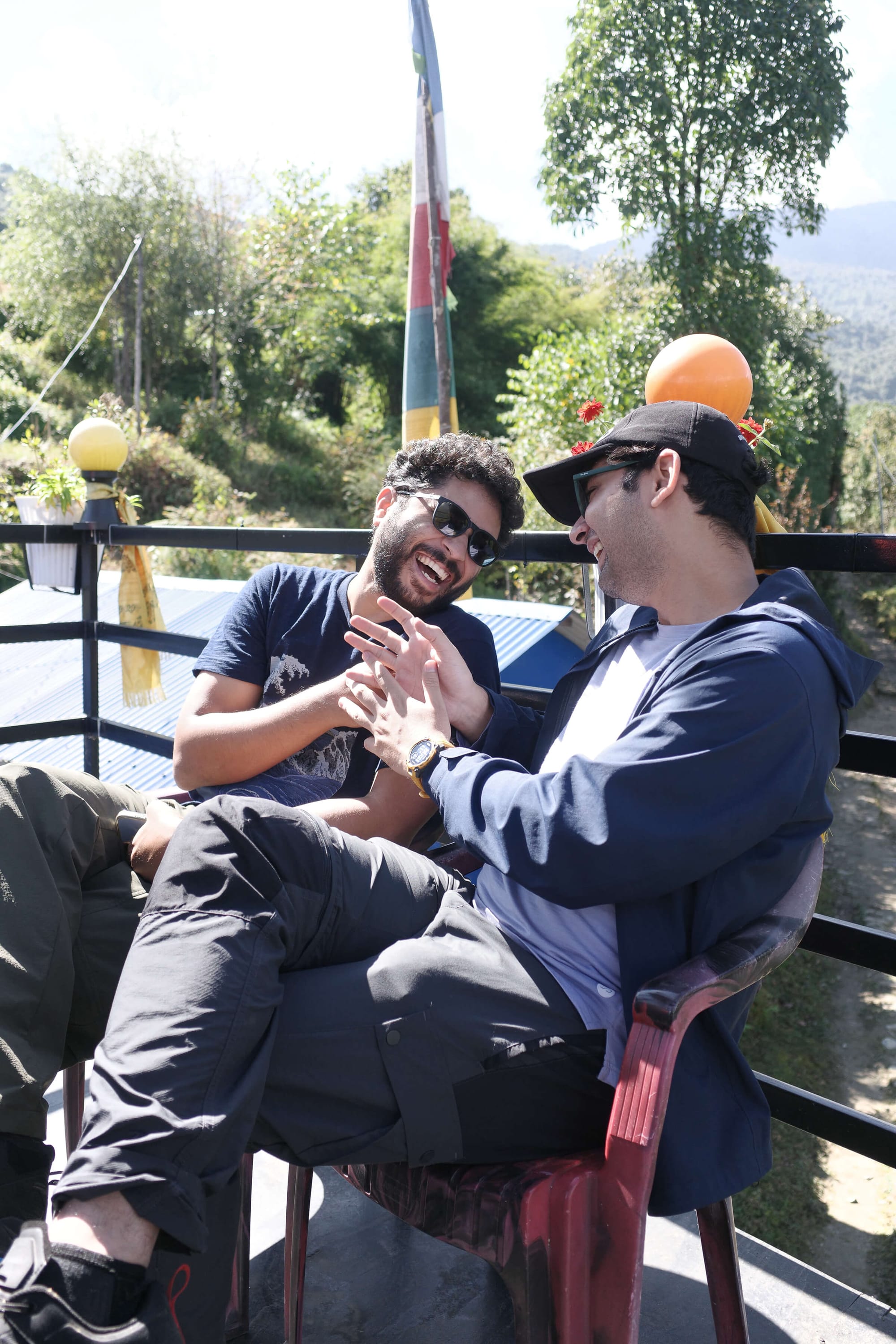
Prashant built Himachal Pradesh's highest lawn tennis court. Why? He can't say. Not logically, not logistically, not economically. He wanted one, so he got it done. Priyanshu said he is going to get fitter for his upcoming marathons. He said so last year too. In the same exact manner. Ankit left his job earlier this year to become an indie hacker and albeit early, he already has some success. We spoke on length about how keeping living costs low is one of the greatest hacks of all time. Lowest recurring cost of living frees us up in ways that we can't even imagine. Eons ago, Marcus Aurelius spouted:
You see how few things you have to do to live a satisfying and reverent life?
Throughout the walk, I also realized that Rounak and I are the same person with different identities. Or at least, I want to be more like him. Among 100 different side-projects that he has, he recently shared this paper form of our favorite podcast Everything is Everything. Agency ftw.
And then we come home and now we start to do things for the rest of the year, partly so that we have something to talk about on the next walk. Undeniable proof of work.
Until next walk.
Like every year, the walk was organized by Subodh's The Vertical Tribe and images were shot on Ricoh GR IV and are used straight out of camera.